Washington, DC —(Map)
The US Congress is deciding this week whether it will go along with a request from US President Donald Trump to cut over $1 billion in support for public radio and TV stations in the US. The deadline for the decision is Friday, July 18.
Recently, Congress barely approved a huge new bill that Mr. Trump hoped to pass. That law cut taxes, and is expected to add about $3.3 trillion ($3,300 billion) to the amount of money the US owes.
What Congress is considering now is very different from a new law. It’s a collection of “rescissions”. A rescission is an effort to take back money that was already approved. Mr. Trump requested the rescissions in June, and the bill was passed by the House of Representatives on June 12. The Senate is considering the bill now. By law, the rescissions must be approved by Congress within 45 days, or they will fail. The 45-day deadline is this Friday.
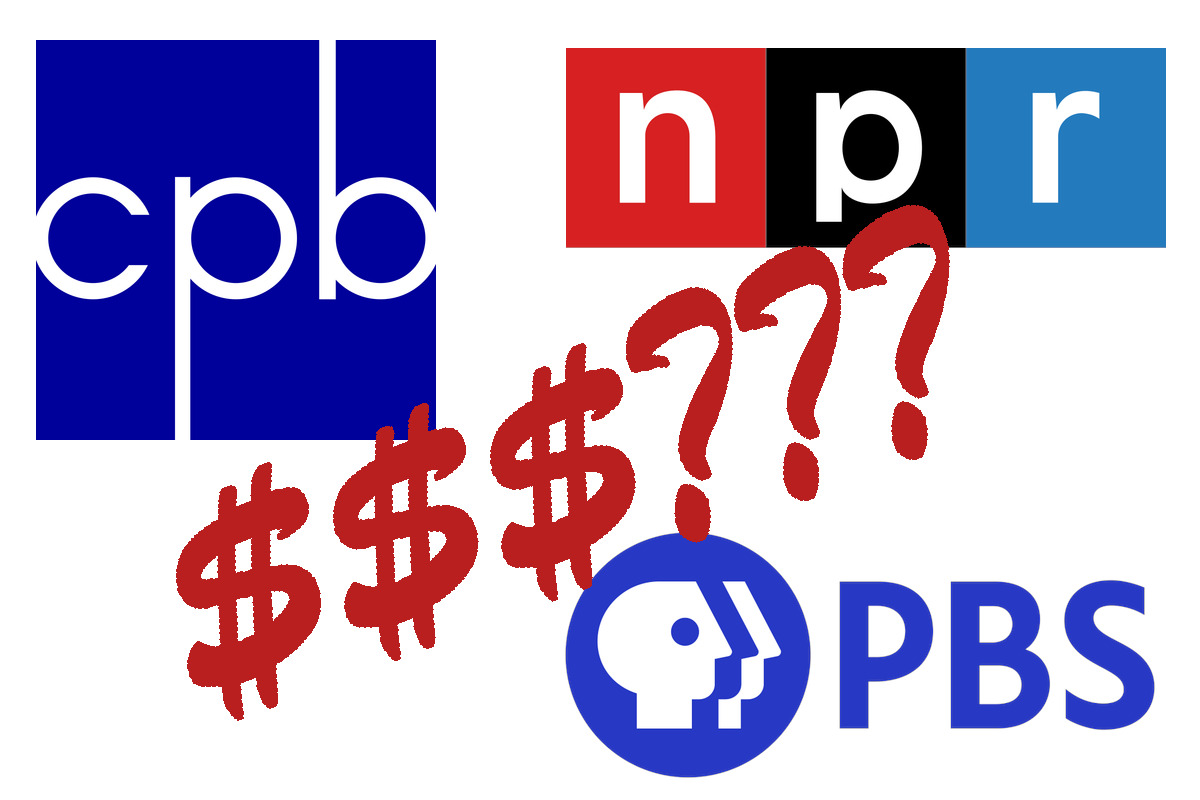
(Source: CPB, NPR, PBS, via Wikimedia Commons.)
The rescissions bill targets $1.1 billion of cuts at the Corporation for Public Broadcasting (CPB), which is known for its PBS TV network and NPR radio network.
The Corporation for Public Broadcasting, PBS, & NPR
The Corporation for Public Broadcasting (CPB) is a non-profit company started by the US government in 1967 to help support public radio and TV. The CPB is best known for its Public Broadcasting Service (PBS) TV network and its National Public Radio (NPR) radio network. Together, NPR and PBS have over 1,500 stations around the US. The networks provide news, entertainment, and educational programs. The networks do not carry ads, and are supported by donations and government money.
Both NPR and PBS have well-known news programs. PBS is also known for its educational programs. These include many programs aimed at children, such as “Sesame Street” and “Daniel Tiger’s Neighborhood”. Importantly, public TV and radio stations serve many remote locations, where they provide one of the few sources of local news and emergency information.

(Source: Richard Termine, Sesame Workshop.)
But Republicans have long complained that the news reporting on these public stations is not fair. In the past, Republicans have made other efforts to cut off money to the CPB.
If government money for the CPB were cut, it would make life hard for NPR and PBS, but it wouldn’t end them. These groups have enough support from other sources that they could keep going.
But cuts to the CPB would seriously hurt small stations in remote areas. Many of these stations depend almost completely on US government support. Without it, many would be forced to close.
It’s uncommon for a president to try to make changes through rescissions. But the rules for approving rescissions aren’t as strict as they are for passing a bill. That means it’s more likely that Mr. Trump can get the changes he wants through rescissions. If it works, Mr. Trump and his team say they hope to make other cuts through rescissions, too.
😕
This image has not been loaded because of your cookie choices. To view the content, you can accept 'Non-necessary' cookies.
The rules for approving rescissions aren’t as strict as they are for passing a bill, so it’s more likely that Mr. Trump can get the changes he wants. But the vote is expected to be tight in the Senate. Senate majority leader John Thune (shown above speaking to reporters last week) is in charge of trying to pass the bill.
Democrats say it will be hard to trust Republicans if they make a habit of using rescissions to try to take back money they have already agreed on.
The House barely approved Mr. Trump’s rescissions bill, 214 – 212. Things are also expected to be tight in the Senate, where several Republicans have concerns about the cuts. Mr. Trump has threatened Republican senators that he won’t support them in the future if they don’t back his rescissions.
If the Senate approves the bill, the House will need to approve it once more. All of this must happen by July 18 or the money will remain in place.
Did You Know…?
Mr. Trump has also included over $8 billion of other cuts in his rescissions request. These cuts will have serious effects on programs that help fight diseases; provide food, shelter, and healthcare; and provide support after natural disasters.
😕
This map has not been loaded because of your cookie choices. To view the content, you can accept 'Non-necessary' cookies.