
Galapagos, Ecuador —(Map)
Scientists have officially identified a tiny blue octopus as a new species after more than ten years of study. The creature, which is small enough to fit in a person’s hand, was first seen deep under the Pacific Ocean near the Galapagos Islands.
In 2015, scientists on the ship EV Nautilus were using a remote-controlled underwater robot to explore the deep waters near the Galápagos Islands. The robot had a camera that sent back video to the ship.
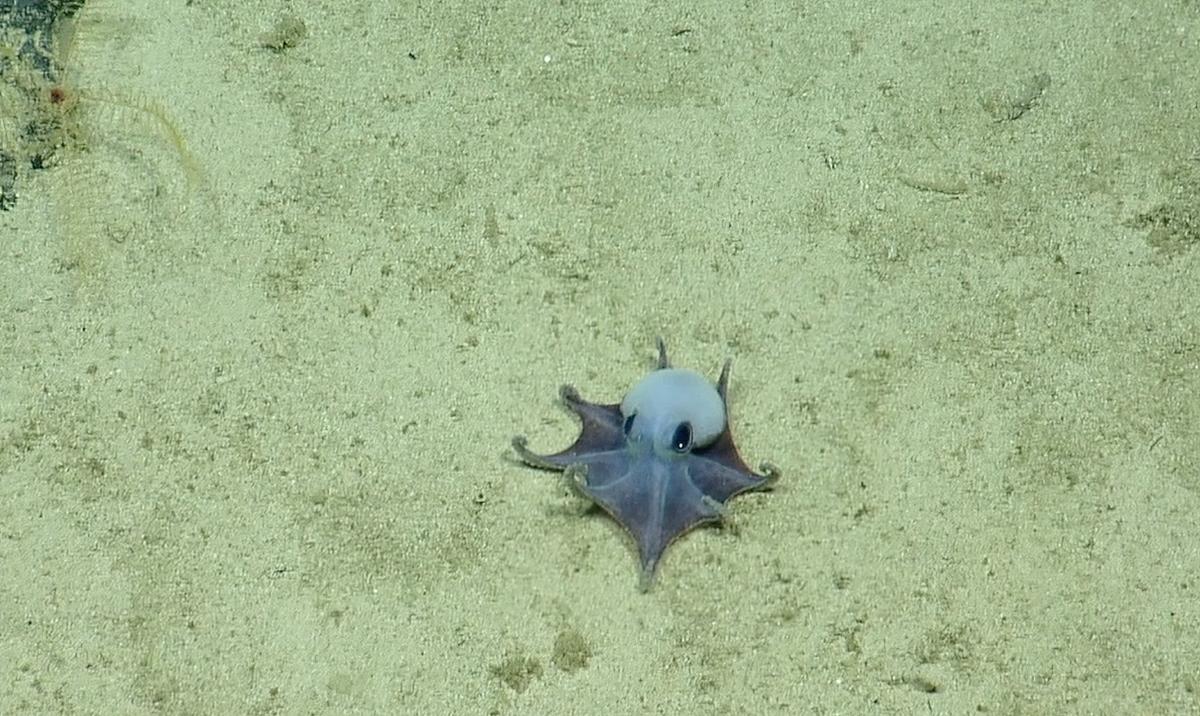
The researchers were watching a live video from 1.1 mile (1.75 kilometers) below the surface, when a small, blue octopus came into view. The scientists were immediately impressed. “Is that a cute little guy or what?” one person asked.
(Source: Charles Darwin Foundation.)
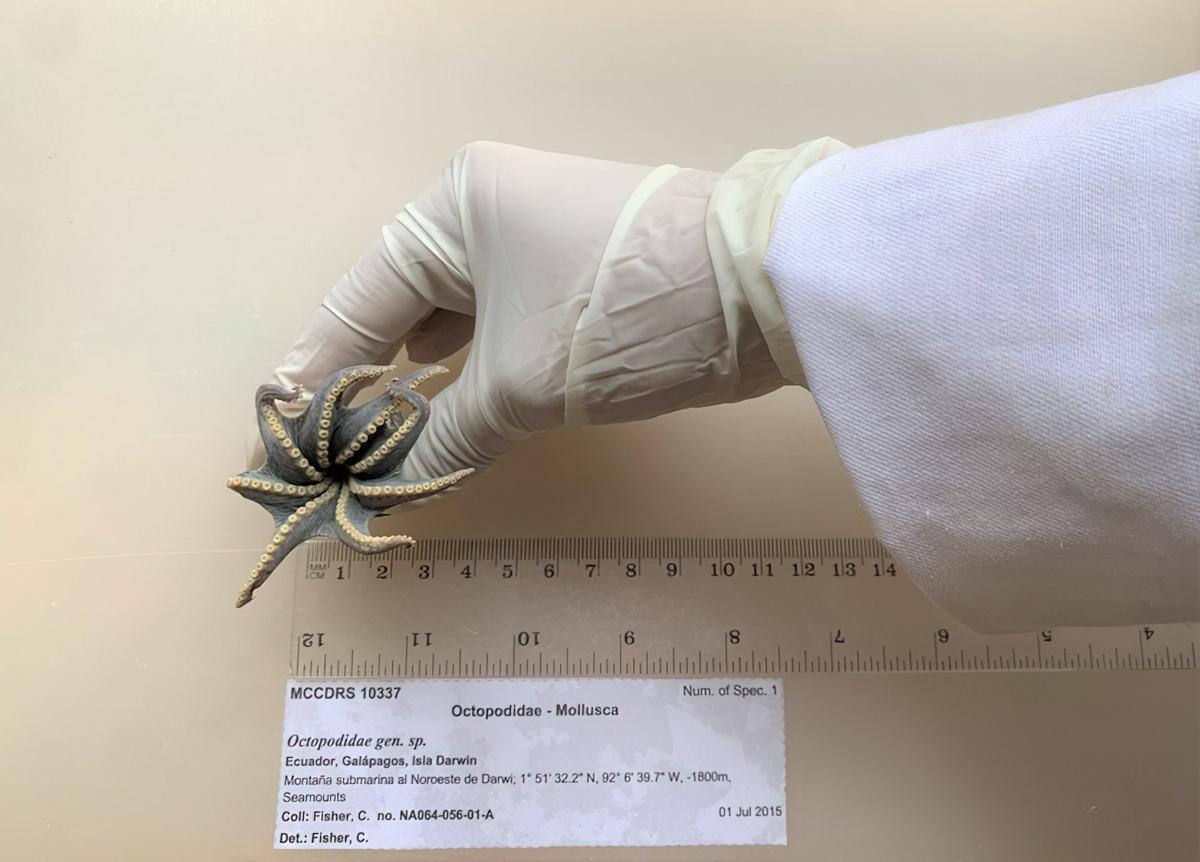
The robot was used to collect the octopus and bring it to the surface. It was about the size of a golf ball. The researchers put the octopus in a special liquid to help preserve it. Later, the researchers spotted two other similar small blue octopuses through the robot’s camera.
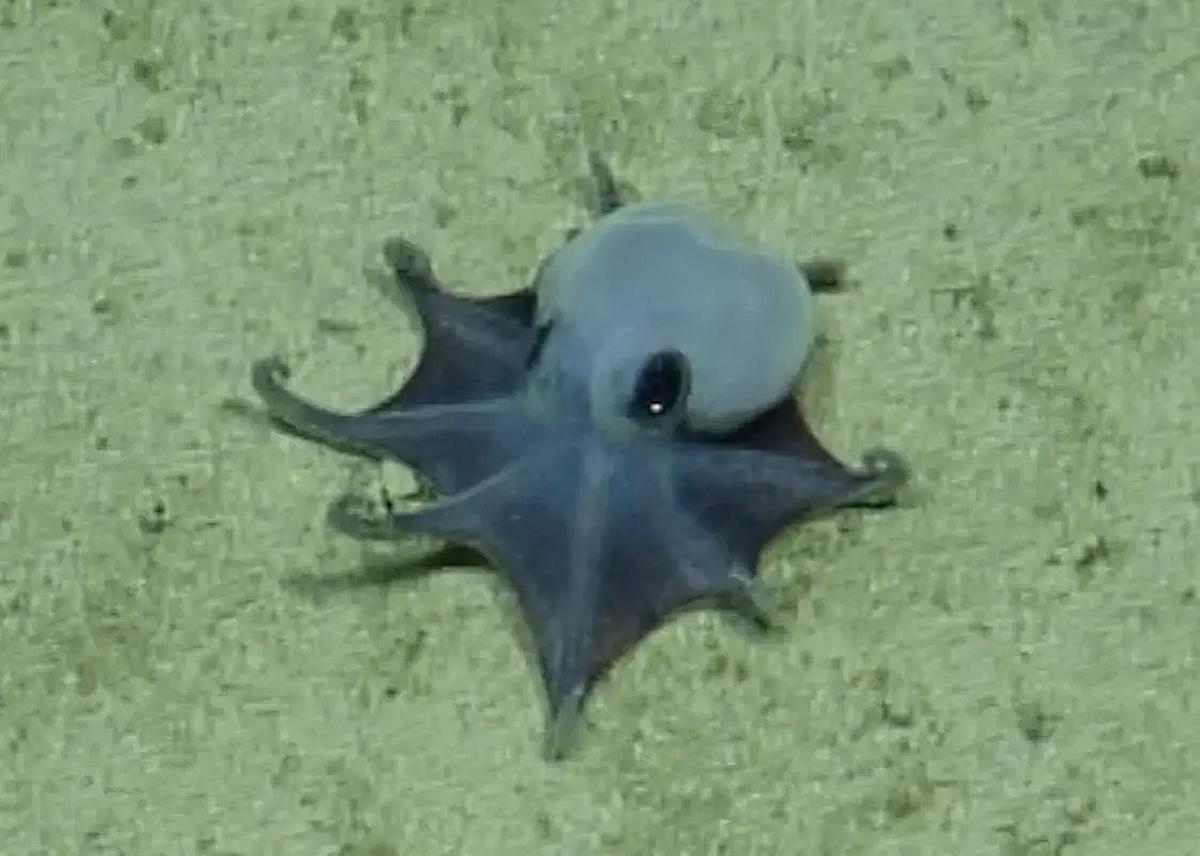
Researchers from the Charles Darwin Foundation in Galapagos sent a picture of the octopus to Janet Voight. Dr. Voight is an octopus expert who works at Chicago’s Field Museum. “Right away, I knew it was something really special,” she said. But it took years to confirm that the octopus was a new species.
(Source: Charles Darwin Foundation, via Field Museum.)
In 2022, the preserved octopus was sent to the Field Museum. But now Dr. Voight faced a problem. This was the only known sample of this kind of octopus, and its body was very fragile. Dr. Voight was nervous about cutting the tiny body up to study it. “If you make the wrong cut or tear something, it’s gone forever,” Dr. Voight told CNN.
So instead, Dr. Voight and her team used a special method of scanning the octopus with thousands of different X-ray images. These images were then used to create a detailed, 3D model of the octopus, inside and out.
Using their model, the scientists were able to study the octopus carefully. They discovered that it had smooth skin, and only one tooth. The octopus had very few suckers on its arms, and its arms were very short.
(Source: Charles Darwin Foundation.)
It was clear that the octopus was different from any other known octopus. They decided to name the new species Microeledone galapagensis, since it was found in Galapagos.
The short, thick arms were confusing for the researchers. Usually, octopuses use their long arms to move through sand and catch food. The scientists wondered how this octopus survived with such small arms. They believe the octopus’s unique colors might be the answer.
Though it looks blue on video, the octopus actually has a light-colored top and a dark purple underside. This color pattern may help the octopus hide while it hunts. If the octopus attacks prey that glows in the dark, its dark skin can hide that light to avoid attracting even bigger predators.
The discovery is a reminder of the many mysteries still to be found in our oceans. As Dr. Voight notes, “The oceans are so big, and there’s so much left to explore.”
😕
This map has not been loaded because of your cookie choices. To view the content, you can accept 'Non-necessary' cookies.