
The science magazine “Nature” recently announced the winners of its 2026 “Scientists at Work” photography contest. The competition uses art to show the important research people do to help the planet and those who live on it. More than 220 people sent in their best pictures, all showing science in action.
The winners receive a prize of £500 (about $660) and have their photos featured in the magazine. Here are some of the winning images and the science behind them.
Teaching Birds to Migrate
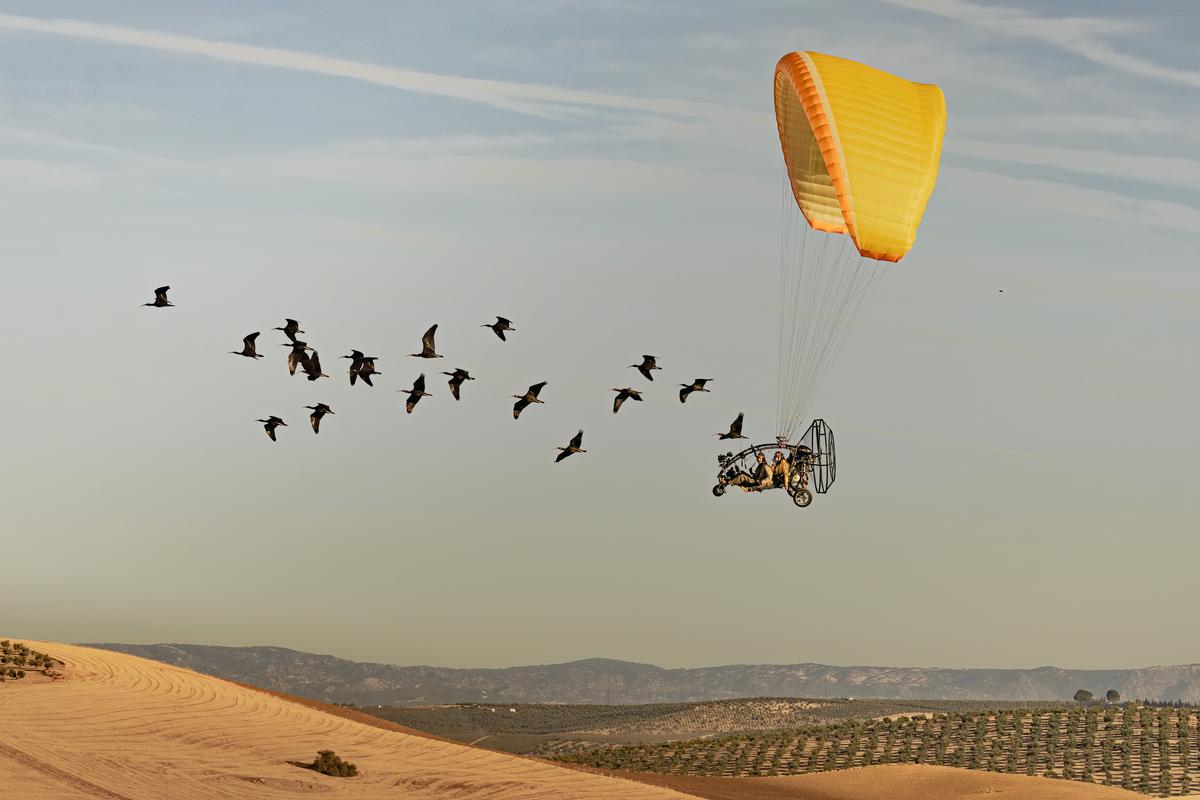
The photograph that won the top prize this year was taken by Gunnar Hartmann, a student at the University of Koblenz in Germany. The picture shows Helena Wehner in a small, ultralight aircraft leading a group of northern bald ibises flying over a beautiful landscape in Spain.
(Source: Gunnar Hartmann, via Nature.)
These ibises disappeared from Europe roughly 400 years ago, in part because they were heavily hunted. Now, in an effort to bring the birds back, a group called Waldrappteam raises the birds in captivity.
The scientists work to build a special bond with the birds from a young age. Then, when they’re old enough, the humans can teach the birds how to migrate. The 1,740-mile (2,800-kilometer) trip takes about 50 days.
Studying Algae Blooms
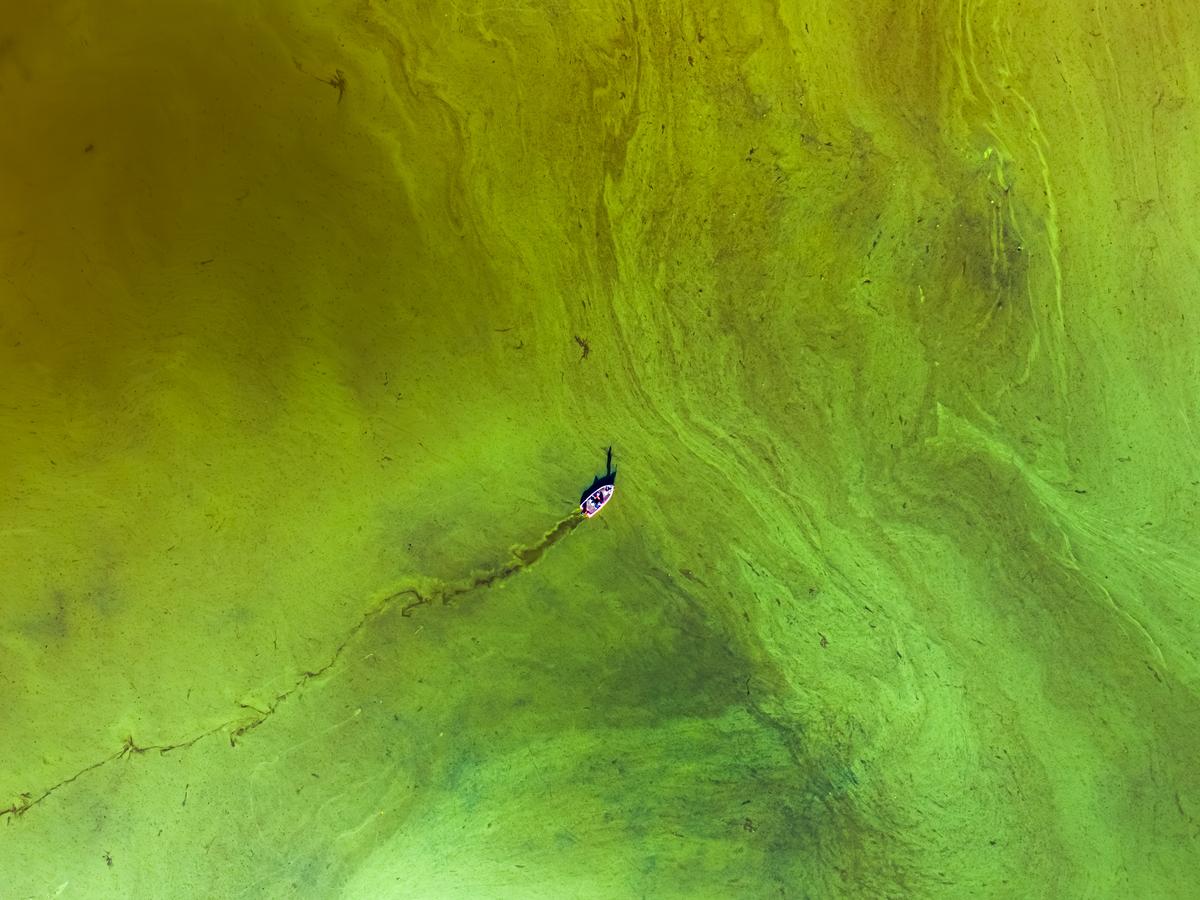
Another winner used a drone to take an overhead photo of a scientific team studying algae growth on Dog Lake in Ontario, Canada. From above, the scene looks like a colorful design made with bright green paint. But it’s actually an algae bloom.
(Source: Haolun (Allen) Tian, via Nature.)
Algae Blooms
Algae blooms happen when tiny plants called phytoplankton grow too fast because there are too many nutrients in the water. These blooms can be dangerous to animals and expensive to deal with.
The team uses a technique called eDNA, which allows them to find tiny traces of DNA in the water. This helps them understand how the algae affects different species. The photographer, Allen Tian from Queen’s University in Canada, said that while the blooms “smelled awful” and looked like “pea soup,” they were still beautiful from above.
Collecting Samples from Whale Sharks
(Source: Rob Harcourt, via Nature.)
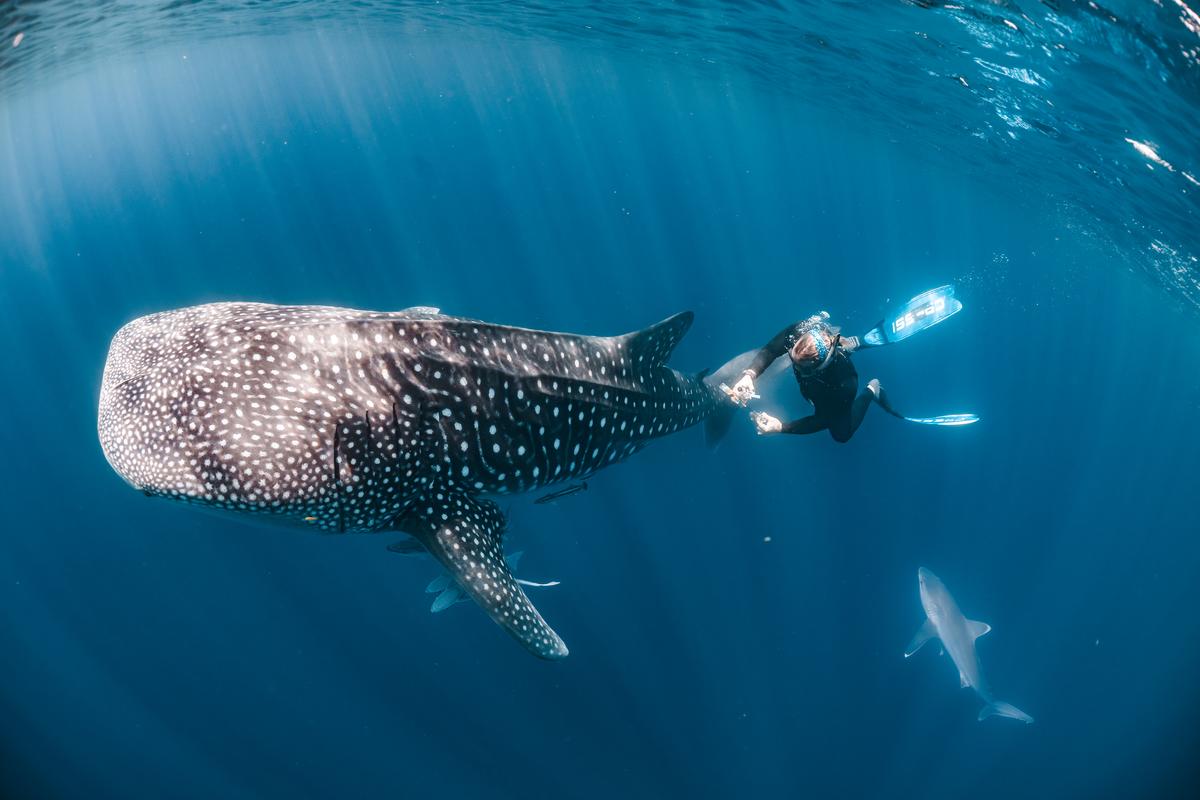
In Australia, Rob Harcourt took a stunning photo of marine biologist Michael Doane. In the image, Dr. Doane is collecting tiny organisms, called microbes, from the skin of a whale shark. A silvertip shark can be seen below Dr. Doane.
Dr. Harcourt said these efforts help scientists understand the whale sharks, their environment, and how they are affected by climate change.
Studying How Climate Change Affects Corals
(Source: Uli Kunz, via Nature.)
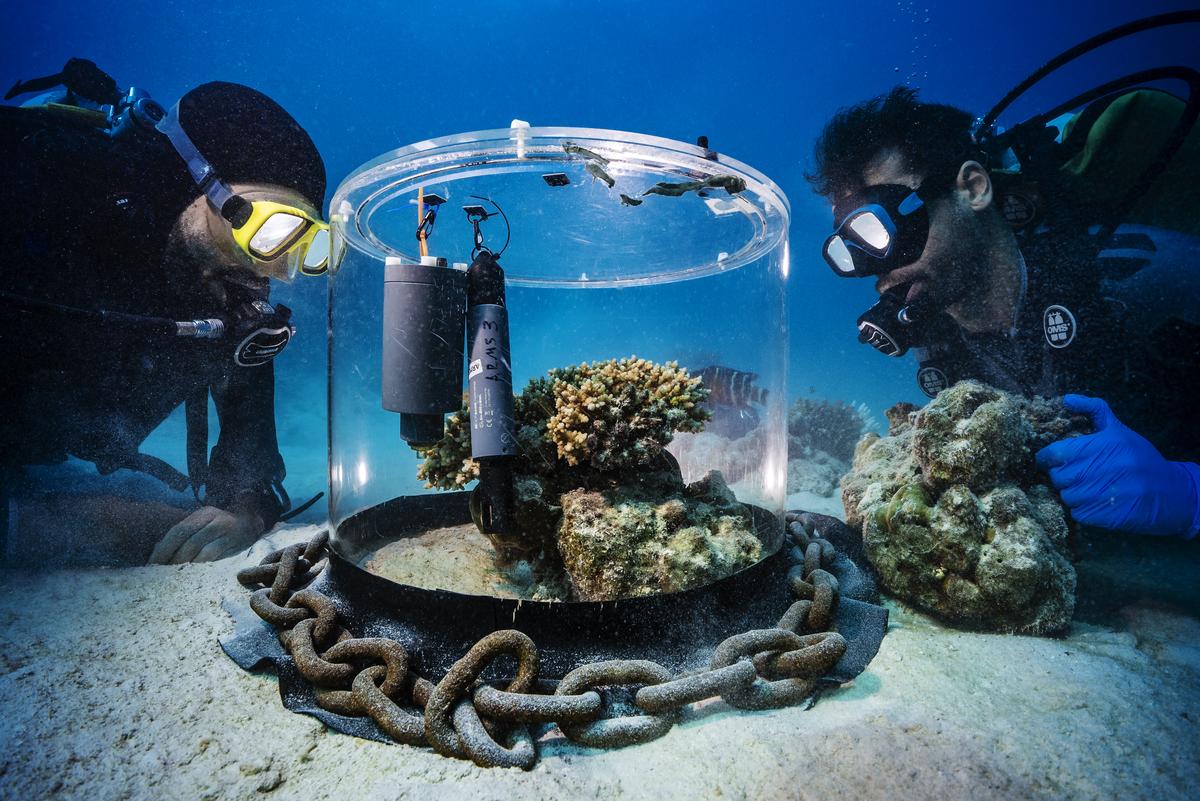
A different sort of underwater photo was taken by Uli Kunz in the Red Sea near Saudi Arabia. It shows two researchers looking at coral inside a clear box. The scientists are studying how corals are affected by rising ocean temperatures. The box allows the researchers to measure how the coral – and a tiny organism that lives inside it – are using oxygen.
Mr. Kunz says he liked the image of the two scientists thinking quietly in the middle of a busy research dive.
Researching a Drug that Could Help Control Mosquitoes
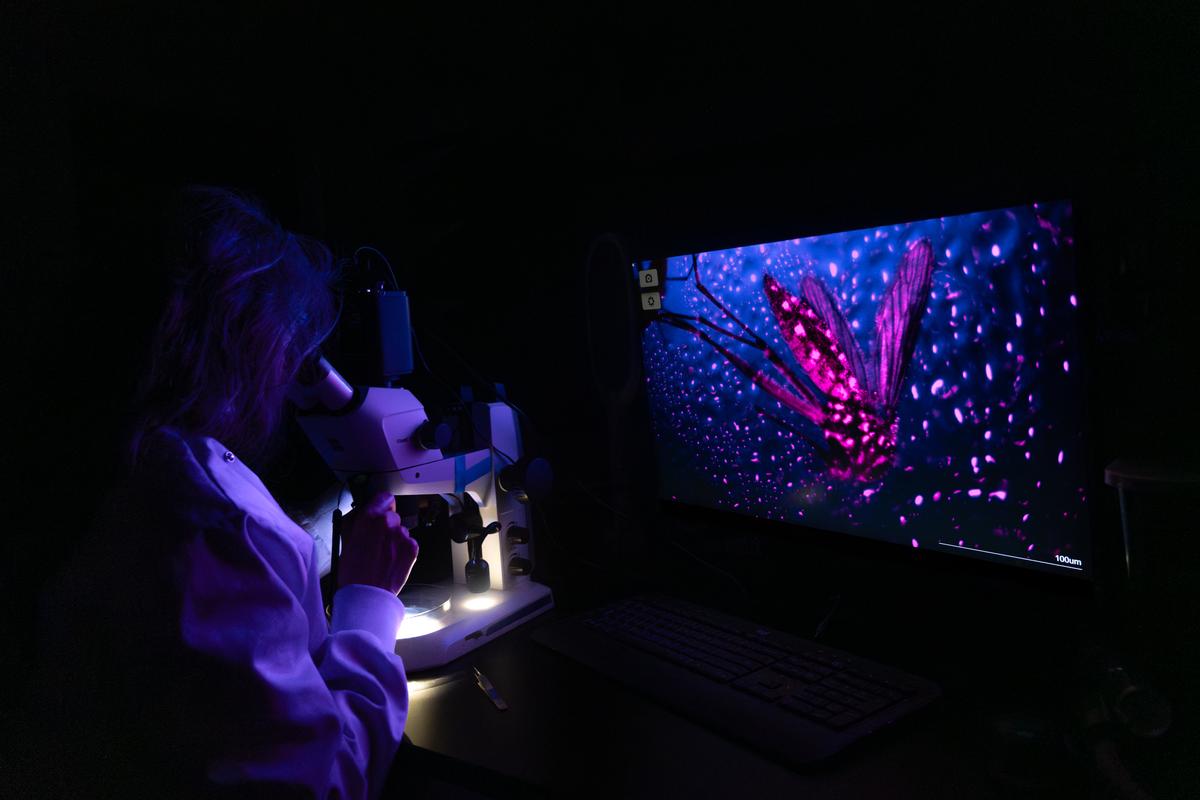
(Source: Shayanta Chowdhury, via Nature.)
The final winner was taken under ultraviolet light by Shayanta Chowdhury at the University of Notre Dame. The photo shows Dr. Lee Haines looking through a microscope at a mosquito that glows purple. Dr. Haines used a special dye to study how a drug could kill mosquitoes that carry dangerous diseases like West Nile and Zika.
Mr. Chowdhury says he thinks art can be a powerful way to show how science helps people.