
High in the sky over the Pacific Ocean, a special mission has begun to save a valuable space telescope. NASA is working with a company called Katalyst Space Technologies in a tricky effort to rescue its Swift satellite.
Neil Gehrels’ Swift Observatory
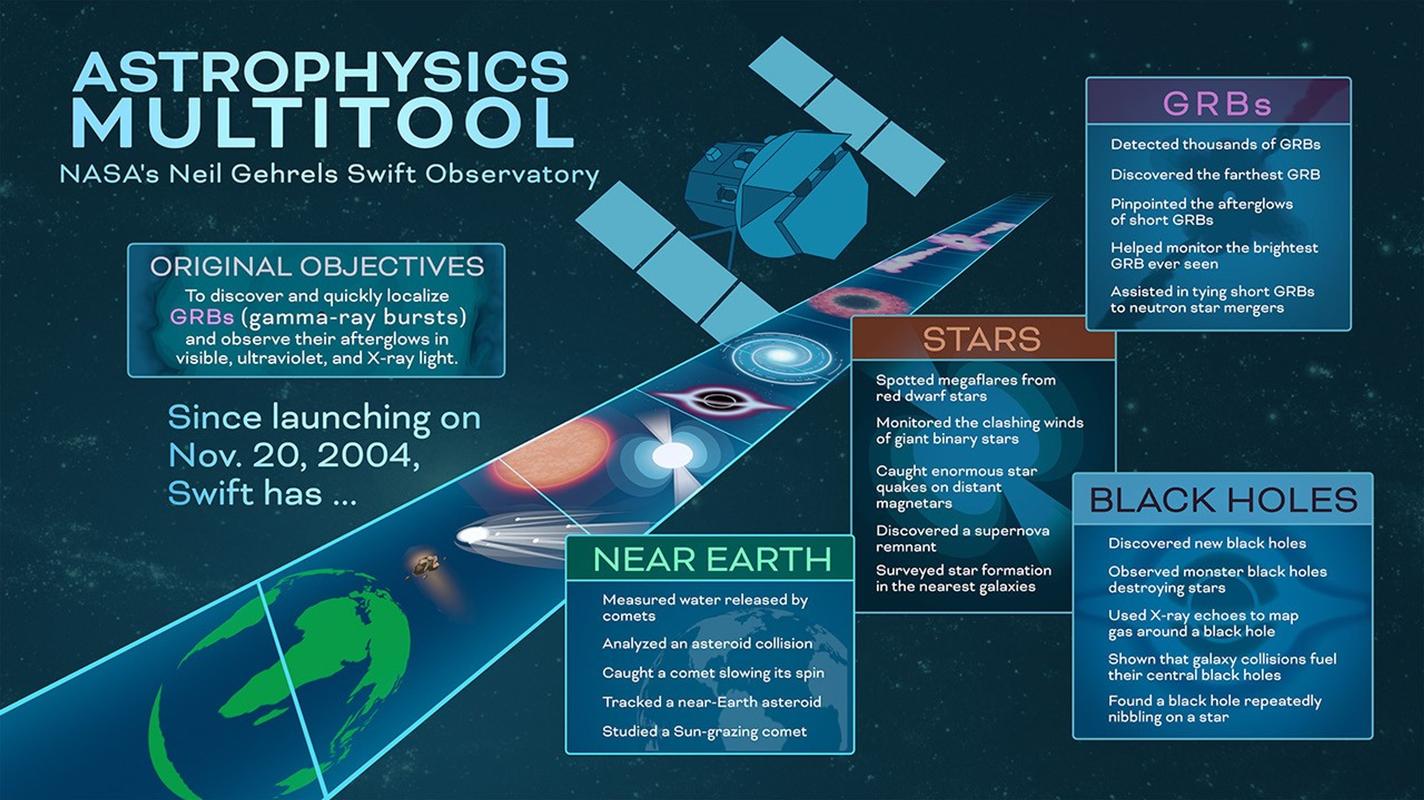
The Swift satellite is a special telescope in orbit around the Earth. Its main job is to find gamma-ray bursts, which involve light blasting out of some of the universe’s strongest explosions. It’s the kind of energy you might get when two stars smash into each other.
Swift actually has three telescopes, and has been used for many more purposes than originally expected.
Swift was first launched in 2004 and has cost NASA around $500 million. But now, the telescope is 21 years old and is slowly falling toward Earth. If it drops below 186 miles (300 kilometers), the planet’s atmosphere will pull on it too hard, and the satellite will burn up as it falls toward Earth.
(Source: [Public Domain], NASA’s Goddard Space Flight Center.)
To stop this, NASA hired Katalyst to plan and build a special spacecraft to rescue the telescope. Normally, developing a mission like this would take years. But in less than a year, the company built and launched its rescue satellite, called Link.
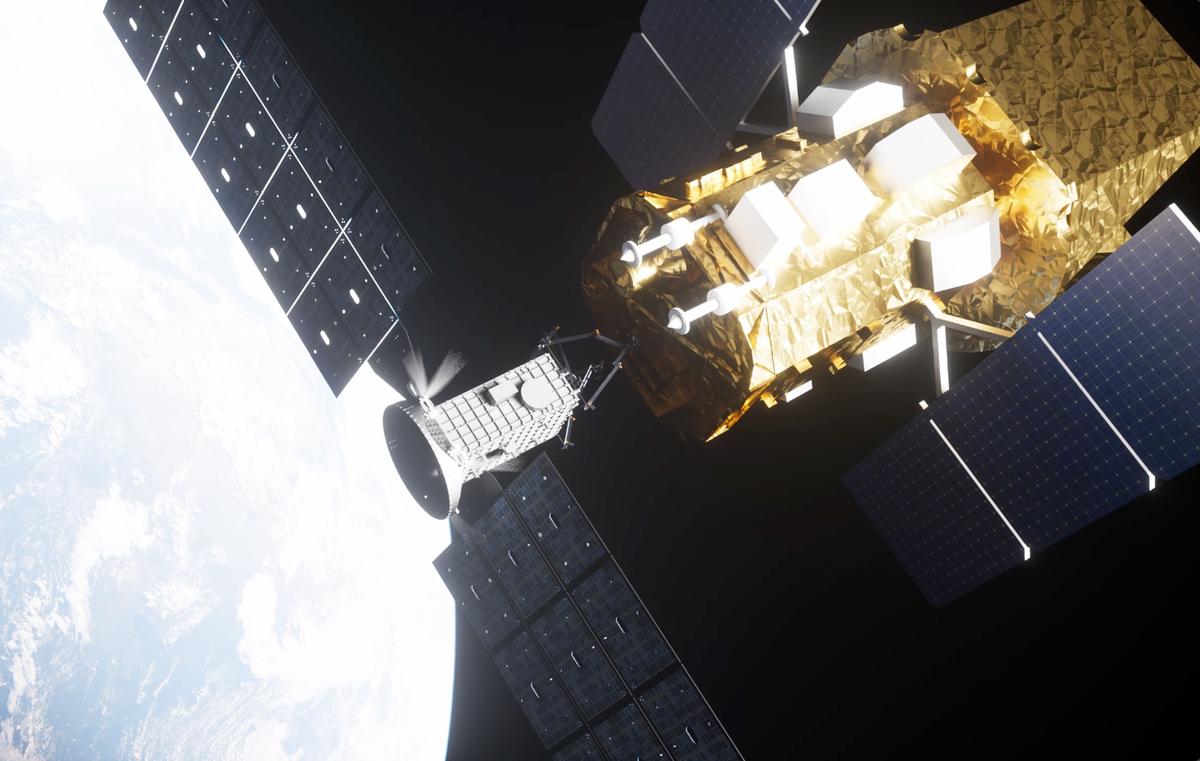
Roughly as big as a refrigerator, the 937-pound (425-kilogram) Link spacecraft has three robotic arms and three thrusters. The plan is for Link to locate the telescope, grab it with its arms, and then use its thrusters – engines that use hot gas – to lift Swift to a much higher orbit.
Link was launched last Friday. Because of Swift’s location, the launch had to happen in a special way.
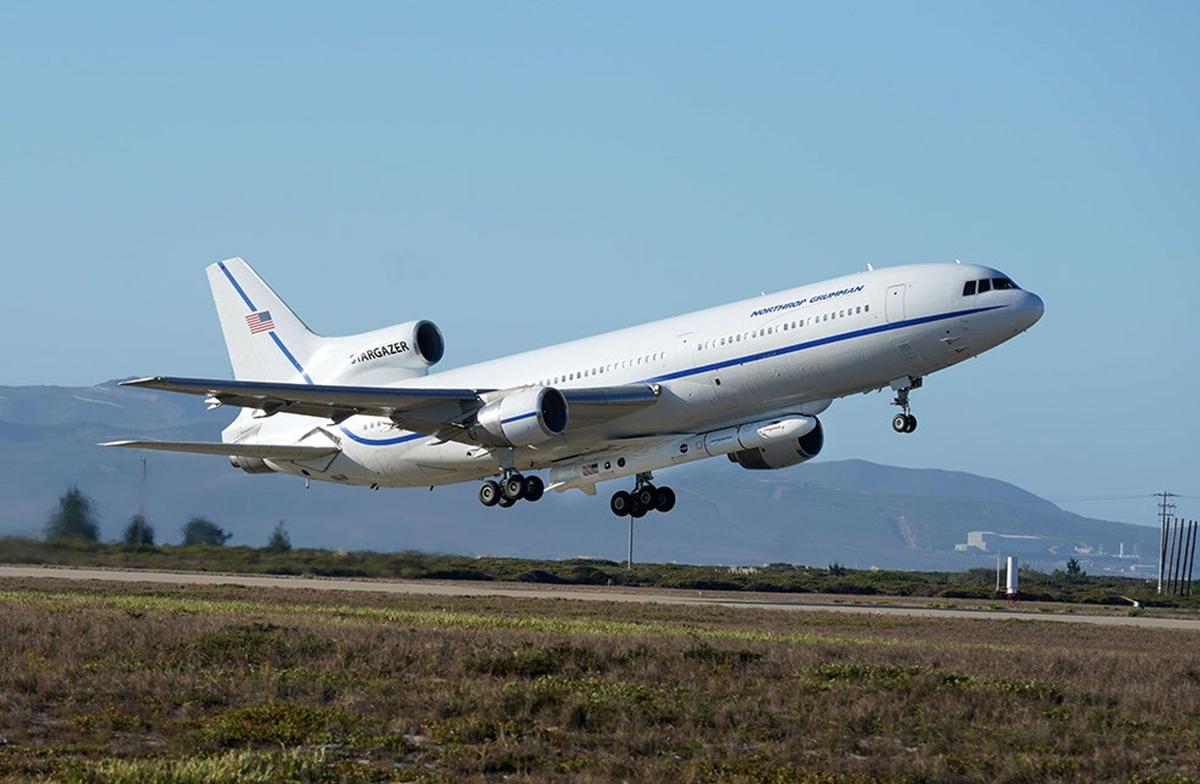
Instead of a rocket blasting off from the ground, a huge plane took off, carrying the 57-foot (17-meter) Pegasus XL rocket beneath it. Once the plane reached a height of about 40,000 feet (12,200 meters), it dropped the Pegasus rocket. The rocket blasted off in mid-air. About 13 minutes later, the Link spacecraft was successfully released into orbit above Earth.
(Source: Northrop Grumman, via NASA.)
Over the next few weeks, Katalyst will run tests on the Link spacecraft before moving it close to the Swift telescope.
That’s when the hard part begins. NASA and Katalyst engineers will study Swift to figure out how to grab onto it. This is difficult because Swift wasn’t built to be caught by another spacecraft. Scientists are worried about the condition of its insulation (the protective material that keeps the satellite at the right temperature).
Link will use cameras and other sensors to find its target and then use its three arms to hold on tight. Once they are connected, Link will use its thrusters to push both satellites higher into space.
(Source: NASA [Public Domain], via Wikimedia Commons.)
If all goes well, Link will slowly bring the Swift telescope from its current height of about 224 miles (360 kilometers) above Earth to 373 miles (600 kilometers) above it. It will take several months, but it could allow Swift to continue working for another 10 years or more.
The mission must be completed quickly. Experts believe that by October, Swift will have fallen too low to be saved.
Kieran Wilson, a lead researcher at Katalyst, described the mission as “challenging and risky.” But for NASA, the chance to save the telescope is worth the risk.
For Katalyst, the mission is about more than just saving one satellite. In the past, satellites were treated as “throwaway” items. Katalyst hopes to develop a business of fixing, upgrading, and moving satellites. This could make future space efforts cheaper, safer, and more sustainable.
Did You Know…?
Swift has already lasted 10 times longer than NASA expected. Originally, NASA believed the telescope would last about two years.