
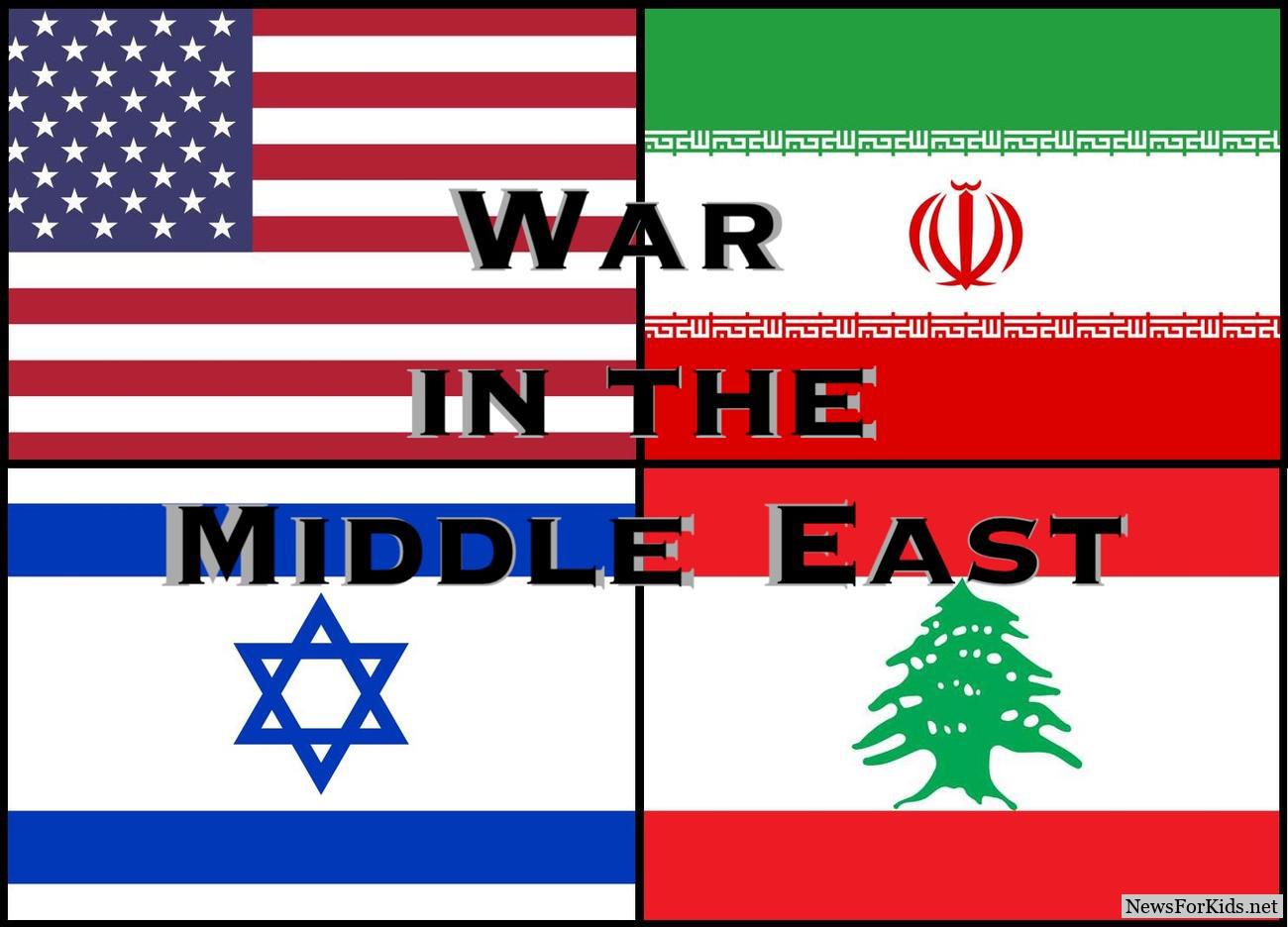
War in the Middle East
The relationship between the United States and Iran has been difficult for many decades. The two countries have often disagreed over power and resources.
In the 1950s, a major disagreement began over oil. Iran’s leader at that time wanted Iran to have full control over its own oil. The US helped remove the leader, and gave the Shah (the country’s king) full power. The Shah ruled harshly. And because the U.S. helped keep the Shah in power, many Iranians began to distrust the US.
In 1979, the people of Iran began protesting the Shah. The huge protests turned into a revolution. The Shah was forced to leave the country. A new group of leaders took over and turned Iran into a country with a religious Islamic government. Protesters took control of the US embassy in Tehran and held 52 people hostage for over a year. This created a mistrust between the two nations that still exists today.
After Iran’s government changed, tensions began rising with Israel. Iran’s new leaders thought Israel shouldn’t be a country at all. Israel was concerned that Iran wanted to destroy it. The two countries became enemies. Though Iran and Israel rarely fought directly, they used other groups in the area to carry out attacks on each other.
In the 2000s, more tension arose as Iran began working to develop nuclear technology. Iran said it was working on peaceful nuclear power. But Western countries worried that Iran was trying to build nuclear weapons. To try to stop this, Western countries placed many sanctions on Iran.
In 2015, the US and several other countries worked out a treaty with Iran. Under the deal, Iran promised not to build nuclear weapons. In return, Western countries agreed to stop many of their sanctions. This allowed Iran to trade more easily with the rest of the world.
But in 2018, U.S. President Donald Trump pulled the US out of the agreement, and began putting sanctions on Iran again. The US and Iran were involved in talks over a new nuclear treaty when the US and Israel attacked Iran on February 28, 2026.
Sunday, June 14, 2026
On Sunday, the US and Iran agreed to a ceasefire deal that could lead to the end of the war between the two countries. The document, called a “Memorandum of Understanding” (MOU) is not a final peace deal. Instead, it’s a general outline of how the two countries plan to reach a lasting peace. The MOU will be officially signed in Geneva, Switzerland on Friday.
(Source: NewsForKids.net [CC BY-SA 4.0].)
Exact details of the agreement are unclear, and both sides are describing the deal in slightly different ways. But in general, the deal is believed to:
- End the fighting between the US and Iran for at least 60 days
- Open the Strait of Hormuz, allowing gas and oil to pass through again
- Open talks on limiting Iran’s nuclear program and on lifting sanctions against Iran
Monday, June 8, 2026
Tensions in the Middle East have risen after Israel and Iran traded attacks over the last two days, despite the current ceasefires. On Monday, both sides said they were stopping their attacks, but the situation remains tense.
US President Donald Trump says the US is close to reaching a peace deal with Iran. But the exchange of attacks threatened those efforts.
Iran says it will only sign a peace deal if Israel stops attacking Hezbollah – a militant group in Lebanon supported by Iran.
On Sunday, Israel’s military attacked the city of Beirut in Lebanon, targeting Hezbollah. Iran responded by firing missiles at Israel. Iran-supported Houthi militants in Yemen also fired missiles at Israel.
😕
This image has not been loaded because of your cookie choices. To view the content, you can accept 'Non-necessary' cookies.
Tensions in the Middle East have risen after Israel and Iran traded attacks over the last two days, despite the current ceasefires. Iran says it will only sign a peace deal if Israel stops attacking Hezbollah in Lebanon. Above, smoke rises from an Israeli airstrike in Lebanon on Sunday.
To calm things down, Mr. Trump said he would ask Israeli Prime Minister Benjamin Netanyahu not to respond. Though the two men spoke, Israel did respond, sending warplanes to strike several targets in Iran, including an Iranian chemical plant.
The fighting raised concerns that large-scale fighting might break out again. Though both sides say the fighting has stopped for now, tensions remain high.
The war on Iran – along with Iran’s control of the Strait of Hormuz – have already caused huge problems around the world. Now there are concerns that the Houthis might block the Bab al-Mandab Strait, on the western side of the Arabian peninsula. That could cause fuel and other prices to shoot up even higher.
For more background and earlier reports on the situation in the Middle East, see these articles:
• Recent Attacks Leave Peace Deals Uncertain
• Do the US & Iran Have a Peace Deal?
• US-China, US-Iran, & an Ebola Outbreak
• US-Iran Talks, Washington Attack, & a Royal Visit
• Talks Uncertain in Final Days of US-Iran Ceasefire
• US-Iran Ceasefire & Hungary’s Election
• Iran War After 5 Weeks: Threats & Peace Efforts
• Iran War Hits One Month & Cuba Gets Oil
• Iran War Enters Its Fourth Week
• War on Iran Drags On, Costs Grow
• 10 Days On, Effects of Iran War Spread
• Fighting Breaks Out in Middle East as US & Israel Attack Iran
• Four Years of War in Ukraine & US-Iran Tensions
• US & Iran Exchange Attacks, Ceasefire Announced
• Israel Attacks Iran: Tensions Rise as Fighting Grows