
Strong storms and heavy rains have caused terrible flooding in several countries in southern Asia, including Indonesia, Sri Lanka, and Thailand. In all, over 1,100 people have died, and millions have been forced to leave their homes.
Indonesia and Sri Lanka have been hit especially hard. Over 600 people have been killed in Indonesia, and more than 350 have died in Sri Lanka. Hundreds more are missing in each country. Severe flooding has also hit Thailand, where at least 175 people have died.
The flooding has been caused by unusually heavy rains. At this time of year, many countries in southern Asia expect to have heavy rains. But recent rains have been much stronger than normal.
😕
This image has not been loaded because of your cookie choices. To view the content, you can accept 'Non-necessary' cookies.
Strong storms and heavy rains have caused terrible flooding in several countries in southern Asia, including Indonesia, Sri Lanka, and Thailand. Over 1,100 people have died, and millions have been forced to leave their homes. Above, people in Hat Yai, Thailand take shelter at a local gym on Friday.
In the last week, two different cyclones hit the region, bringing complicated weather patterns. Cyclone Senyar hit Indonesia and Thailand, before weakening and moving on to Malaysia. Sri Lanka was hit by Cyclone Ditwah, which has now weakened and moved on to southern India.
Cyclone Senyar
Indonesia and Thailand were both heavily affected by Cyclone Senyar. The intense rainfall in Indonesia triggered massive flooding and landslides. Indonesia’s government says around 570,000 people have been forced from their homes.
The island of Sumatra was hit the hardest. The flooding knocked out roads and bridges, making it hard for rescue workers to get to people who need help. Instead, helicopters are being used to rescue people and to bring supplies to those who need them.
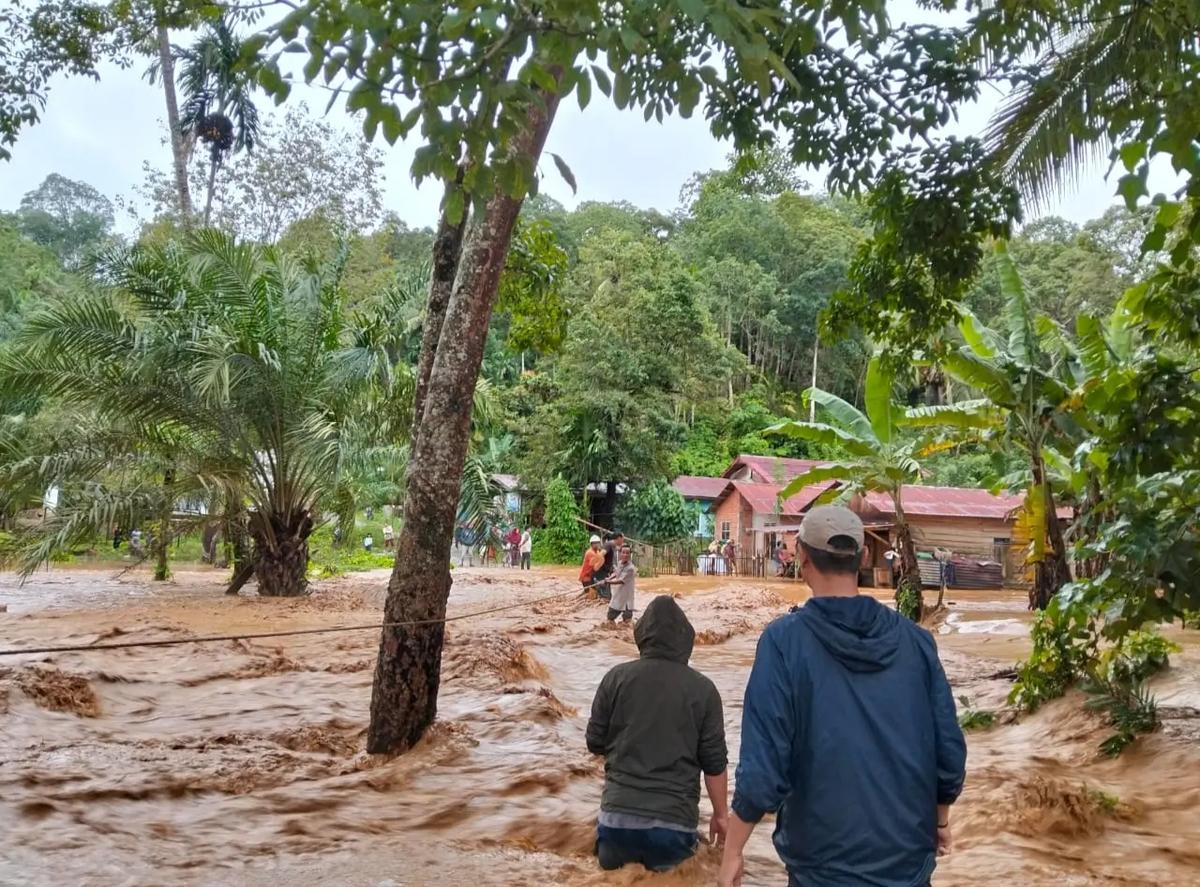
(Source: Indonesia – BNPB [Public Domain], via Wikimedia Commons.)
In Thailand, over 2 million people have been forced from their homes by the flooding. In some areas, people were forced to climb onto their roofs to stay safe. Boats and helicopters were used to deliver supplies and to rescue people who were trapped.
Cyclone Ditwah
Cyclone Ditwah pounded Sri Lanka, causing floods and mudslides, and destroying over 25,000 homes. Around 147,000 people are now living in temporary shelters set up by the government. The country’s president described it as the “most challenging natural disaster in our history.”
😕
This image has not been loaded because of your cookie choices. To view the content, you can accept 'Non-necessary' cookies.
Cyclone Ditwah pounded Sri Lanka, causing floods and mudslides, and destroying over 25,000 homes. The country’s president described it as the “most challenging natural disaster in our history.” Above, a Sri Lankan Army boat carries people on a flooded street near Colombo on Sunday.
Around a third of the country has no power and no running water. In many places, communication is difficult because there is no phone service. The government is working to bring things back to normal.
Intense Rains, Fast Flooding
In many of the affected areas across southern Asia, people were surprised by the massive amount of rain that fell. The city of Hat Yai in Thailand got 13.2 inches (33.5 centimeters) of rain in a single day. That hasn’t happened in 300 years.
😕
This image has not been loaded because of your cookie choices. To view the content, you can accept 'Non-necessary' cookies.
Many people were surprised by the massive amount of rain that fell. The city of Hat Yai in Thailand got 13.2 inches (33.5 centimeters) of rain in a single day. That hasn’t happened in 300 years. Above, a view of Hat Yai taken from the air last Wednesday.
In many places, people were also shocked by how quickly the flood waters rose. A driver in Sri Lanka told CNN that he expected a few feet of water. But less than an hour later, his two-story house was underwater.
Scientists say the heavy rains are being driven, in part, by a weather pattern called “La Niña”. In La Niña years, heavy winds blow warm water on the surface of the Pacific Ocean toward Asia. These conditions can lead to heavier rains and more powerful cyclones. Scientists say climate change could also be making the storms stronger.