
Antarctica —(Map)
Scientists have been tracking the huge iceberg A23a for years. What was once the world’s largest iceberg is rapidly shrinking in size, and is covered with blue water from melting ice. After 40 years, the massive iceberg is breaking up and is soon expected to disappear completely.
Antarctica is covered with a thick layer of ice and snow. As snow falls, it piles up in the center of Antarctica in a layer of ice. Over time, the ice and snow become slowly moving rivers of ice called glaciers, which push out toward the sea.
Glaciers slowly push beyond the edge of the land, creating massive “ice shelves” floating on the water below. From time to time, the edges of these ice shelves break off. This is a natural process, called “calving”.
😕
This image has not been loaded because of your cookie choices. To view the content, you can accept 'Non-necessary' cookies.
A23a broke from an Antarctic ice shelf in 1986. After 40 years, the massive iceberg is now breaking up and is soon expected to disappear completely. Above, a view of A23a from November, 2024, when it was still the world’s largest iceberg.
A23a calved in 1986. When it broke off of the Filchner Ice Shelf in Antarctica, it was massive – about 1,544 square miles (4,000 square kilometers) in size. That’s roughly twice the size of the US state of Rhode Island.
For decades, scientists have been using satellites to track the iceberg from space. A23a remained in the Weddell Sea for over 30 years, stuck in shallow water. But in 2020, it broke free again and began to head north, carried by ocean currents.
As A23a has traveled into warmer waters, it’s been slowly breaking into smaller pieces. Even so, just a year ago, it remained the world’s largest iceberg. But by this January, it had shrunk to 456 square miles (1,182 square kilometers). That’s about a third of its original size, but A23a was still larger than New York City.
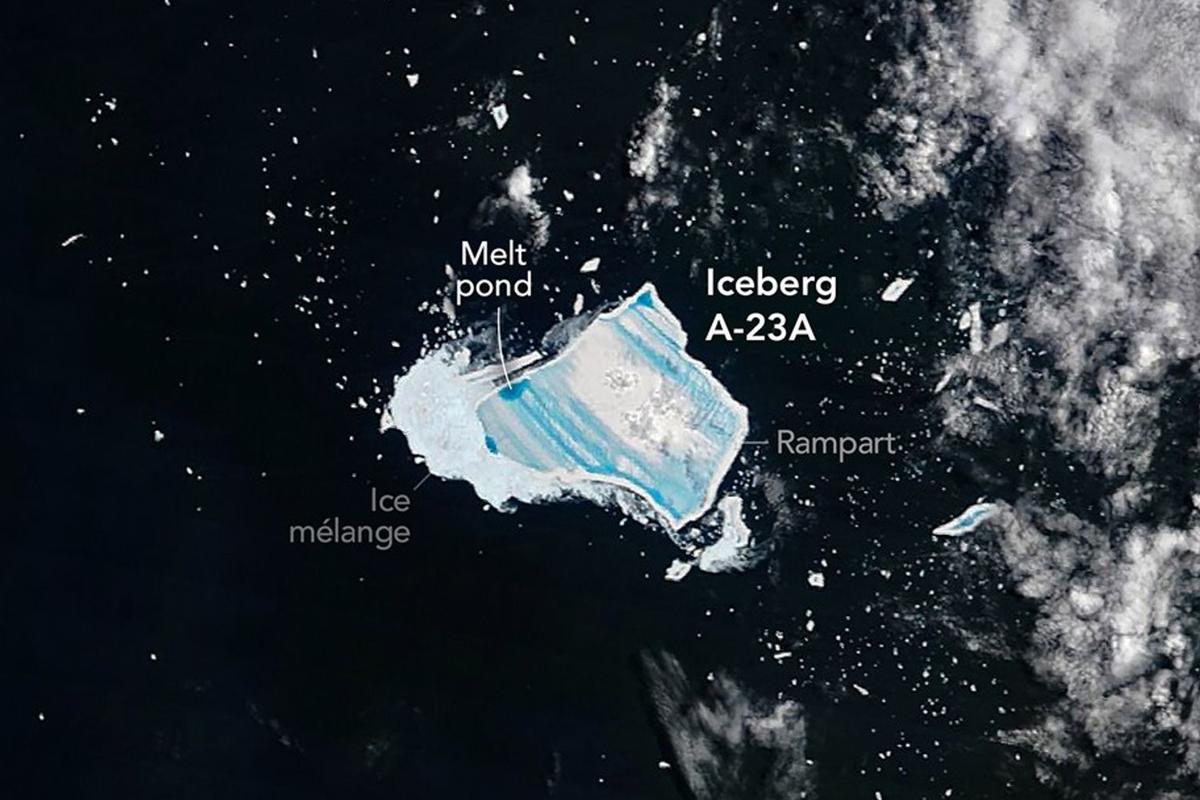
(Source: Michala Garrison [Public Domain] NASA’s Earth Observatory.)
But now the iceberg is covered in pools of water from the melted ice, turning it a deep blue. This is a sign that the iceberg’s final days are near.
Recent images of the iceberg show its flat surface striped with blue streaks. Scientists believe these grooves reveal how the ice was raked across rocks in Antarctica centuries ago, when it was part of a glacier.
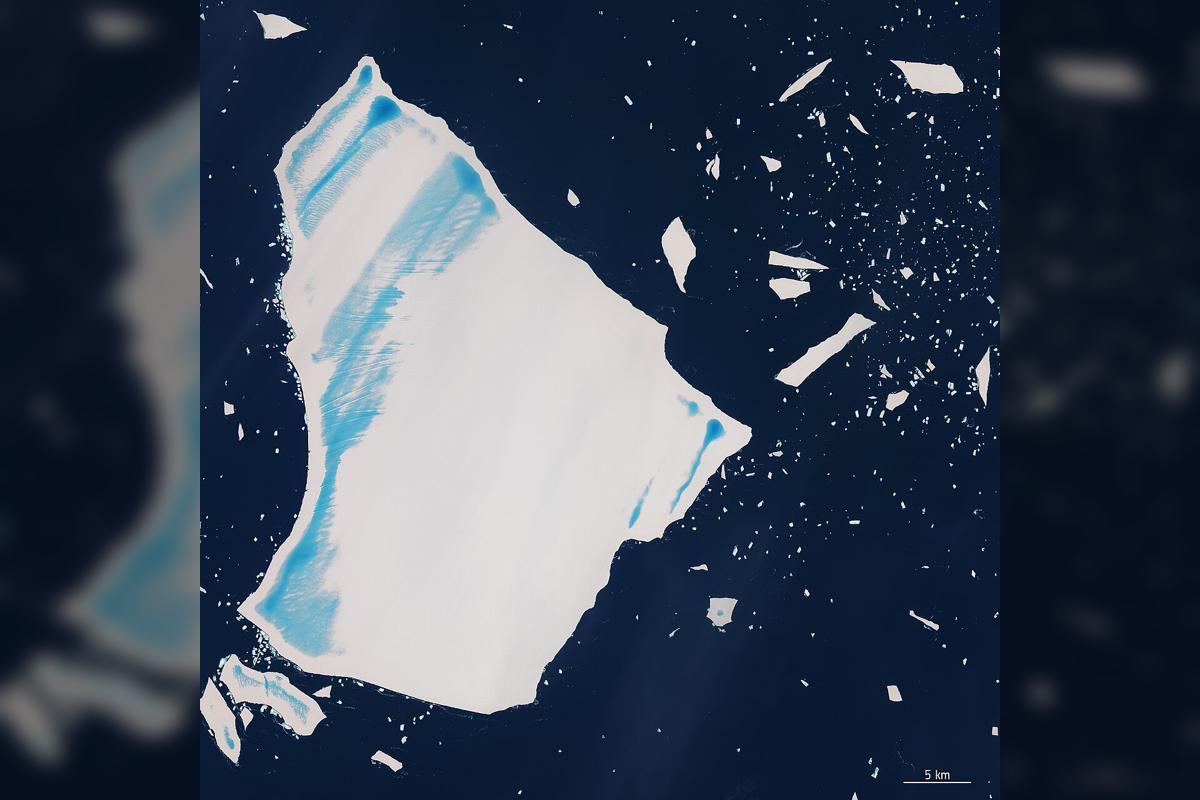
(Source: ESA [CC BY-SA 3.0 IGO], via Wikimedia Commons.)
Now, the weight of the water from the melting ice is causing cracks in the iceberg to open up wider. Researchers also noticed a “blowout” in the side of the iceberg. This has allowed more water to pour into the sea below, carrying with it many smaller pieces of ice that have broken off.
Based on the satellite images from December, scientists said they expected the cracks to cause the iceberg to break apart soon. The scientists said A23a was probably just days or weeks away from breaking apart completely.
And it looks like the researchers were correct. Satellite images from January 13 and January 21 show huge chunks of the iceberg splitting off and floating away.
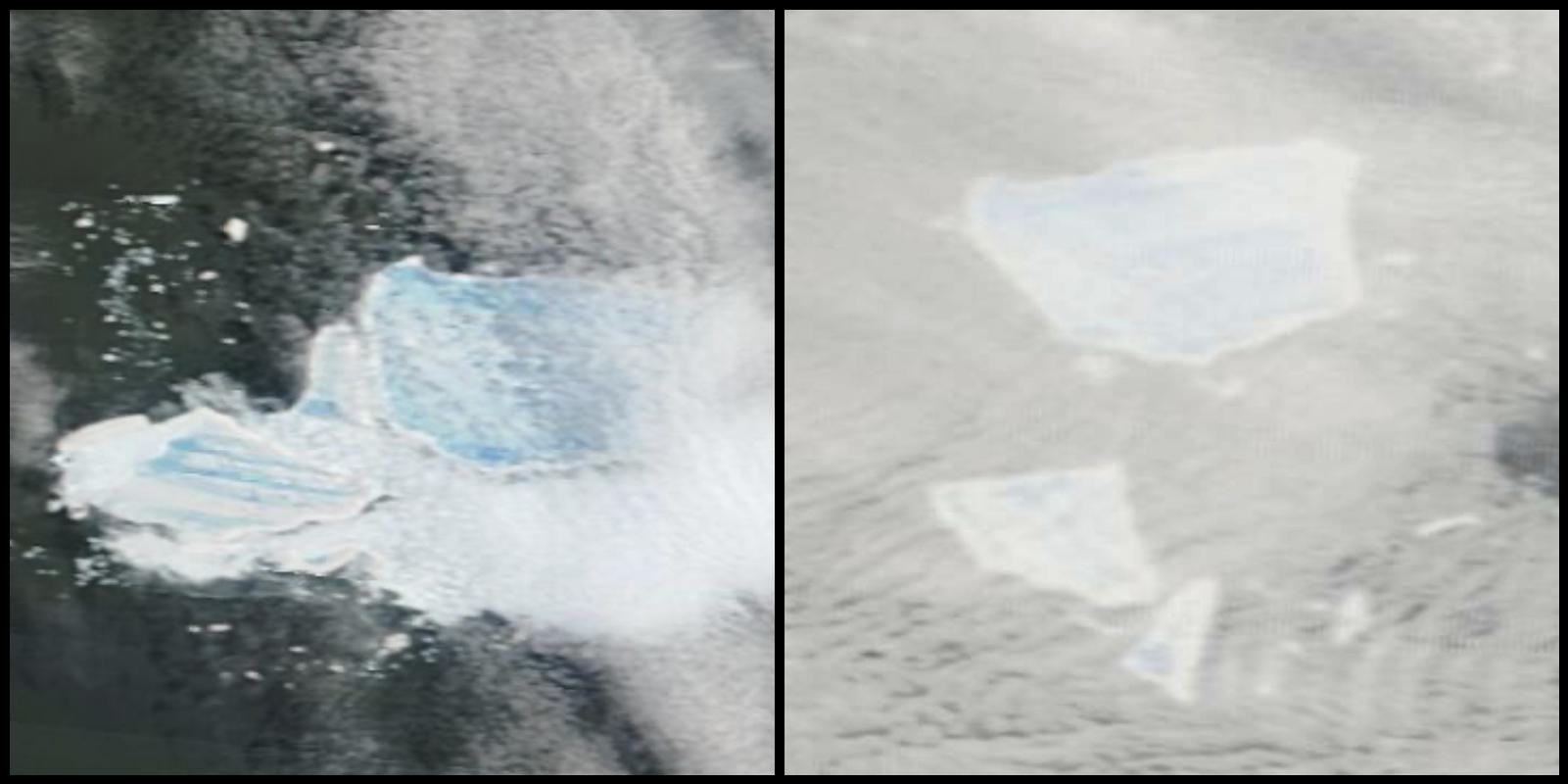
(Source: ESDIS [Public Domain], NASA Worldview.)
The area where A23a is now is considered a “graveyard” for icebergs. That’s because the warmer air and water temperatures there cause icebergs to melt more quickly.
Scientists are thankful that they’ve had the opportunity to study A23a for decades. The iceberg’s long and winding journey has taught scientists a lot about how these massive icebergs behave.
Did You Know…?
As A23a disappears, several other giant icebergs are still resting against Antarctica’s shores. Scientists expect that, in time, these icebergs will also break free and follow a similar path.
😕
This map has not been loaded because of your cookie choices. To view the content, you can accept 'Non-necessary' cookies.