
A massive winter storm has hit the US, bringing record-breaking low temperatures and huge amounts of snow and ice. The deadly storm left hundreds of thousands of people without power, and made travel nearly impossible in many areas. The storm’s effects are being felt from the South all the way to the Northeast.
This storm was unusual because it hit over such a large area. The affected region is up to 2,000 miles (3,200 kilometers) across, and runs from the US-Mexico border all the way into Canada.
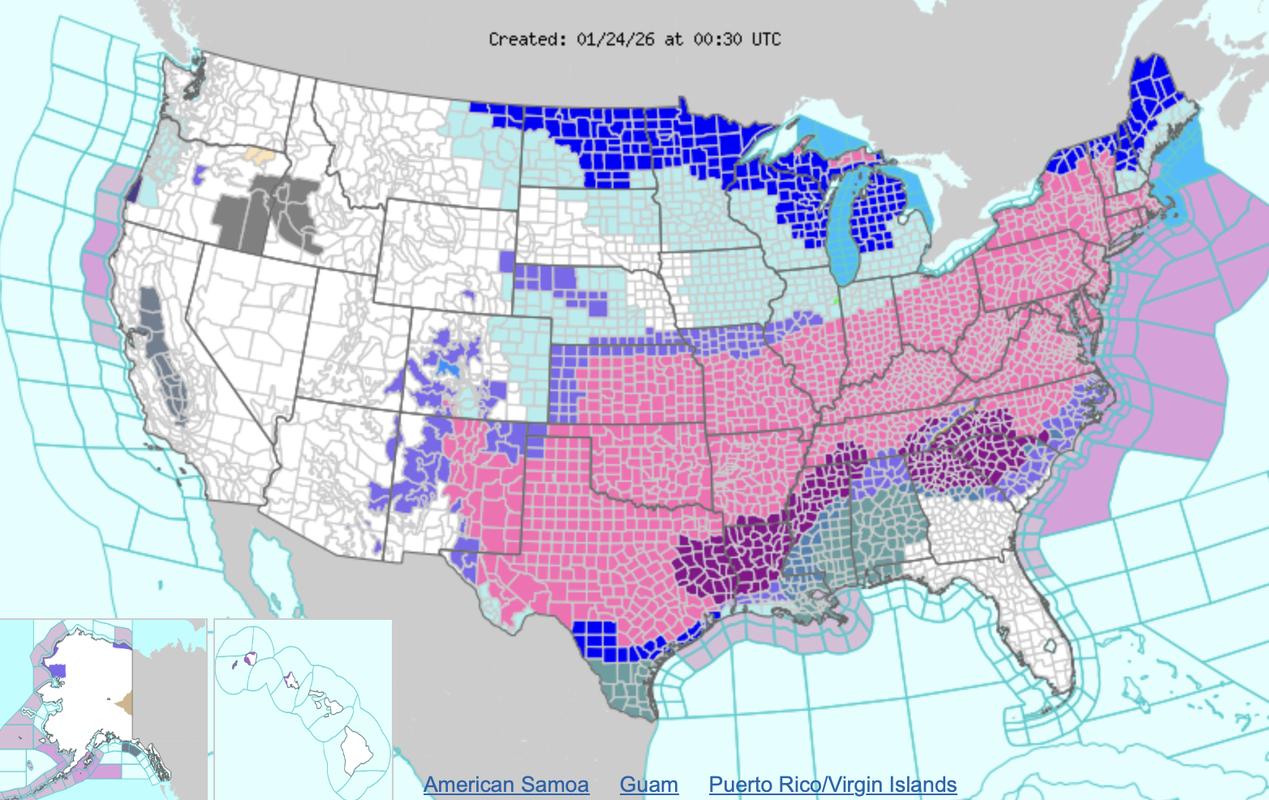
(Source: National Weather Service [Public Domain], via Wikimedia Commons.)
Governors in 24 states declared an emergency. The US government approved disaster declarations for at least a dozen states, and said it planned to support these states with supplies and rescue teams.
At least 19 states got over a foot (30 centimeters) of snow. In many areas, including Colorado, Massachusetts, New Mexico, and Pennsylvania, the snow has been even deeper.
In the southern US, where snowfall is less common, the storm has caused even more problems. Kentucky, Louisiana, Mississippi, and Tennessee have been hit hard.

(Source: Ktkvtsh [CC BY-SA 4.0], via Wikimedia Commons.)
The heavy snow and ice have damaged trees and caused power lines to go down. Hundreds of thousands of homes were left without electricity. Many of these were in the South. In some places, the weight of the ice continues to bring down more trees, sometimes taking out power again soon after it has been restored.
The icy conditions have made roads dangerous. This has led to accidents, and has caused many cities to encourage people to stay off of the roads.
By Sunday, the storm had moved to the East Coast, where it dumped heavy snow through the day and night, and into Monday.
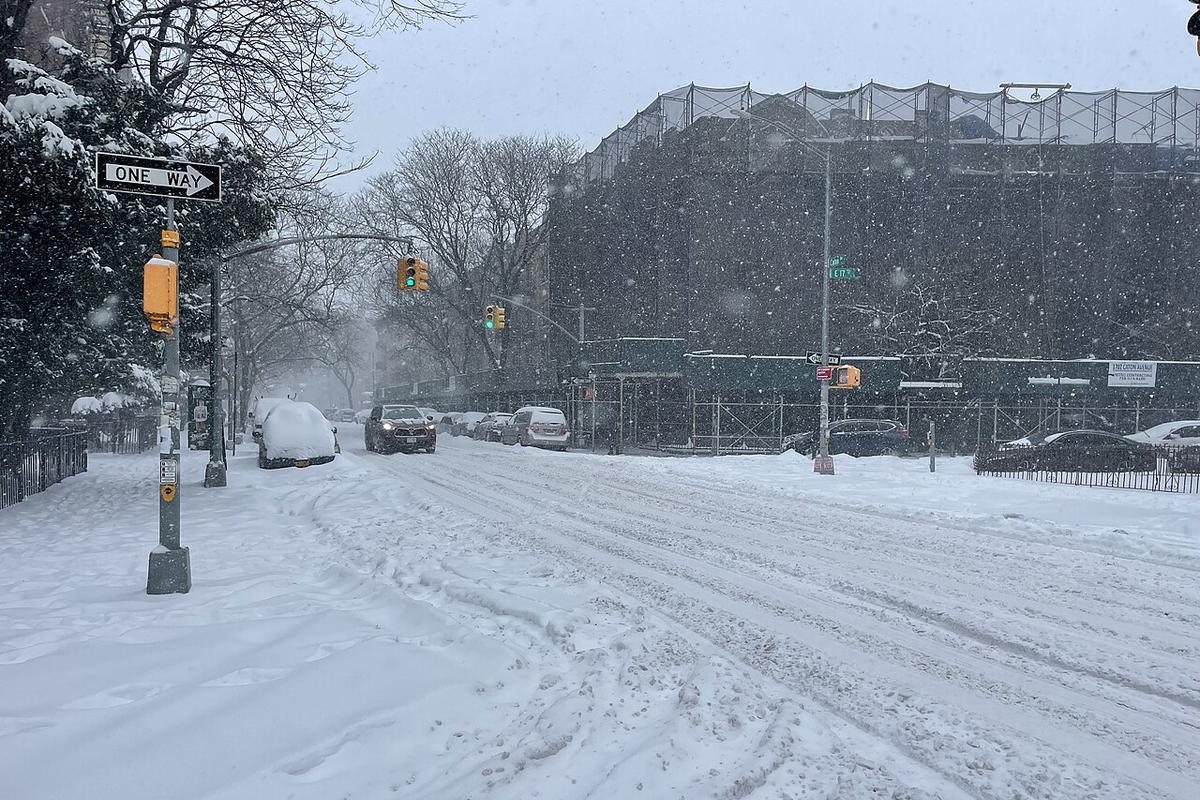
(Source: Wil540 art [CC BY-SA 4.0], via Wikimedia Commons.)
The storm continued on up into Eastern Canada, where it also set records. Toronto’s airport set a record for the most snow to fall there in one day, while the city center recorded even more snow – 22 inches (56 centimeters).
In many places across the US and Canada, universities, libraries, museums, some businesses, and many public services were closed on Monday. Many areas canceled school or switched to remote learning. Some areas have canceled classes for Tuesday, as well.
The extreme weather made air travel very difficult. Over 16,000 flights were canceled between Saturday and Monday. On Sunday alone, nearly 12,000 flights were canceled, and close to 20,000 flights were delayed. Many airports on the East Coast were affected.
😕
This image has not been loaded because of your cookie choices. To view the content, you can accept 'Non-necessary' cookies.
The extreme weather made air travel difficult. Over 16,000 flights were canceled between Saturday and Monday. On Sunday, nearly 12,000 flights were canceled, and close to 20,000 flights were delayed. Above, workers clear snow at LaGuardia Airport in New York on Sunday.
The National Weather Service has warned that the storm’s effects could last for days. Arctic air has pushed far to the south, bringing temperatures that feel as cold as -30°F (-34°C) or even colder. In one village in upper New York state, temperatures dropped to a record low of -49°F (-45°C).
In many places, the weather is expected to remain very cold for several days. Those without electricity and homeless people are especially at risk from the extreme cold. Local governments across the US and Canada have opened special warming centers to help people stay warm.