
Kennedy Space Center, Florida —(Map)
NASA is preparing for a historic space launch that could take astronauts around the moon for the first time since 1972. The flight, called Artemis II, is a key step in NASA’s plan to return to the moon. The launch is scheduled for 6:24 p.m. tonight, New York time.
The Artemis program is NASA’s effort to land people on the moon again. The program is named after Artemis, the Greek goddess of the moon, and sister of Apollo. NASA’s last moon mission, Apollo 17, took place in 1972. Since then, no humans have been to the moon.
The Artemis II mission will be the first time astronauts have been launched into space on NASA’s powerful new Space Launch System (SLS) rocket. The rocket, which is over 322 feet (100 meters) tall, will carry an Orion spacecraft with four astronauts on board.
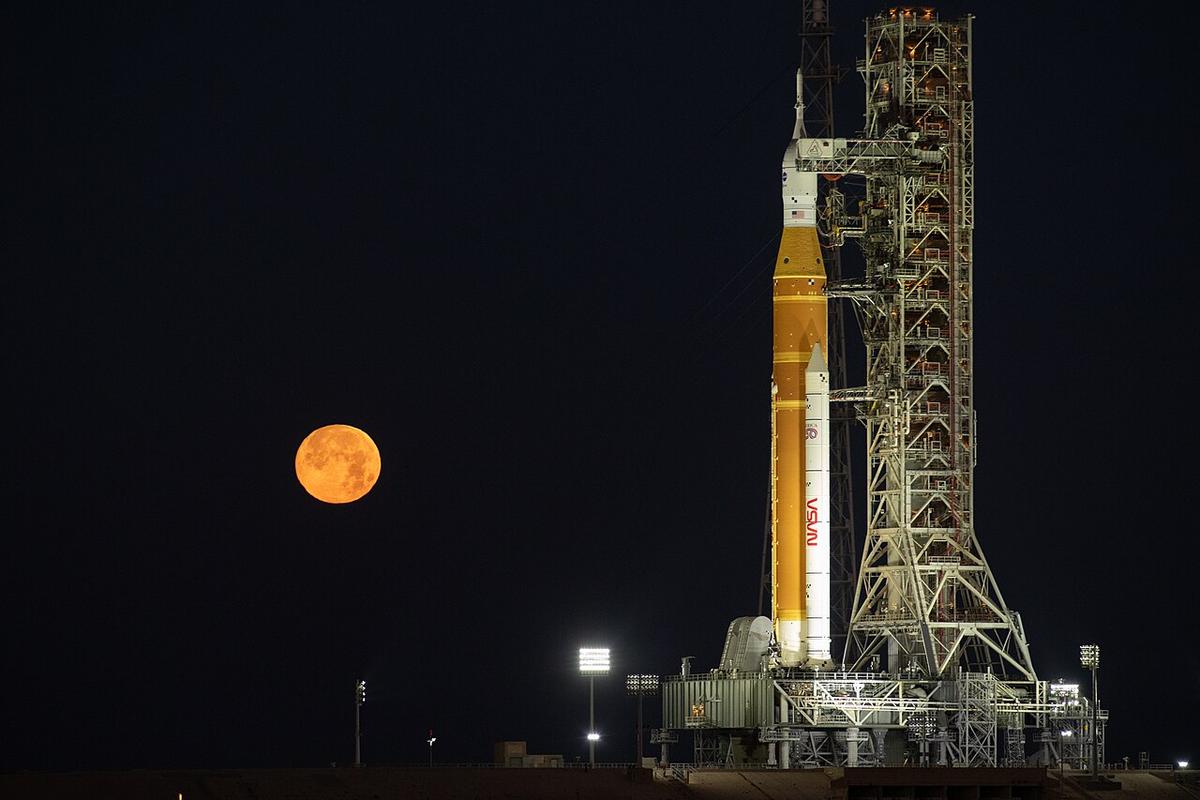
(Source: NASA/Ben Smegelsky [Public Domain], via Wikimedia Commons.)
Earlier Artemis missions were designed for testing equipment and safety, and took place without any astronauts on board.
The four astronauts taking part in the Artemis II mission are NASA’s Reid Wiseman, Christina Koch, and Victor Glover, along with the Canadian Space Agency’s Jeremy Hansen. If the mission goes as planned, it will be the first time a woman (Ms. Koch), a person of color (Mr. Glover), and a non-American (Mr. Hanson) have gone around the moon.
The SLS rocket is designed to boost the Orion capsule into orbit around the Earth. This will allow the astronauts to test important spacecraft systems, like those for life support, communication, and controlling the spacecraft.
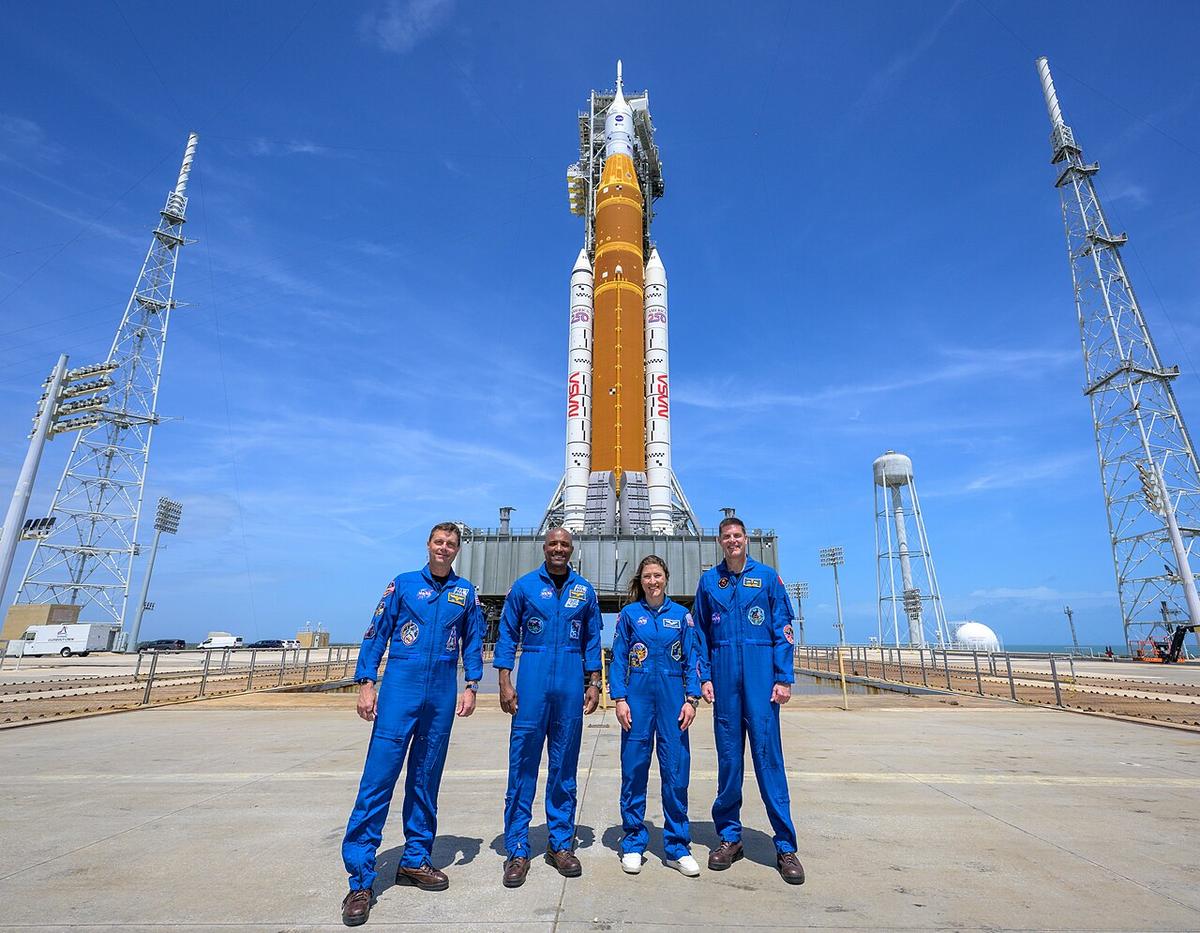
(Source: NASA/Bill Ingalls [Public Domain], via Wikimedia Commons.)
If all systems are working well, the astronauts will use Orion’s “thrusters” to send it on a curving trip that will loop around the moon. The path that the spacecraft will take around the Earth and Moon will look a little bit like the number “8”.
The mission will take about 10 days, and the trip will cover over 230,000 miles (370,000 kilometers). At the farthest, Orion is expected to travel 4,700 miles (7,600 kilometers) beyond the moon. That’s farther from Earth than any astronauts have traveled before. For a short period, as it passes behind the moon, Orion will be out of contact with NASA.
The Artemis II mission is designed to test out the spacecraft and its systems. If the mission is successful, it will pave the way for future missions which will land on the moon, possibly as early as 2028.
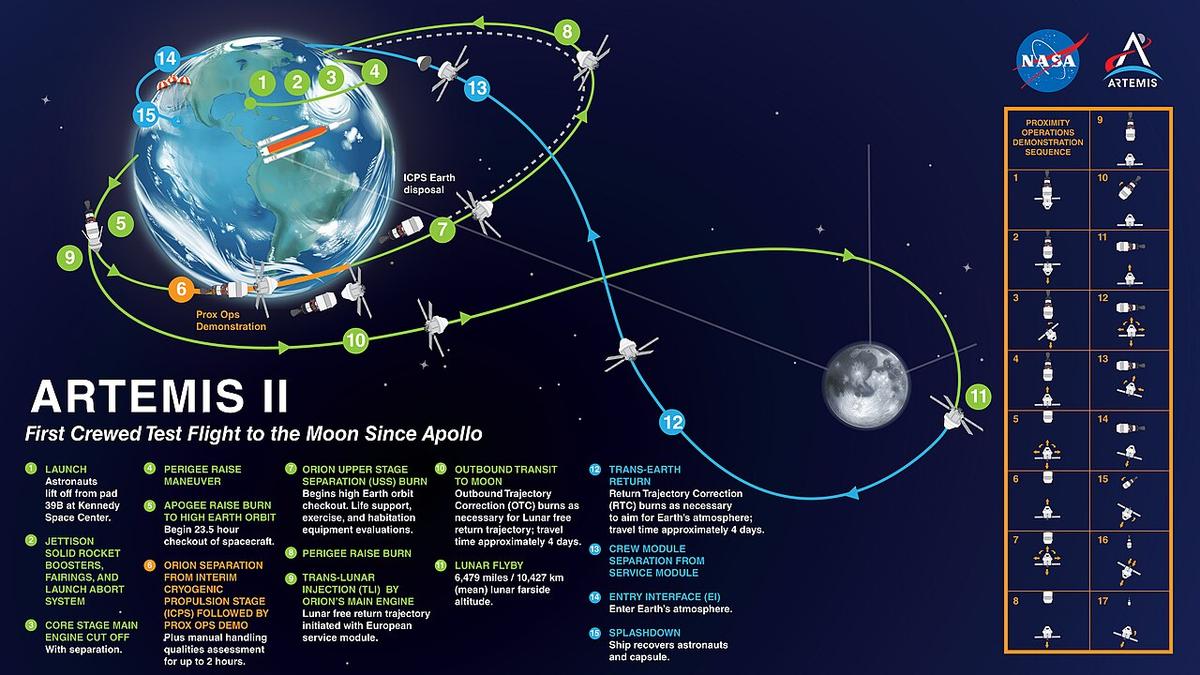
(Source: NASA [Public Domain], via Wikimedia Commons.)
NASA has been working on its Artemis program for many years, and has spent around $93 billion on it. The program is important to NASA, and the US government has been pushing for it to move quickly. But many of the systems needed for future missions are still being developed.
Recently, under NASA’s new leader, Jared Isaacman, NASA’s plans for the moon have changed, and become simpler. Now, instead of a space station orbiting the moon, NASA plans to build a base on the surface of the moon.
Some people see the Artemis program as an important effort to challenge China, which is also planning to send astronauts to the moon.
Did You Know…?
If you’d like to watch the launch, NASA will have a live stream of the event here. Later, you should be able to track the progress of the mission here.
😕
This map has not been loaded because of your cookie choices. To view the content, you can accept 'Non-necessary' cookies.