
Islamabad, Pakistan —(Map)
The conflict between the United States, Israel, and Iran has reached a difficult moment. There is currently a ceasefire, but it ends on Wednesday. The struggle between the countries continues, with each side accusing the other of breaking the ceasefire. The US and Iran may meet in Pakistan on Tuesday for talks.
After nearly six weeks of intense fighting, a two-week ceasefire was reached between the US and Iran on April 8. Diplomats from Pakistan were behind the efforts that led to the ceasefire. The attacks did stop. But both sides complained that some of the ceasefire’s conditions were not being met.
😕
This image has not been loaded because of your cookie choices. To view the content, you can accept 'Non-necessary' cookies.
Iran’s greatest strength in the war has been that it controls the Strait of Hormuz. Roughly 20% of the world’s oil and gas pass through this important waterway. Iran has closed the strait to most Western countries, which has driven up fuel prices worldwide.
Strait of Hormuz
Iran’s greatest strength in the war has been that it controls the Strait of Hormuz. Roughly 20% of the world’s oil and gas pass through this important waterway. Iran has closed the strait to most Western countries, which has driven up fuel prices and caused serious problems worldwide.
The US complained that Iran did not quickly open up the Strait of Hormuz for all ships to pass through. Iran complained that the ceasefire was meant to include Israel’s attacks on Lebanon, but Israel continued its deadly attacks. Israel’s government said the ceasefire didn’t include its war against the militant group Hezbollah in Lebanon.
On April 11 and 12, the US and Iran held peace talks in Islamabad, Pakistan. The countries were able to agree in some areas, but the talks ended with no deals. The two sides couldn’t reach agreements on limiting Iran’s nuclear efforts and on how the Strait of Hormuz would be handled.
😕
This image has not been loaded because of your cookie choices. To view the content, you can accept 'Non-necessary' cookies.
On April 11 and 12, the US and Iran held peace talks in Islamabad, Pakistan. The two sides couldn’t reach agreements on limiting Iran’s nuclear efforts and on how the Strait of Hormuz would be handled. Above, a meeting room at the hotel where the peace talks were held.
After the peace talks failed, the US began a blockade of Iranian ports, using its navy to stop ships going to or coming from Iran. A blockade is considered an act of war. The US wanted to put pressure on Iran by preventing it from selling oil to other countries.
Despite the blockade, there were positive changes. On April 16, Israel and Lebanon agreed to a ceasefire. The next day, Iran announced that it was opening the Strait of Hormuz to all ships.
But this didn’t last long. After US President Donald Trump refused to lift the blockade, Iran closed the Strait of Hormuz again. It even fired on two ships that were trying to get through.
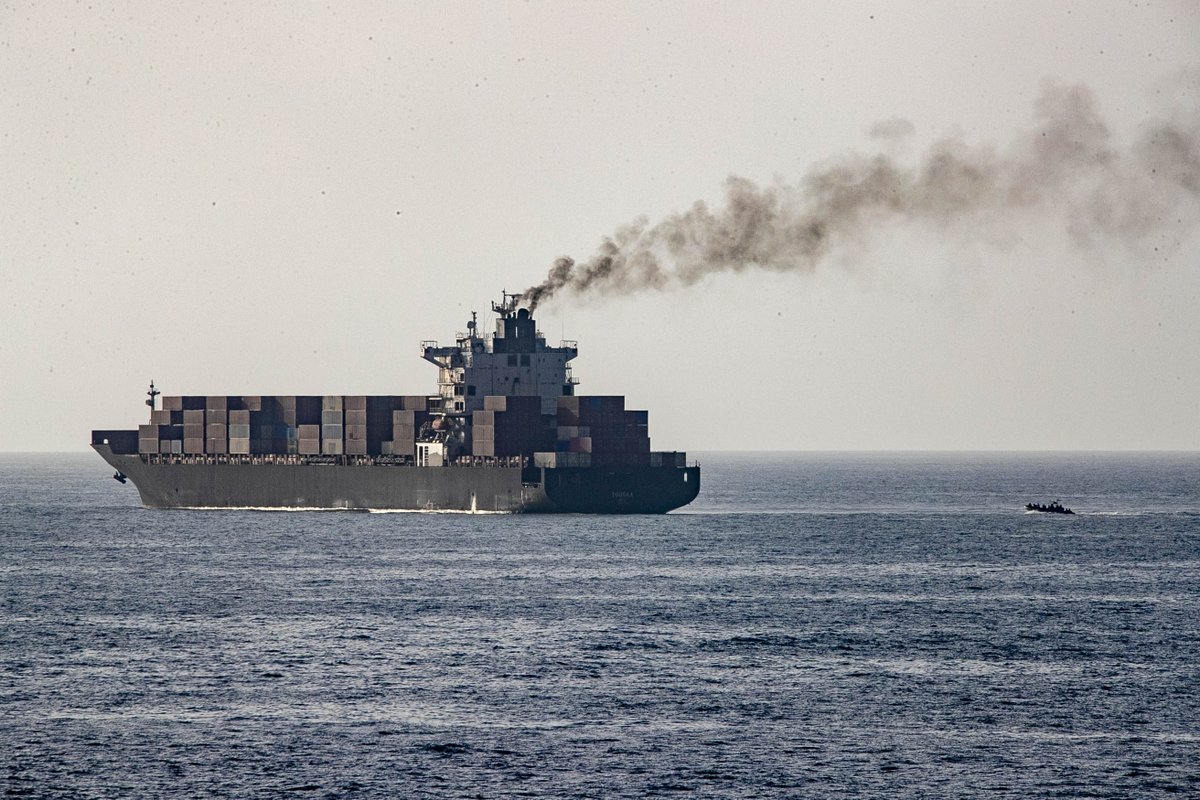
(Source: US Central Command, viaX.)
The tension grew even more on Sunday after the US Navy fired on an Iranian ship that was trying to get past its blockade. Members of the US military then took control of the ship. Iran called this action “piracy” and promised to strike back.
In spite of the tensions, Pakistan has been encouraging both sides to meet again for talks. The hope is that the two sides can reach a deal before the ceasefire ends. On Sunday, Mr. Trump again threatened that if no deal was reached, the US would destroy all of Iran’s bridges and power plants.
😕
This image has not been loaded because of your cookie choices. To view the content, you can accept 'Non-necessary' cookies.
Pakistan has encouraged both sides to meet again for talks, hoping to reach a deal before the ceasefire ends. The talks were expected to happen on Tuesday in Islamabad, Pakistan, but it’s not clear if Iran will take part. Above, banners promoting the talks are seen in Islamabad on Saturday.
The talks were expected to happen on Tuesday in Islamabad, Pakistan. The US says Vice President JD Vance and a team plan to go to Islamabad. But Iran has suggested that it might not take part in the talks. Some of Iran’s diplomats say they won’t hold talks while they’re being threatened.
There is serious pressure on both sides. The two-week ceasefire is expected to end on Wednesday.
Update: Trump Extends Ceasefire Agreement
No talks were held in Pakistan on Tuesday, since Iran said it would not participate. Despite this, US President Donald Trump extended the ceasefire agreement with Iran. He announced this hours before the two-week ceasefire was set to end. Mr. Trump didn’t set a new end date, but said the ceasefire would continue until talks with Iran are finished, “one way or the other.”
😕
This map has not been loaded because of your cookie choices. To view the content, you can accept 'Non-necessary' cookies.