
Loughborough, Leicestershire, England —(Map)
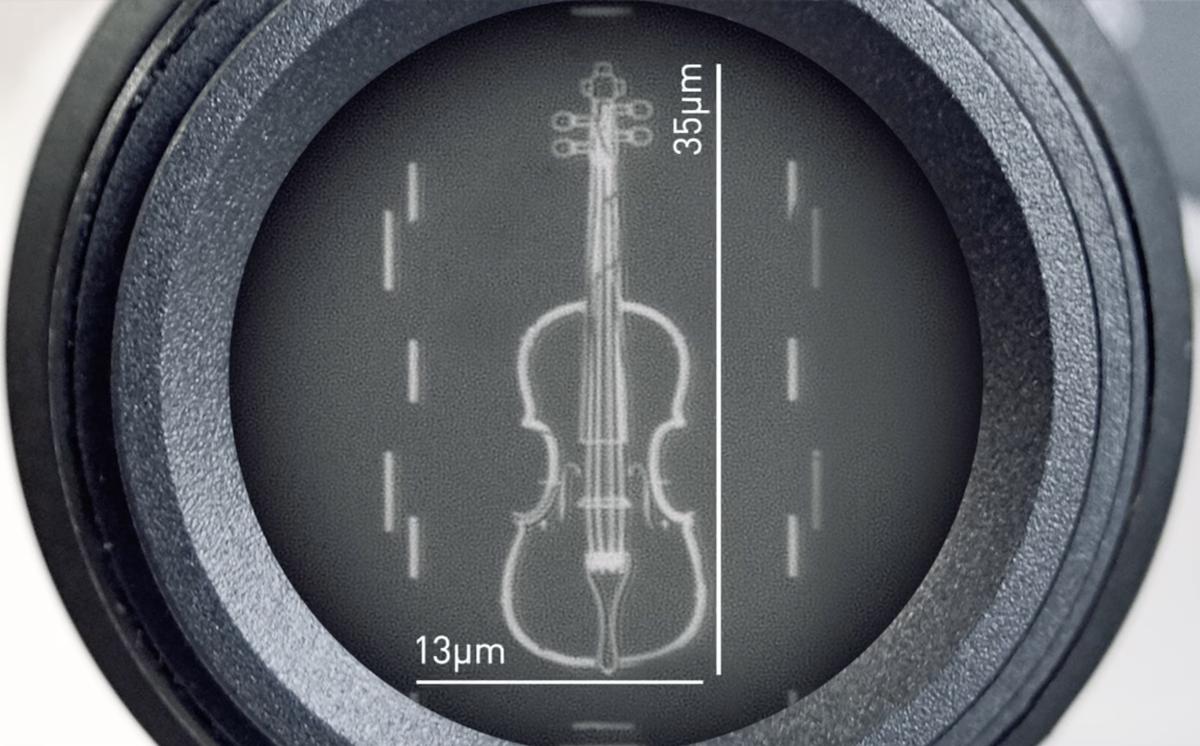
Scientists at Loughborough University in the United Kingdom have created what they call “the world’s smallest violin”. The violin is made of metal and is so tiny that it can only be seen with a powerful microscope. The project was designed to test new technology for building extremely small things.
Usually, when people talk about “the world’s smallest violin”, they’re joking about someone who’s feeling sorry for themselves. But in this case, the researchers wanted to use a new kind of nanotechnology to test the limits of how small a violin could actually be created.
Nanotechnology
Nanotechnology, or nanotech, is a scientific area that deals with making or changing things that are incredibly tiny. We’re used to measuring things using sizes like a meter (a little more than a yard). But nanotech is measured in nanometers – one billionth of a meter (0.000000001 meter). That’s extremely tiny.
(Source: Screenshot, Loughborough University .)
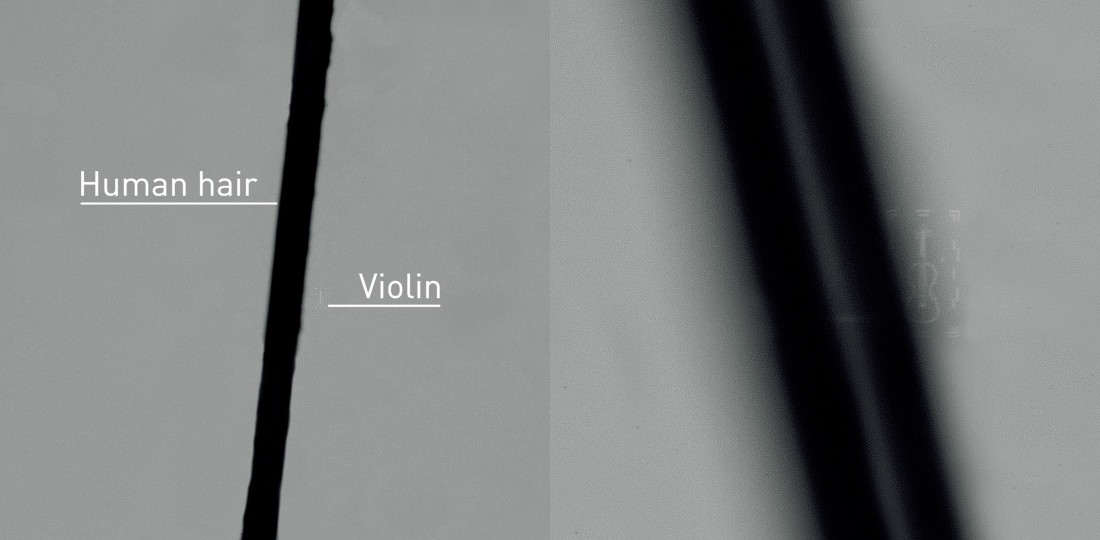
The tiny violin, made of a metal called platinum, measures just 35 microns long and 13 microns wide. A micron is one millionth of a meter. This means that the violin is even thinner than a human hair.
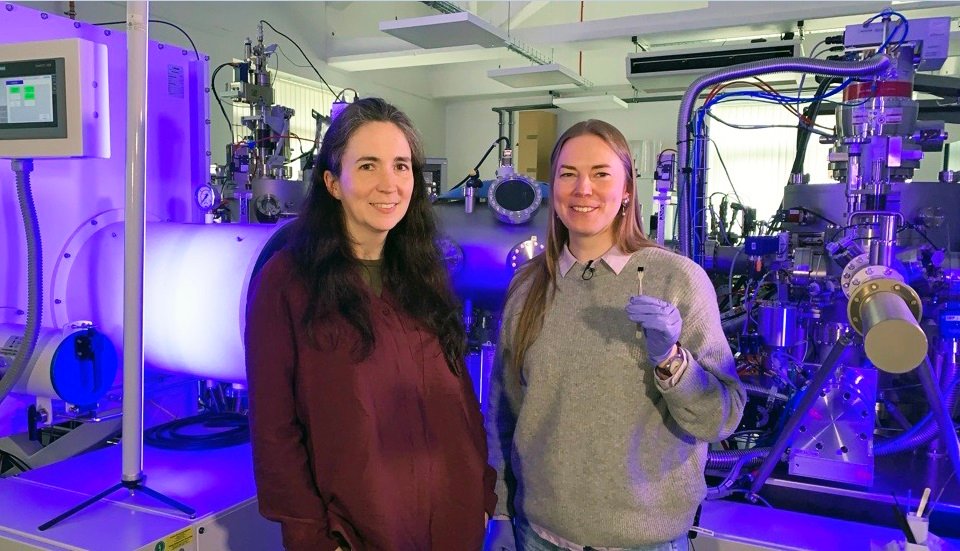
The “nano-violin” wasn’t designed to be played. So what was the point? Physics professor Kelly Morrison, who led the project, says that “creating the world’s smallest violin may seem like fun and games,” but the work they did in the process is actually very important for their research.
(Source: Loughborough University .)
In recent decades, computers and other technology have become faster as the parts inside of devices have become smaller. Building and studying extremely small things will help the scientists develop and test new ideas and materials for making things even smaller.
The team at Loughborough University is working with a new system that allows them to build extremely tiny things through “nanolithography”. If you’ve ever used a stencil, you’re familiar with the basic process. Say you cut a violin-shaped hole in a piece of paper. That’s a stencil. When you scribble over the paper, the only part that gets filled in is where the violin-shaped hole is.
Nanolithography is more complicated, of course, but it follows a similar pattern. To make the tiny violin, the researchers first covered a small chip with a special gel. That was like the paper.

(Source: Loughborough University .)
Creating the hole was a two-step process. The first involved a special machine called a NanoFrazor. This special machine has a super-tiny needle that can be heated up. The scientists used the heated needle to “draw” the violin on the chip. The heat burns the gel on the chip where the needle touches. The second step was washing the burned part away, leaving a tiny violin-shaped hole in the gel.
Next, the scientists covered the chip with a thin layer of platinum. This filled the violin-shaped hole. Finally, they washed the chip again, this time removing the rest of the gel, and leaving behind the tiny metal violin.
(Source: Loughborough University .)
The whole process of making the violin took about three hours. But it took the researchers several months to develop the methods they used to create it.
Now that they’ve made the nano-violin, the researchers plan to use their system to study more serious things. For example, they’re looking at new ways to store information, and how to use heat to make computers work faster and use less energy.
😕
This map has not been loaded because of your cookie choices. To view the content, you can accept 'Non-necessary' cookies.