
San Francisco, California —(Map)
Scott Shaffer is a biologist who studies birds. In 2018, he was studying data from a tracking device he had placed on a gull. He was surprised to find that the bird had gone for an 80-mile (129-kilometer) ride on a truck carrying food scraps. And the bird had done it twice in just one week.
Gulls & “Seagulls”
Western Gulls are one of the kinds of birds that Dr. Shaffer studies. Such birds are often called “seagulls”. But it’s more accurate to call them “gulls” since they don’t all live near the sea.
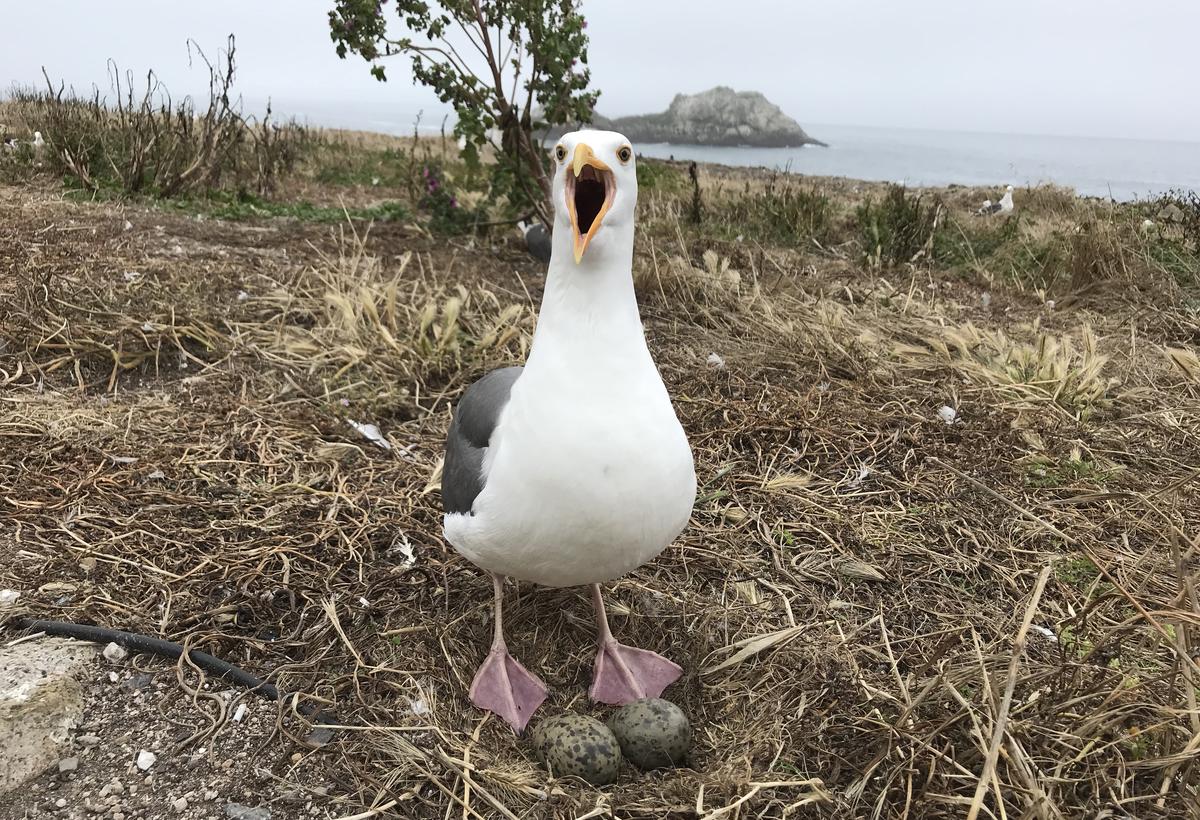
(Source: Scott Shaffer.)
On the ocean, gulls often eat near whales, feasting off the small sea creatures the whales bring to the surface. But when there’s not much food at sea, they spend more time looking for food on land. The clever birds are famous at beaches for eating almost anything – whether they’ve been invited or not.
The food is important, since flying is hard work. Research has shown that gulls will take short rides on boats to save energy. But until recently, there wasn’t much to suggest that gulls also catch rides on land.
(Source: Scott Shaffer.)
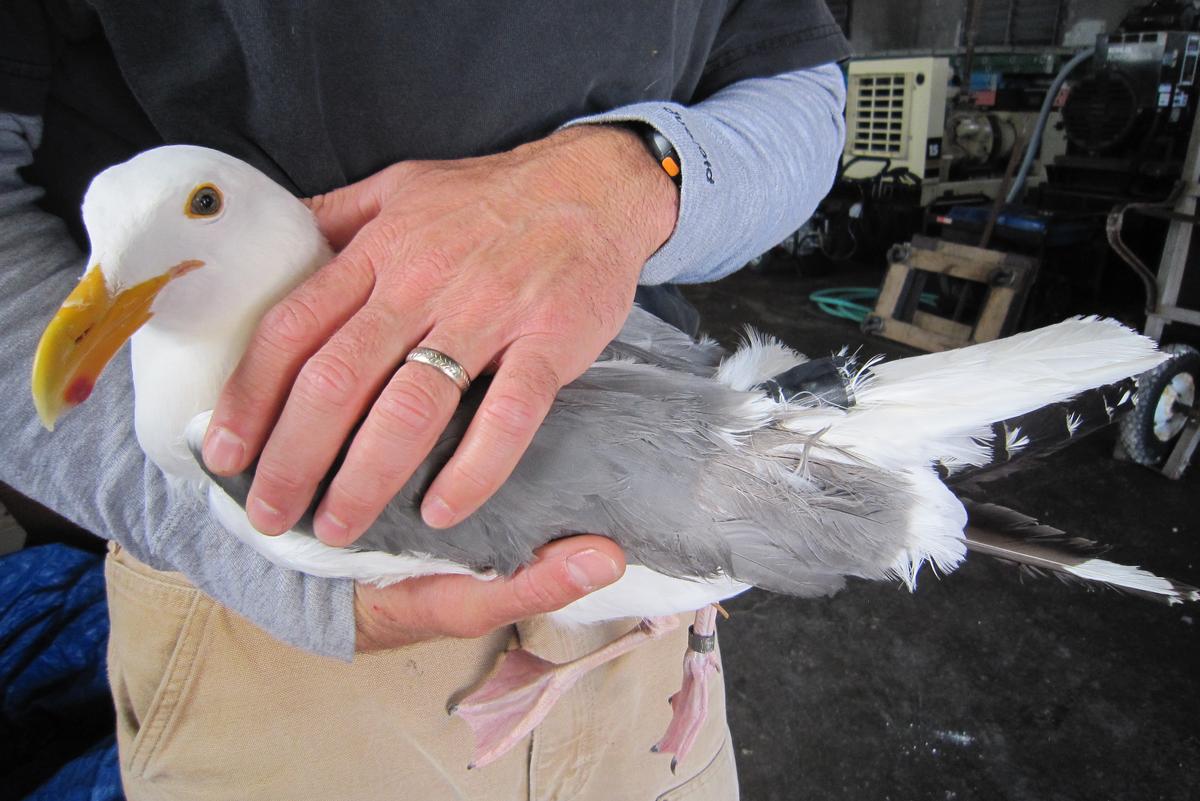
In 2018, Dr. Shaffer placed a tracking device on a female gull. He expected the device to give him a good idea of where the gull went over the next week. But when he checked the tracker, he found some very unusual results.
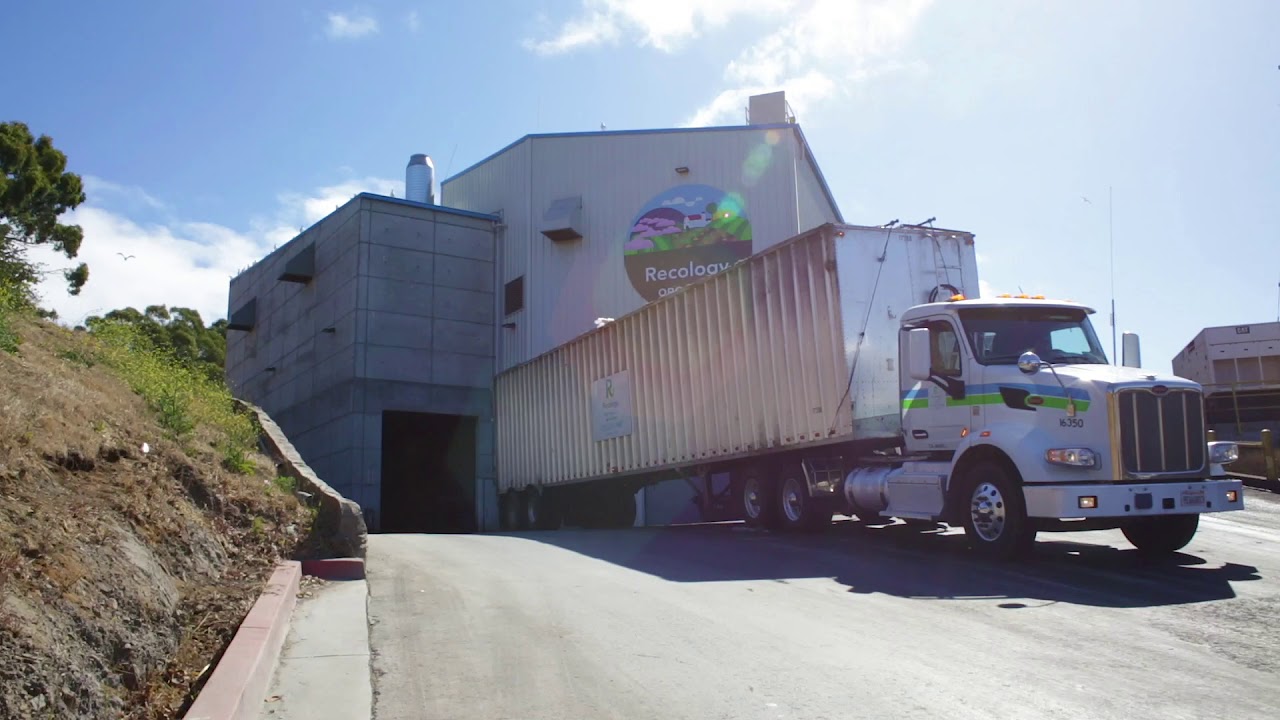
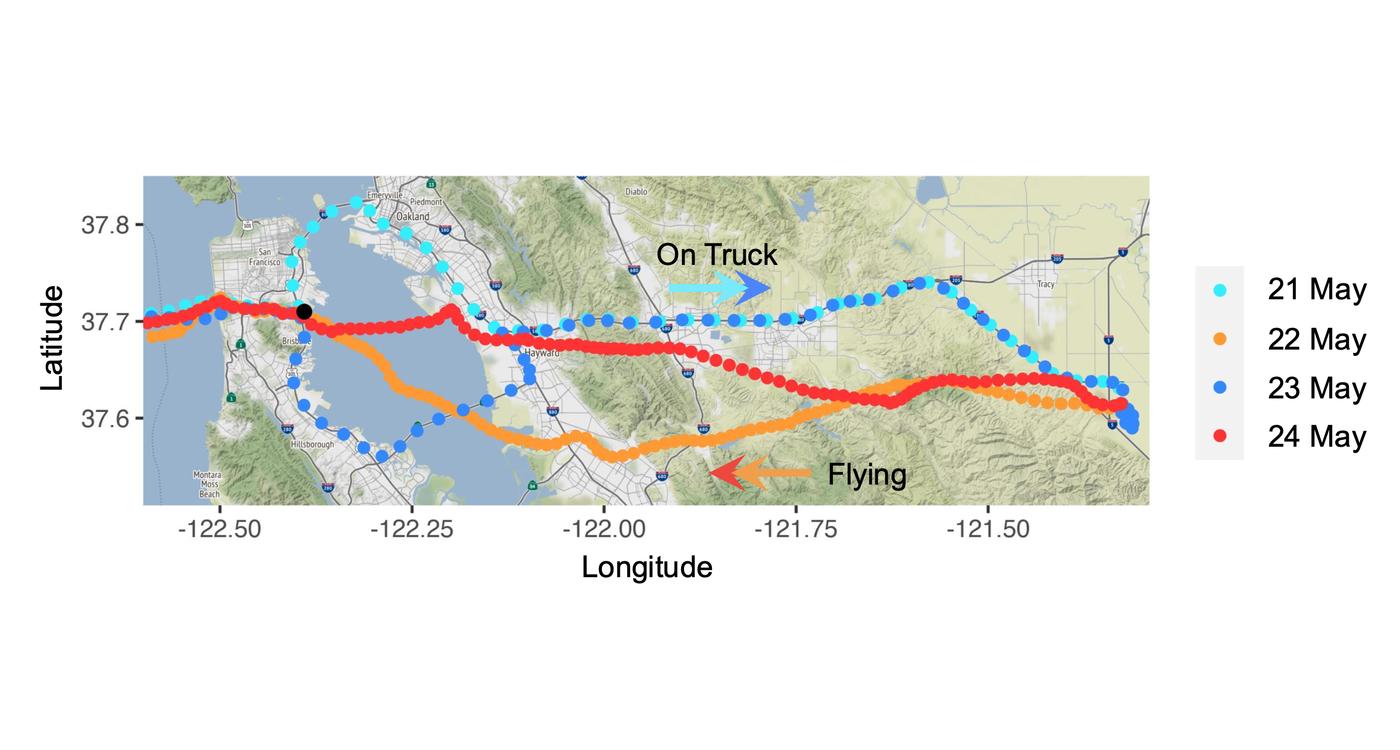
Some results were normal: the gull’s six trips over the sea were shorter; they covered an average of about 22 miles (36 kilometers). The bird also made two longer trips over land to a recycling center called Recology. Recology collects food scraps for composting – and gulls are very interested in food scraps. On these trips, the gull flew about 67 miles (108 kilometers) to get to the center and back home again.
(Source: Cimino et al., Waterbirds, via Scott Shaffer.)
But two of the gull’s trips really took Dr. Shaffer by surprise. Again, the bird had flown to the Recology center. But from there, the gull traveled across a bridge and along major highways for 80 miles (129 kilometers). And the bird seemed to be traveling at a speed of about 60 mph (96 kph)! The journey ended at a compost center near Modesto, California.
Dr. Shaffer believes that on the first trip, the gull had been eating food in the back of a truck carrying food scraps. She probably got caught under a net covering the back of the truck. The bird spent the night at the compost center, then flew all the way back to her nest, stopping off for a break at the Recology center. The entire trip took over 20 hours.
(Source: Cimino et al., Waterbirds, via Scott Shaffer.)
That was unusual enough. But the next day, the gull went back to the Recology center and took a second ride on another truck. Again, the bird spent the night at the compost center and flew back the next day.
Dr. Shaffer and his team say they don’t have any reason to believe the gull took the trips on purpose. But they say it’s “notable” that the bird made the trip twice in two days, and kept returning to the Recology center afterward.
The scientists say it’s possible that the bird was beginning to learn about an easy way to reach a great source of free food.
Did You Know…?
One example of how clever gulls are is the fact that they can recognize humans. When Dr. Shaffer works directly with gulls, he has to wear different masks and keep changing his clothes to keep them from recognizing him.
😕
This map has not been loaded because of your cookie choices. To view the content, you can accept 'Non-necessary' cookies.