Feltham, London, United Kingdom —(Map)
A water company in England has removed a massive “fatberg” which was blocking pipes in a London sewer. The word “fatberg” is used to describe something large, like an iceberg, but made out of fat. The fatberg was a hardened mess of grease, oil, wet wipes, and other items that had been put down toilets and sinks instead of into trash cans.
When you pour something down the drain or flush it down a toilet in most cities or towns, it goes into a sewer. The nasty collection of things flowing through the sewers is called “sewage”. Most cities have ways of cleaning and treating sewage so that clean water can be returned and used again.
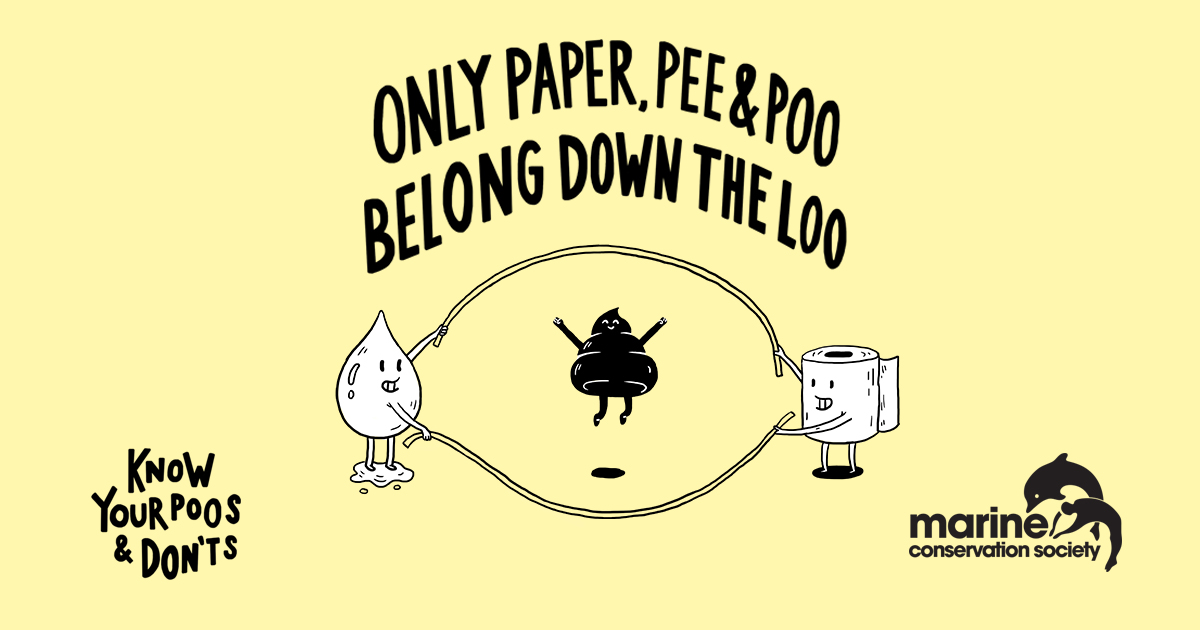
(Source: Marine Conservation Society.)
Thames Water, the company that found the fatberg, says that only “3 Ps” should be put down a toilet: pee, poop, and paper (toilet paper, that is). Big problems can happen when people use a sink or toilet to get rid of things that shouldn’t go into the water system.
The company found the fatberg about 33 feet (10 meters) below street level in the west London town of Feltham. Thames Water reports that the fatberg weighed around 110 tons (100 tonnes) – or about as much as eight double-decker buses. It was longer than a football field, measuring 410 feet (125 meters) in length.
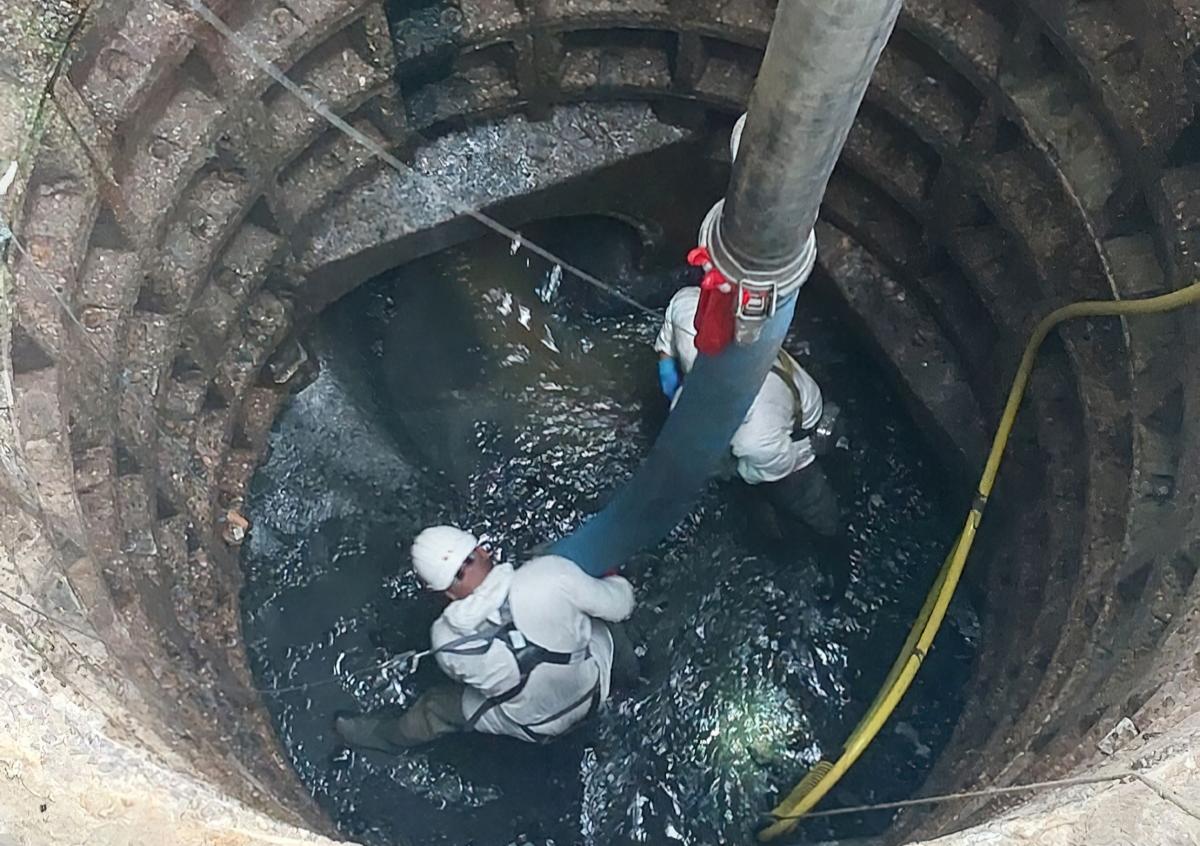
(Source: Thames Water.)
Alexander Dudfield, speaking for Thames Water, said clearing the blockage was “hugely complex”. It took a team of specially trained workers over a month to remove the fatberg.
After lowering themselves down into the sewer, the workers had to slowly and carefully break up the fatberg into smaller pieces. When the pieces were small enough, they were sucked out through long pipes. Above ground, large machines moved the nasty mess into dumpsters, which were then taken to a landfill.
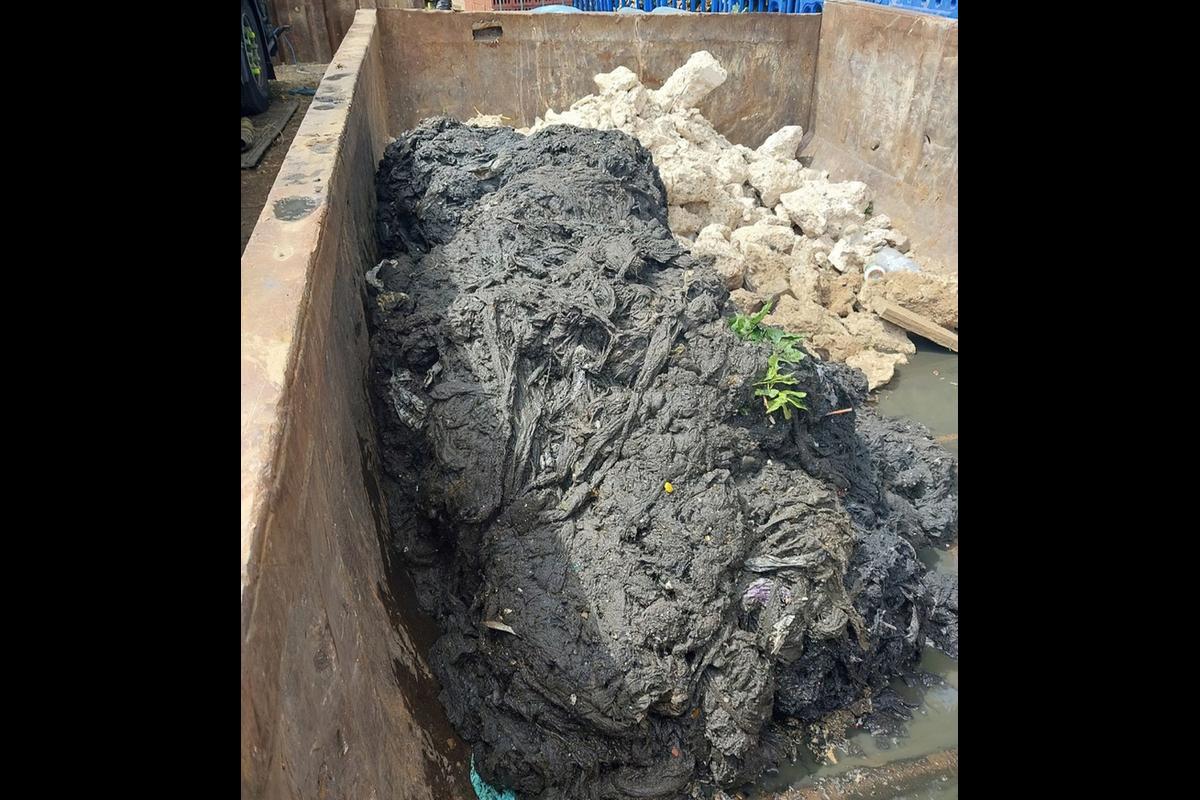
(Source: Thames Water.)
Thames Water says it clears about 75,000 blockages from its sewers every year. There are two main groups of harmful things that often make their way into sewers – bad solids and bad liquids.
Bad solids include anything that is not toilet paper. Toilet paper is made so that it breaks down easily in water. Other papers aren’t made this way.
Other items, like cleaning wipes, baby wipes, diapers, and some special products women use, don’t break down on their own. These can only cause problems – even if the package says it’s “flushable”. Thames Water says wipes are the number one cause of blockages.
(Source: Thames Water.)
But bad liquids make things worse. Cooking oil and grease may look like they can go down the drain because they’re liquids, but they’re very different than water. In cold water, they get harder, and put a thick layer of slimy grease on anything they touch.
Oils, fats, and grease build up on things like wet wipes, turning them into sticky balls that more and more things begin to stick to. That’s how fatbergs begin.
Mr. Dudfield points out that even though fatbergs can be incredibly large, most blockages happen in local pipes, which are much smaller.
Did You Know…?
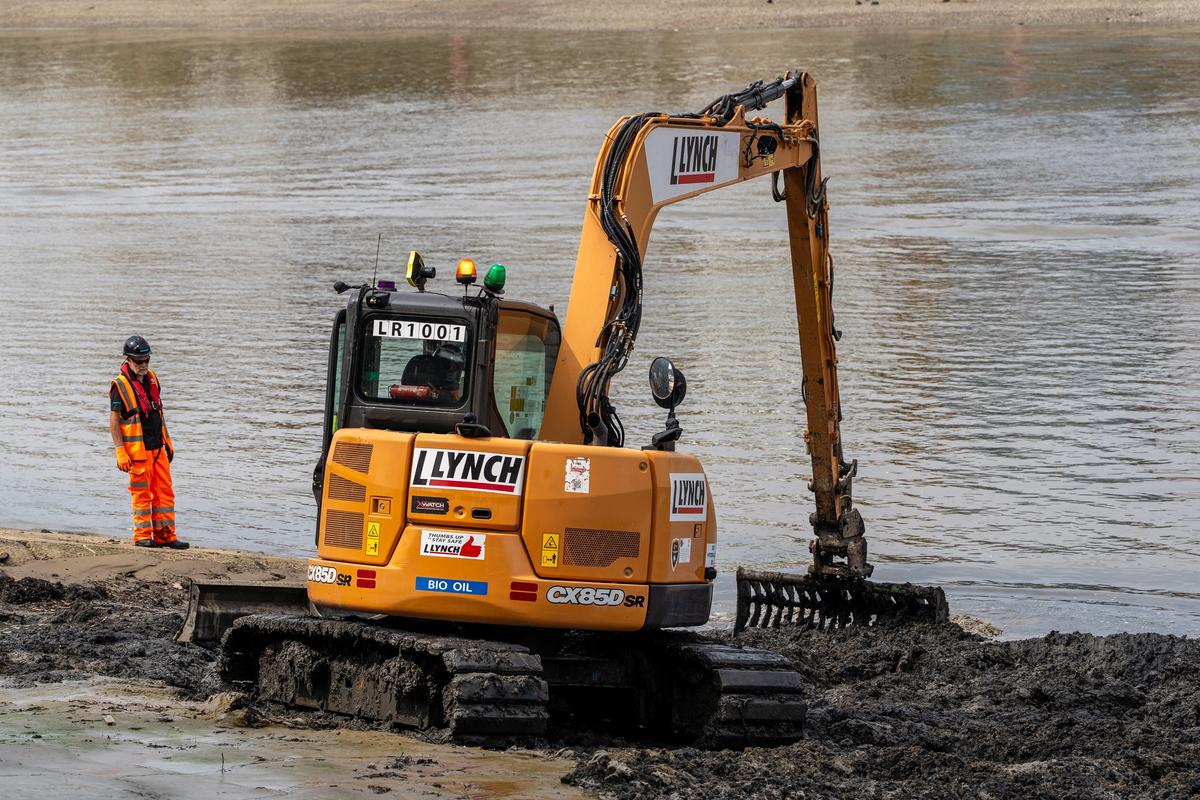
Earlier this year, Thames Water removed 126 tons (114 tonnes) of wipes from “Wet Wipe Island” – a huge area of roughly 5 million wipes that had collected along London’s Thames River (see image above). The “island” was the size of two tennis courts and had changed the way the river was flowing.
😕
This map has not been loaded because of your cookie choices. To view the content, you can accept 'Non-necessary' cookies.