
Nuku'alofa, Tonga —(Map)
In January of 2022, a massive volcano erupted under the ocean near Tonga. The eruption released huge amounts of methane – a dangerous greenhouse gas. Now scientists have discovered that the volcano’s ash cloud also removed a lot of methane. The discovery could lead to new ways to fight global warming.
The Hunga Tonga-Hunga Ha’apai volcano is located off the coast of Tonga, about 40 miles (65 kilometers) away from the capital, Nuku’alofa. When it erupted in 2022, it caused huge problems in the area. It also created ocean waves that were felt on the far side of the Pacific, and shockwaves in the air that were felt around the world.
The eruption also sent a massive cloud of ash and different gases into the atmosphere. One of those gases was methane.
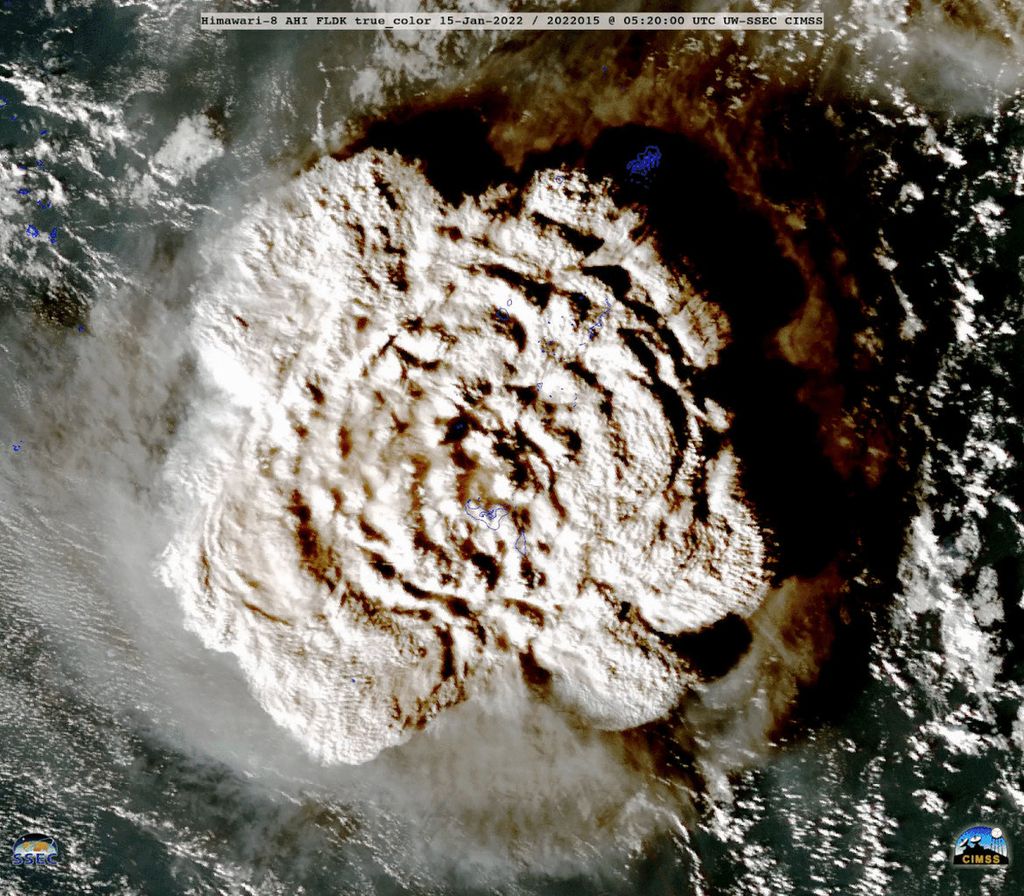
(Source: SSEC/CIMSS, University of Wisconsin–Madison [Attribution], via Wikimedia Commons .)
Methane is one of the important gases behind global warming. It’s responsible for about 30% of the heating causing the climate crisis. One reason methane is so powerful is that it’s much better at trapping heat than carbon dioxide (CO2).
Now, a group of scientists from the Netherlands studying the Hunga Tonga–Hunga Ha’apai eruption have learned that the volcano didn’t just add a bunch of methane to the atmosphere. It also removed some.
The researchers used pictures taken by a satellite to study the volcano’s ash cloud in the atmosphere. They found that the volcano’s ash cloud contained very high levels of a chemical called “formaldehyde”. The scientists knew that formaldehyde can be created in certain conditions when methane breaks down.
But formaldehyde itself breaks down after just a few hours. And yet there was formaldehyde in the ash cloud for days. That meant that some kind of chemical reaction was continuing to happen in the ash cloud. And that reaction was helping to break down the methane.
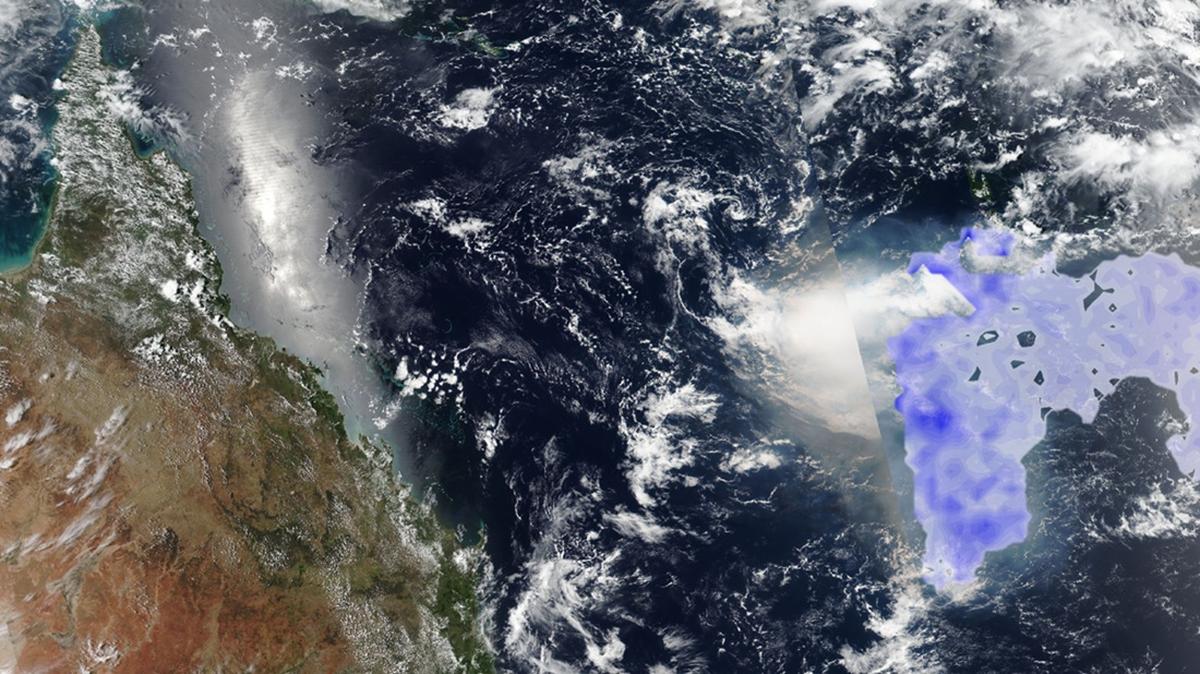
(Source: van Herpen et al. University Of Copenhagen.)
The scientists believe the secret of this rapid methane breakdown was probably salty seawater. Because the volcano was underwater when it erupted, it sent huge amounts of seawater into the atmosphere.
The researchers say that the ash from the volcano mixed with the salt from the sea water. When the sun shone on this mixture, it created chlorine atoms. This was the key, since chlorine is known to speed up the breakdown of methane.
Learning that an underwater volcano might clean up some of the pollution it creates was unexpected.
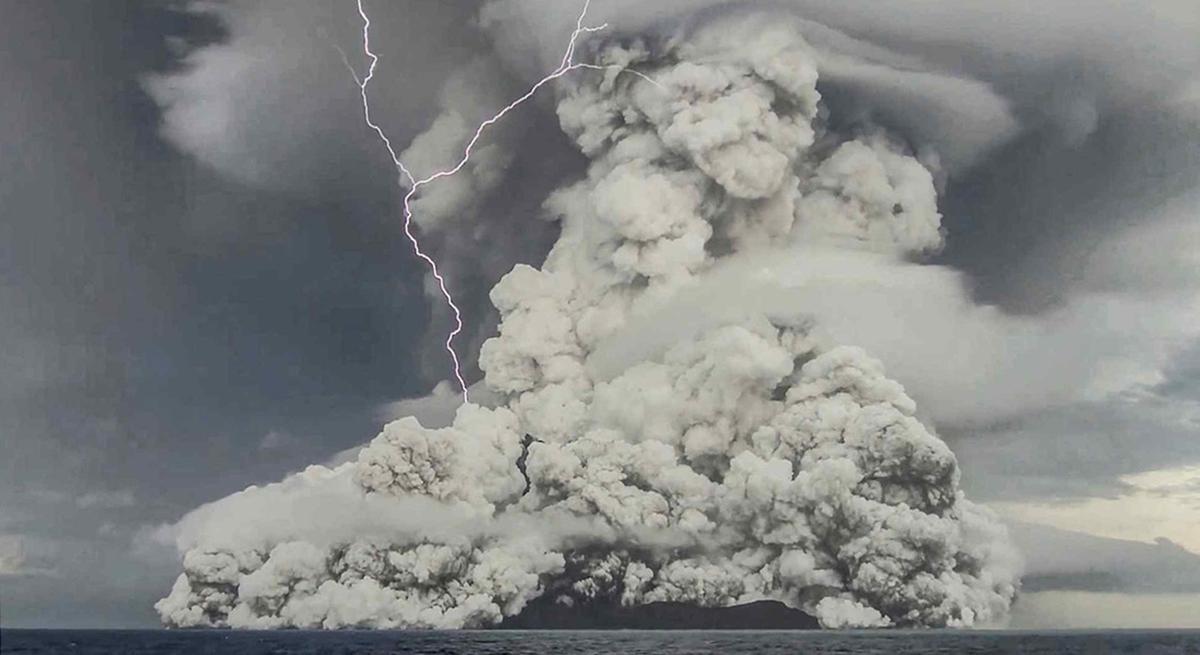
(Source: Tonga Geological Services University Of Copenhagen.)
The discovery could be very important. The researchers hope that their findings will encourage others to explore ways of using chlorine atoms to remove methane from the atmosphere. They say it’s an “obvious idea” to try to recreate the cleaning process that happened naturally in the volcano’s ash cloud.
There will be many challenges in figuring out how to safely and cheaply turn such a process into a real solution. But the scientists believe that their method of using satellite images to confirm that methane is being broken down will be useful.
If scientists can find a way to remove methane from the atmosphere, it could play a big part in slowing climate change.
😕
This map has not been loaded because of your cookie choices. To view the content, you can accept 'Non-necessary' cookies.