
On Monday, the crew of NASA’s Artemis II mission became the first humans to go behind the moon in over 50 years. The four astronauts on the mission are now on their way home, after traveling farther away from Earth than anyone ever has before. The spaceship is expected to splash down on Friday.
Artemis II is the second flight in NASA’s Artemis program, which aims to send humans to the moon. The mission, which launched last Wednesday, was designed to test the systems aboard the Orion spacecraft. The crew has faced challenges at times, but overall, the mission has been very successful.
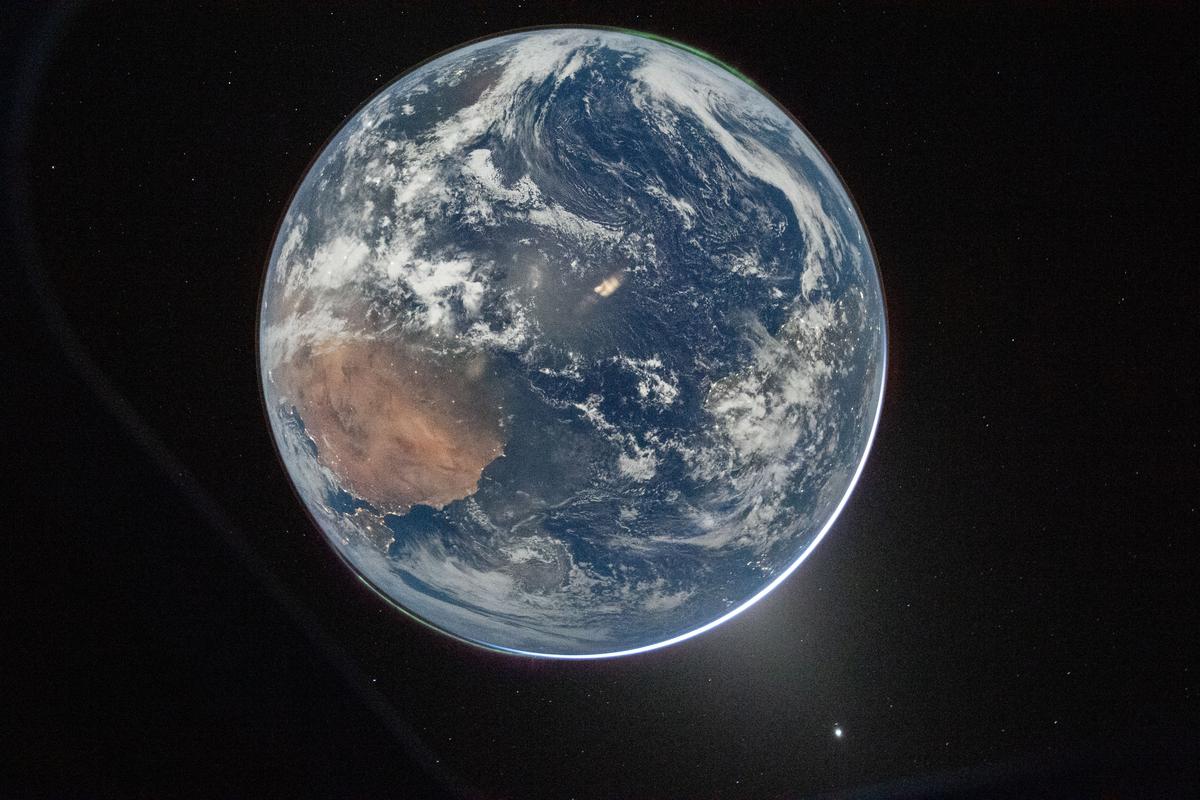
(Source: [Public Domain], NASA/Reid Wiseman.)
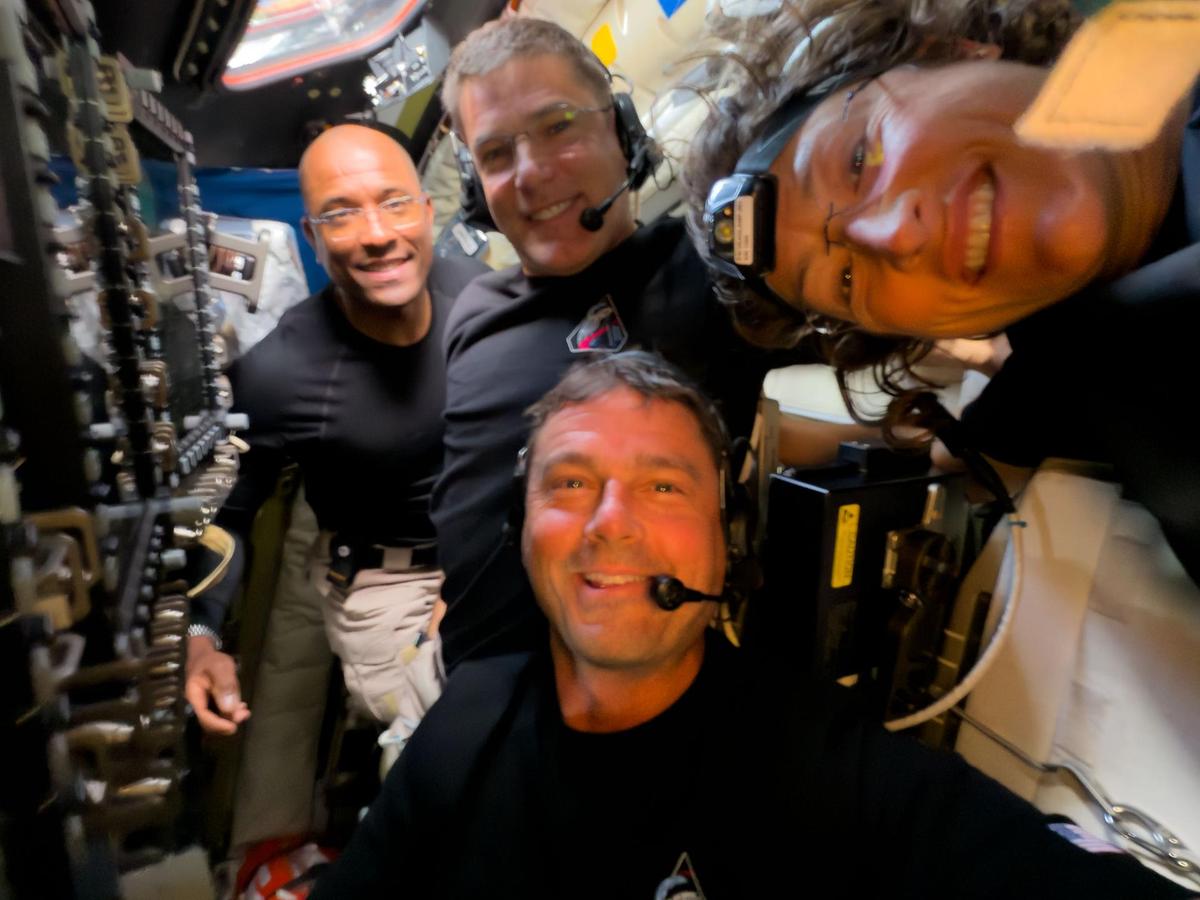
Since launching, the crew of four has been working hard, testing the ship and its systems. The crew is made up of NASA astronauts Reid Wiseman, Christina Koch, and Victor Glover, along with Jeremy Hansen from the Canadian Space Agency.
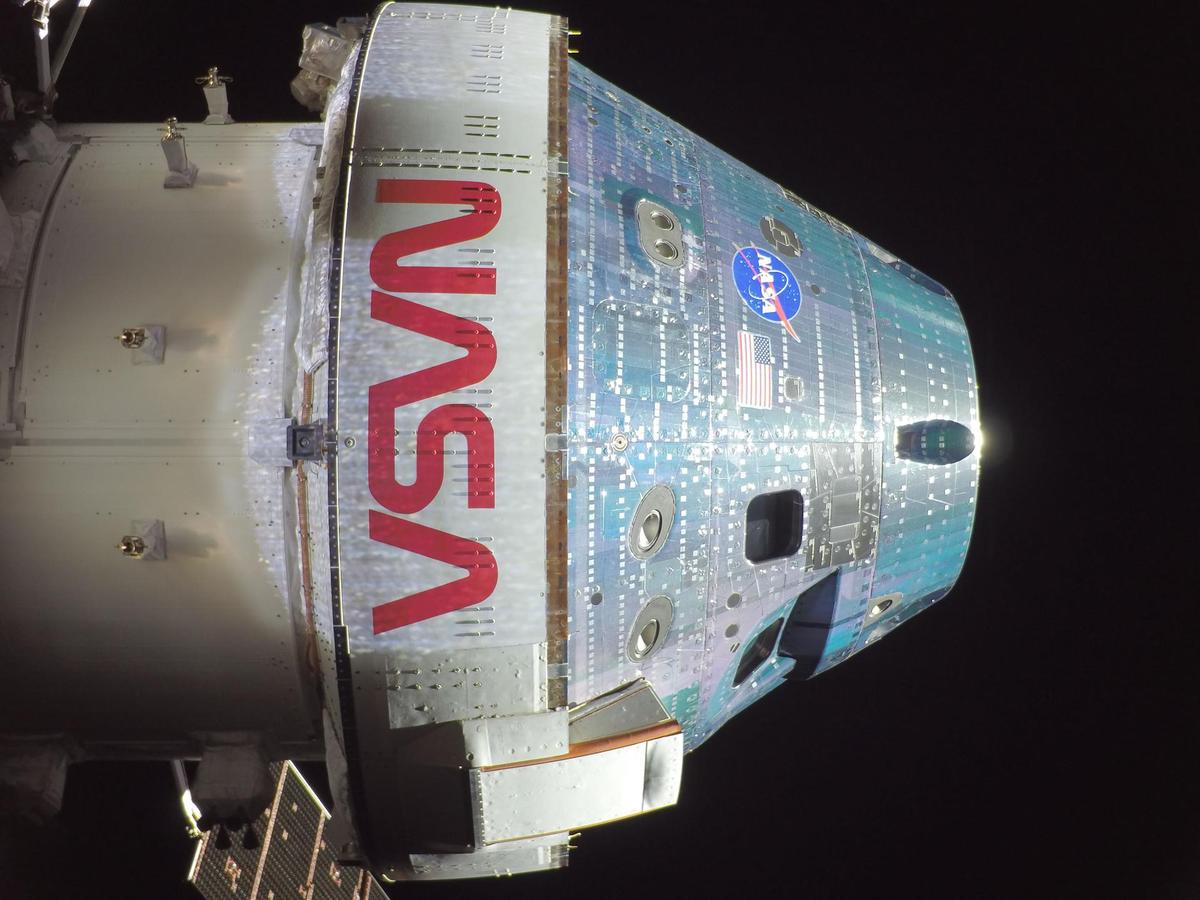
The four are traveling in an Orion spacecraft, which the crew has named “Integrity”. Inside the ship is a packed jumble of electronics, scientific gear, and living supplies. All of this, along with the four astronauts, is jammed into a space that’s about twice as large as the inside of a minivan.
(Source: [Public Domain], NASA.)
Some of the crew sleep in bags attached to the walls of the capsule. For meals, they add water to bags of dried food, and then squeeze the results into their mouths. Somehow NASA even found room in the spacecraft for an exercise machine and a toilet.
But the toilet has caused some problems. At first, it wasn’t working. Then, after Ms. Koch repaired it, the pee inside the toilet froze. As a result, the astronauts have had to pee into special bags. Toilet troubles may sound unpleasant, but finding problems like this is exactly what the mission was meant for.
(Source: [Public Domain], NASA.)
After early checks were finished, Orion headed toward the moon. Its specially designed path uses the moon’s gravity to help return the ship to Earth.
On Monday, the astronauts reached the far side of the moon. That morning, they heard a recorded greeting from Jim Lovell, who flew behind the moon over 50 years ago. “Welcome to my old neighborhood!” said Mr. Lovell. At its farthest, Artemis II was 252,756 miles (406,771 kilometers) away from Earth – breaking a record that Mr. Lovell had helped set in 1970.
(Source: [Public Domain], NASA.)
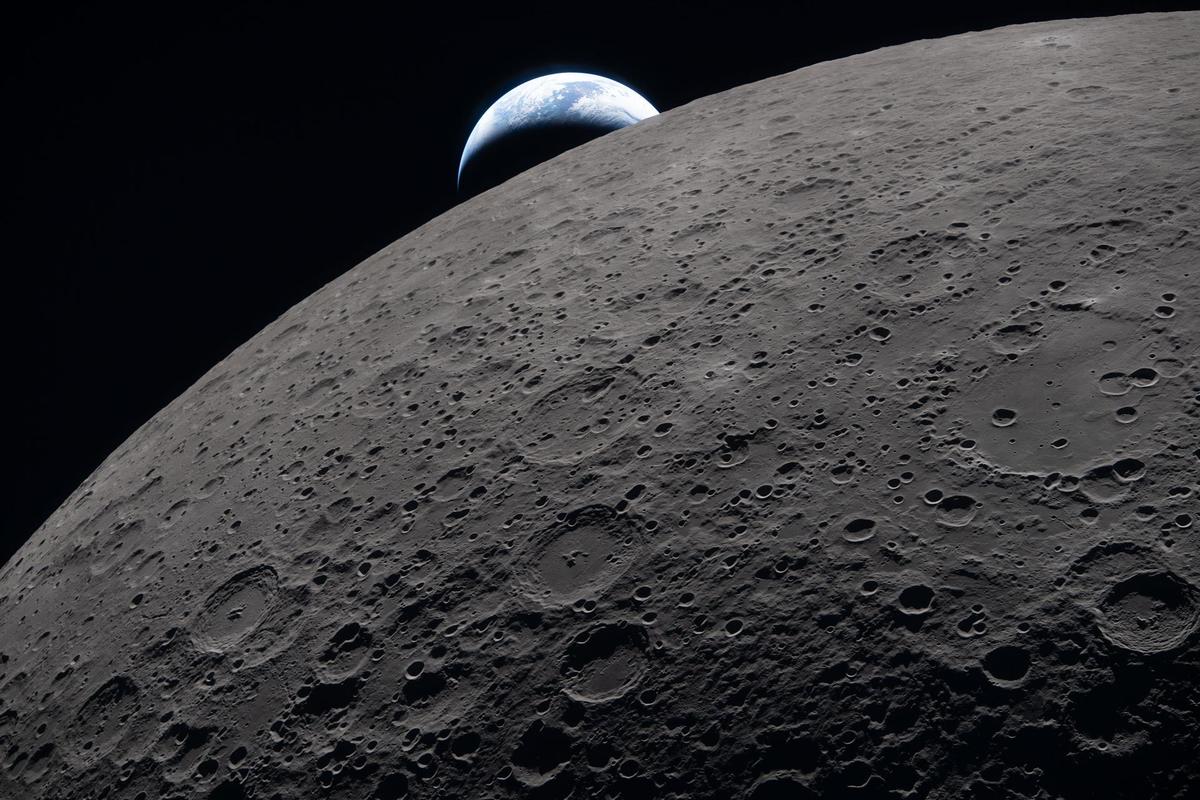
During their “lunar flyby”, the astronauts were able to closely examine the side of the moon that is always facing away from Earth. The astronauts spent several hours studying the moon’s surface, and sent back detailed pictures of the moon’s far side. One of the photos showed the entire “Orientale Basin”, a giant crater over 600 miles (1,000 kilometers) wide.
The crew saw other amazing sights, too. This included seeing five meteors hitting the moon, and watching a solar eclipse, as the sun was hidden behind the moon.
On Thursday, the crew will make a small change to correct its course toward home. The mission is expected to splash down in the ocean off the coast of California on Friday.