
International Space Station —
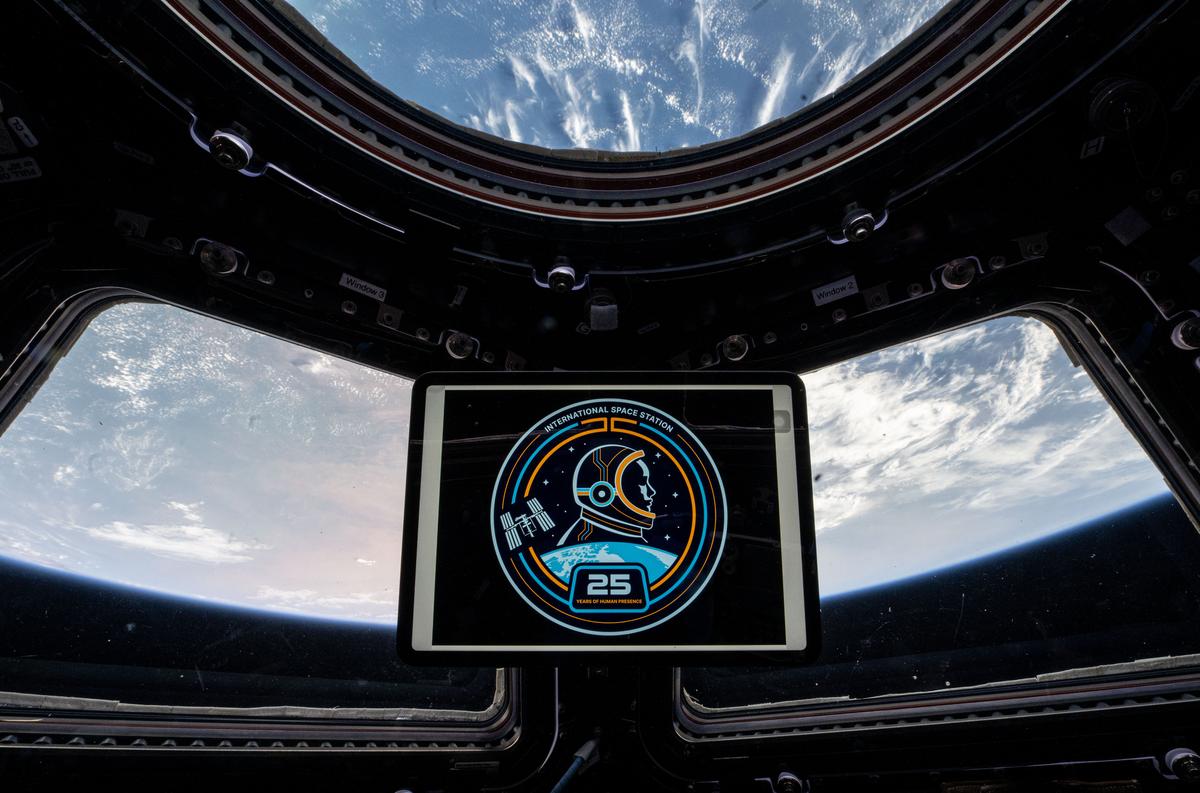
This week marks 25 years of humans living in space. On November 2, 2000, three astronauts became the first full-time workers at the International Space Station (ISS). Since then, the ISS has never been empty.
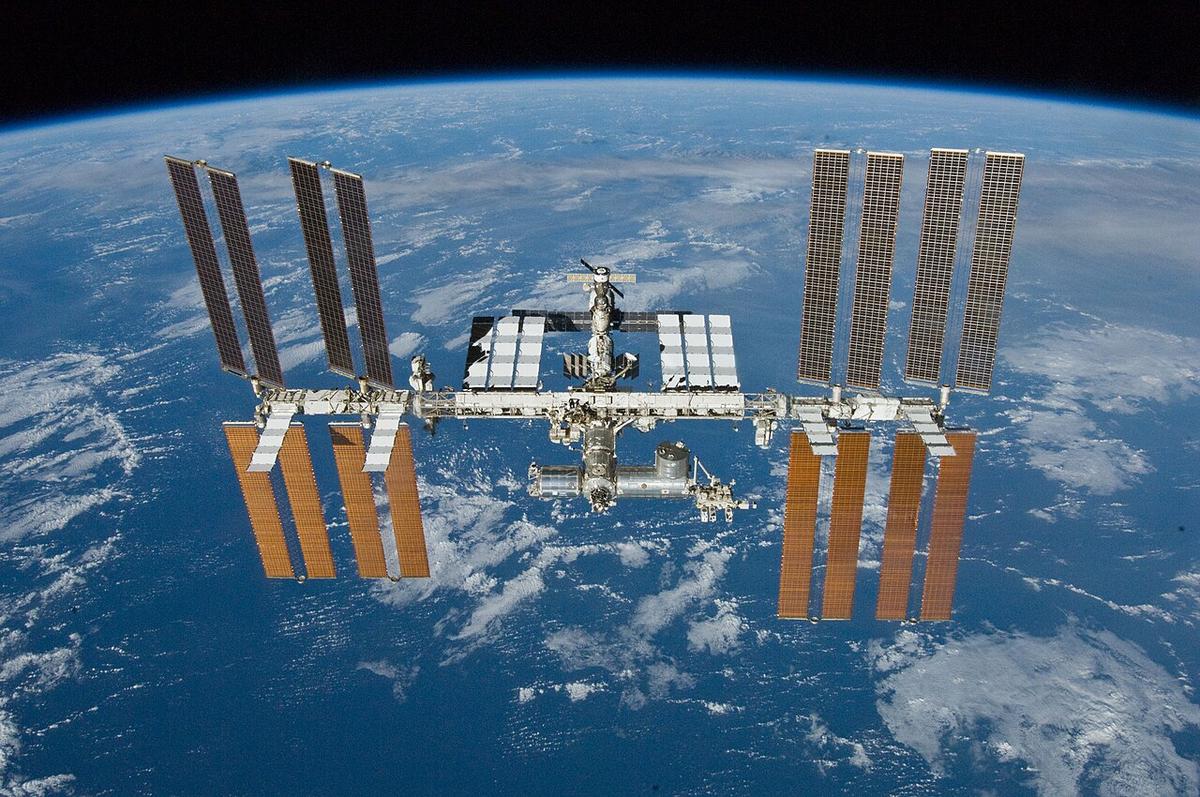
The ISS is a huge science laboratory in space, supported by the United States, Russia, and several other countries. The station rotates around the Earth, about 250 miles (400 kilometers) above it.
The station is important for many different kinds of experiments that can only be done in space. It allows scientists to do research in very low gravity, and lets them test things that might be used on future trips into space.
(Source: NASA [Public Domain], via Wikimedia Commons.)
It took roughly 16 years to design and build the first version of the ISS. When the first three astronauts – one American and two Russians – arrived, the station was very basic and had just three rooms.
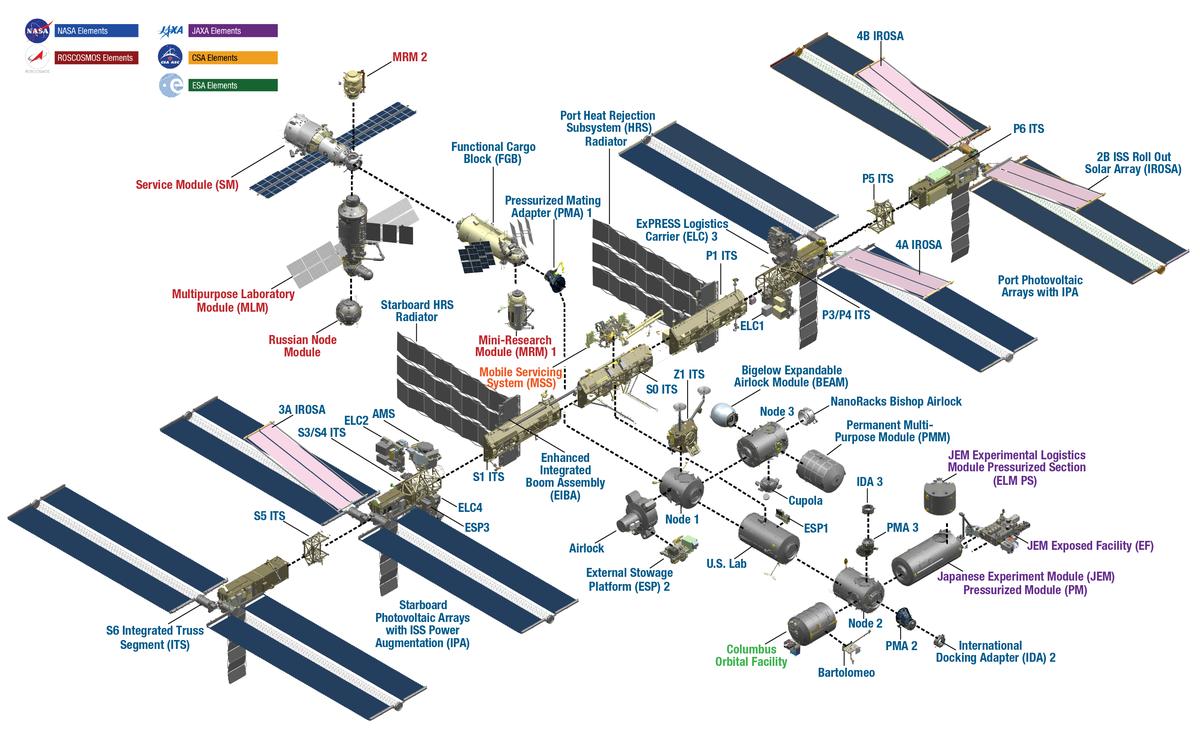
Since then, many rooms, labs, and modules have been added. The ISS is now about the size of a football field, and has several different laboratory areas. The station has exercise machines and a special phone that allows astronauts to call home. The “cupola”, with its glass windows, offers amazing views of Earth.
(Source: [Public Domain], NASA.)
Over the last 25 years, the ISS has been home to 290 people from 26 different countries. Most of these people were professional astronauts. But in recent years, it has become more common for people to pay to visit the station. The ISS has even been used to film a movie.
Currently, there are seven astronauts – from Japan, Russia, and the US – working on the ISS.
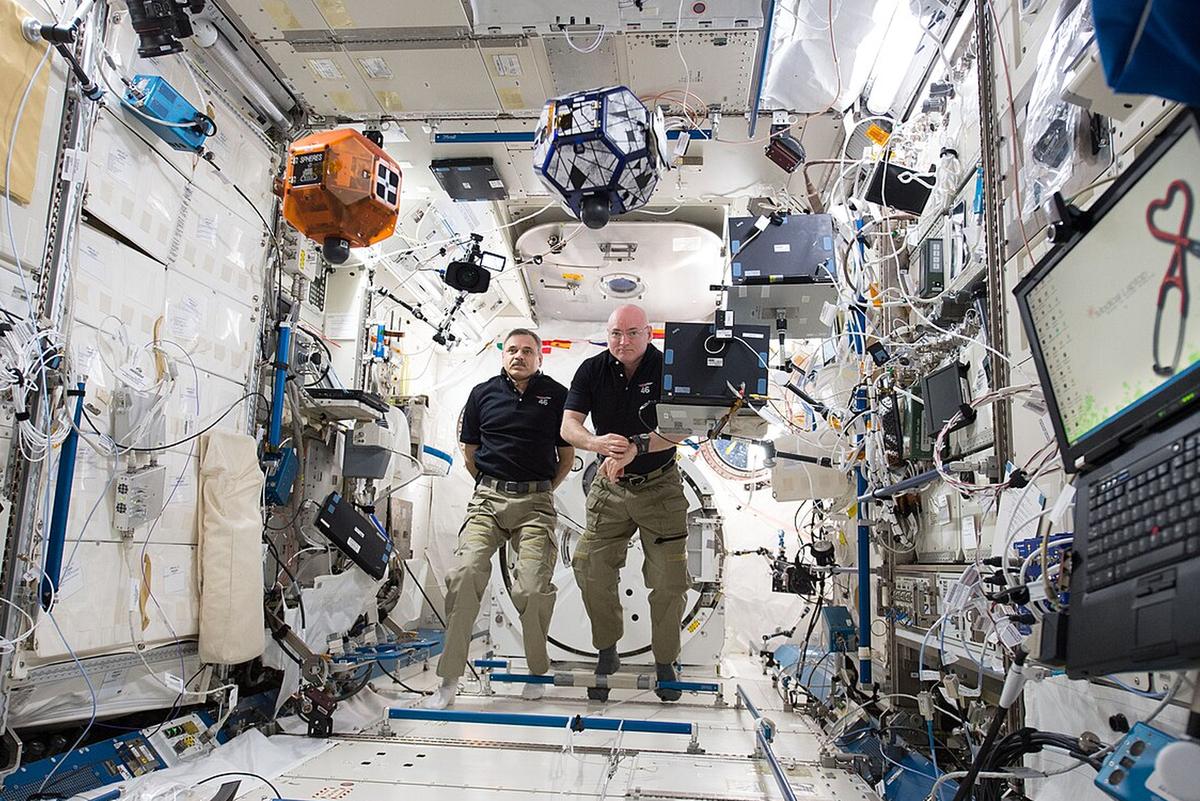
Many ISS experiments have studied how the human body reacts to living in space. In one famous experiment, scientists looked at how living for nearly a year in space affected astronaut Scott Kelly compared to his twin brother Mark, who remained on Earth.
(Source: NASA [Public Domain], via Wikimedia Commons.)
After so long, it may seem like traveling to space and living there is very ordinary. But it can also be very dangerous. The ISS has been hit by dangerous space debris, and has had worrying cracks and leaks. At one point, a spacewalking astronaut almost drowned. And once, when a spacecraft docked, it sent the ISS spinning in an unexpected way.
Still, astronauts and scientists have managed to keep the ISS going. The station has lasted much longer than the originally planned mission of just 15 years.
(Source: [Public Domain], Jonny Kim/NASA.)
But that’s coming to an end. The ISS is expected to be used for the next five years, and then retired. The US space agency NASA hopes that the ISS will be replaced by other space stations that are built and run by private companies. China has already built its own space station, called Tiangong.
Plans call for the ISS to be retired in 2031. NASA is working with the company SpaceX to guide the station back down into the atmosphere, where most of it will burn up as it falls toward Earth.
But the ISS will be remembered as a home to astronauts, an orbiting space lab, and a symbol of international cooperation in space.
Did You Know…?
If you’d like to learn more about the history of the ISS, you can. Two people who work for NASA have put together a special website that shares all kinds of information and photos from the ISS for every day of the last 25 years.