
Oulu, Finland —(Map)
A new study shows that bumblebees can use objects around them to solve a challenging puzzle they’ve never seen before. The results suggest that even though bumblebees have tiny brains, they can think in much more complicated ways than most people believed.
In 1913, a scientist ran a famous experiment with chimpanzees. He hung a banana out of reach and left some boxes and sticks lying around. After some failed efforts to reach the banana, the chimps stacked the boxes and stood on them to reach the banana.
The chimps realized that they could use the boxes to solve a problem they’d never seen before. Scientists call this “insight”. Not many animals have been shown to have this kind of insight.
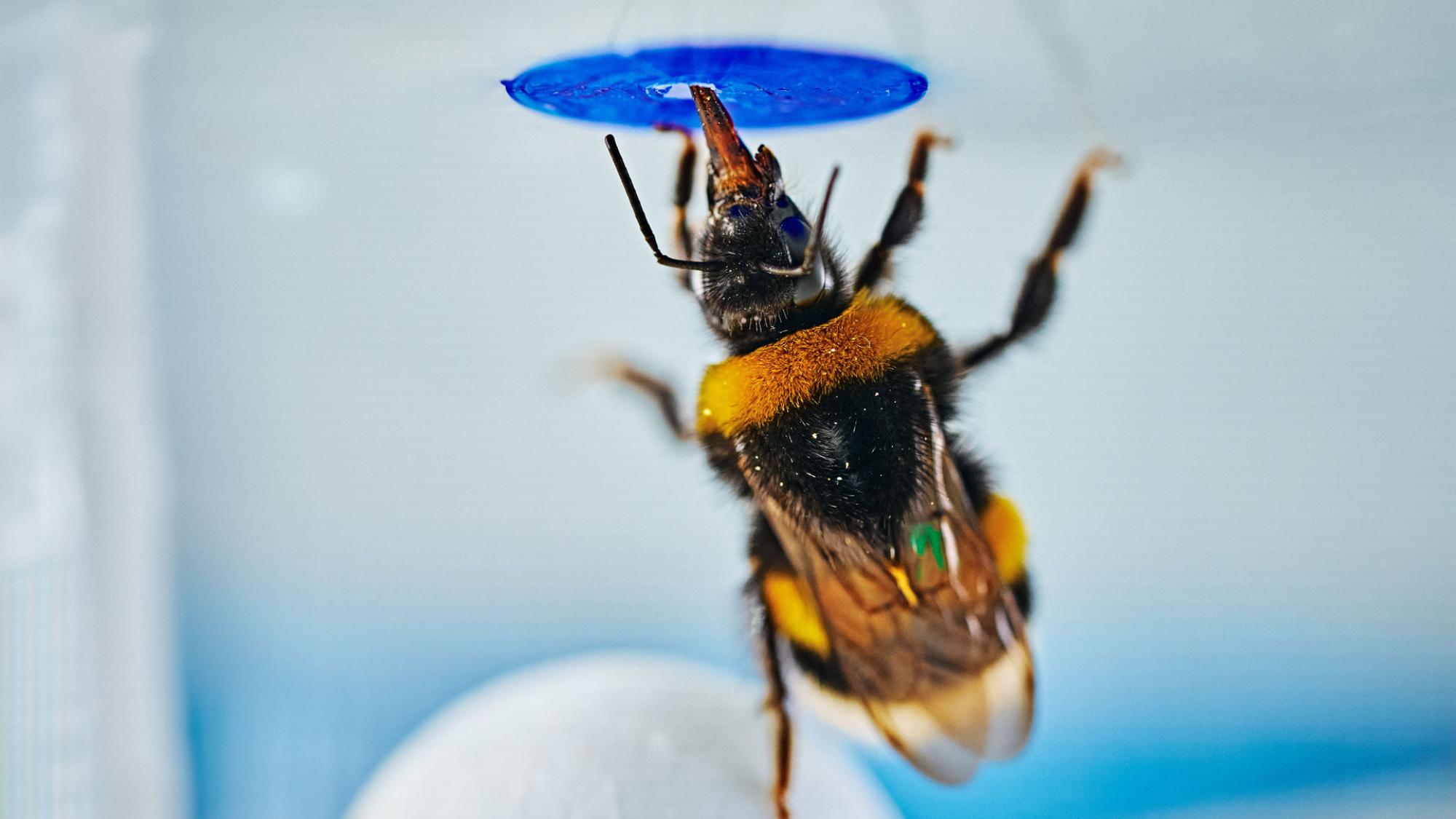
(Source: Mikko Törmänen / University of Oulu.)
Researchers at the University of Oulu in Finland decided to run “an insect version of the classic ‘box-and-banana’ problem” with bumblebees.
They built a special round testing “arena” that was just 1.3 inches (3.2 centimeters) tall. It wasn’t tall enough for the bumblebees to fly in, and the bees couldn’t reach the top of the arena from its floor.
But before the researchers began testing the bumblebees, they had to let them discover a couple of things. First, there was a fake “flower” on the floor – a blue dot with a sugary treat on it. This was used as a reward for the bees. At the same time, the scientists let the bees get used to having a small foam ball around.
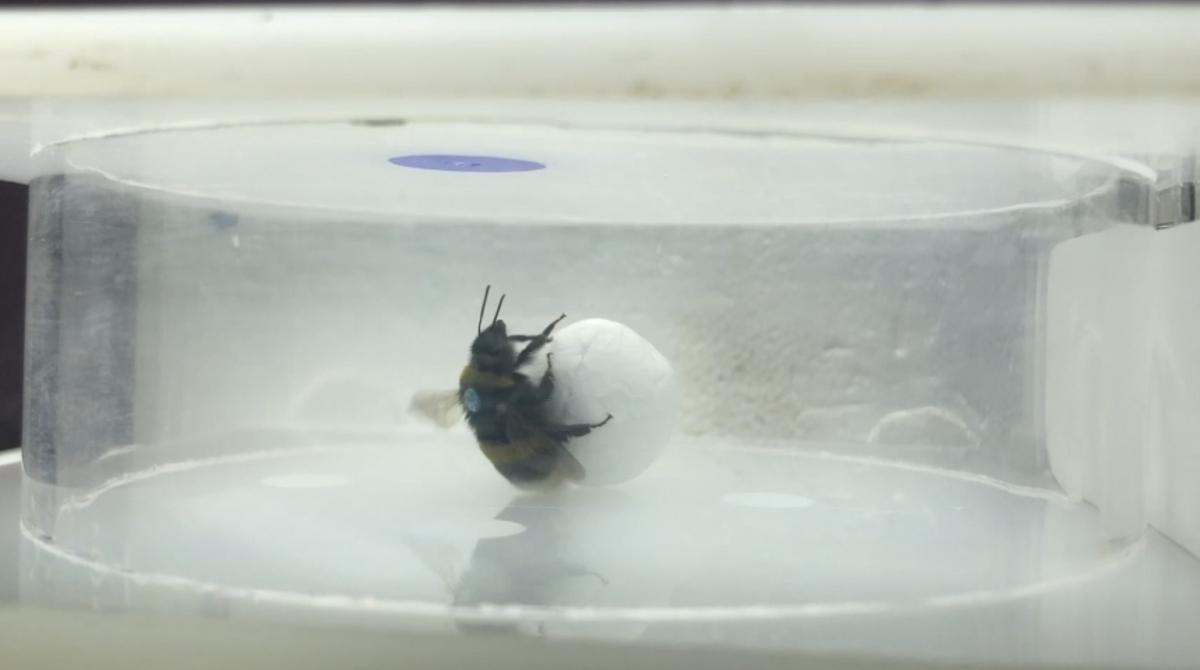
(Source: Screenshot, Bhambore et al., Science.)
In the next stage of the experiment, the researchers put the foam ball on top of the blue dot. The bees had to move the ball off of the dot to get the sugar. This helped the bees understand that the ball could roll.
It’s worth noting that these early stages of the experiment were important. The researchers discovered that bumblebees who didn’t have a chance to learn about the ball and the blue dot failed at the later stages of the experiment.
Finally, the researchers presented the real challenge. They moved the blue “flower” to the top of the arena, so the bumblebees couldn’t reach it. They also made small holes in the floor of the arena, each big enough to hold the foam ball. One of these holes was just below the blue dot.
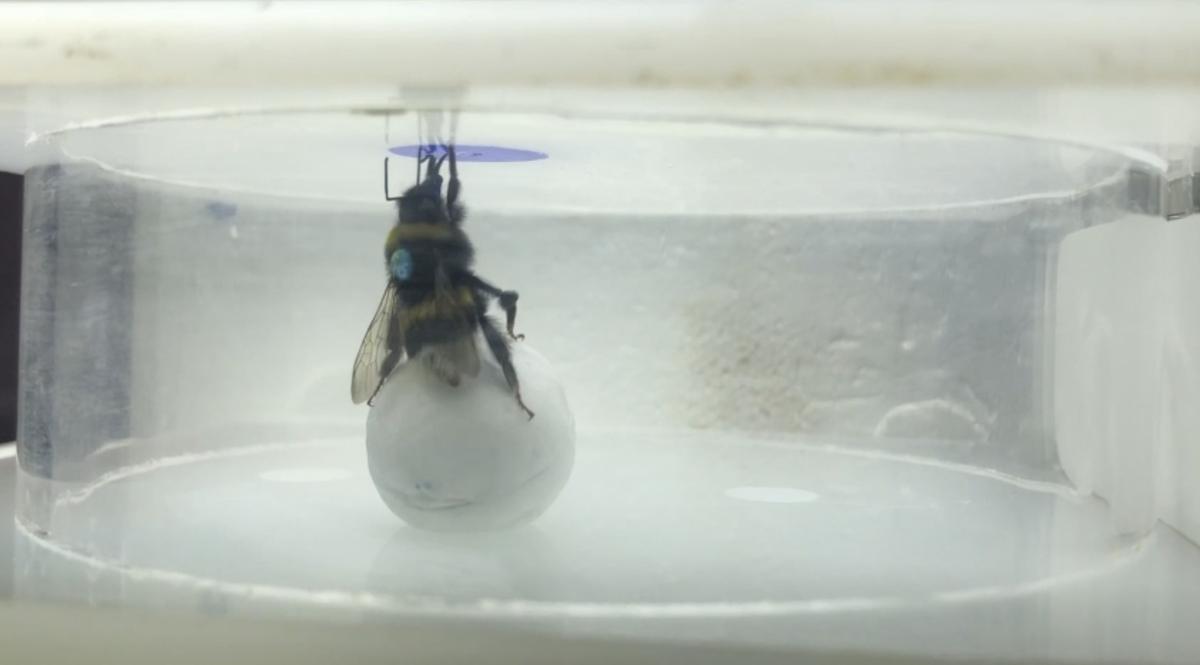
(Source: Screenshot, Bhambore et al., Science.)
The researchers were testing to see if the bees could figure out the solution: by rolling the ball into the hole below the flower, they could climb on the ball to get the reward.
Roughly 73% of the bees solved the puzzle. They were able to do this even though they were young bumblebees who had never seen anything similar before.
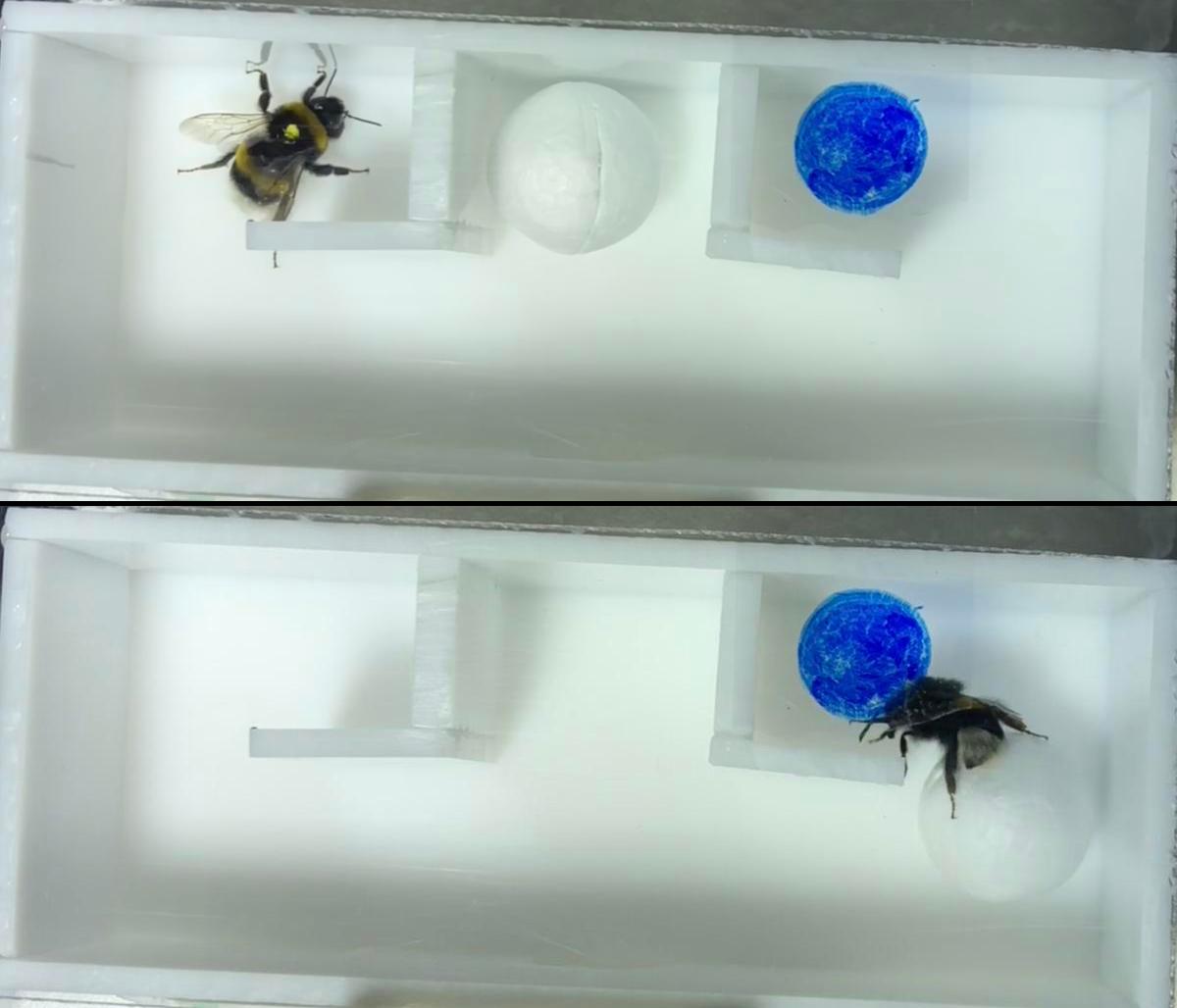
(Source: Screenshot, Olli Loukola / University of Oulu.)
To make sure the bumblebees weren’t just getting lucky, the scientists added one last challenge: they “hid” the blue dot behind a small wall. That way the bees couldn’t roll the ball to the right place by accident. The bees still managed to solve the puzzle.
The results suggest that despite their small brain size, bumblebees have insight, and can come up with creative solutions to problems they have never faced before.
😕
This map has not been loaded because of your cookie choices. To view the content, you can accept 'Non-necessary' cookies.