
Scientists have long known that there are huge networks of fungi underground. Now, researchers have created a map of these fungal webs and how they are spread around the world. Their study reveals that if the threads of these fungi were laid out in a line, they could stretch to the sun about 730 million times.
Fungi
Fungi are a group of living things that are not plants and not animals. They absorb nutrients from their food (like decaying leaves, wood, or soil) instead of making their own food from sunlight. Common examples include mushrooms, molds, and yeast.
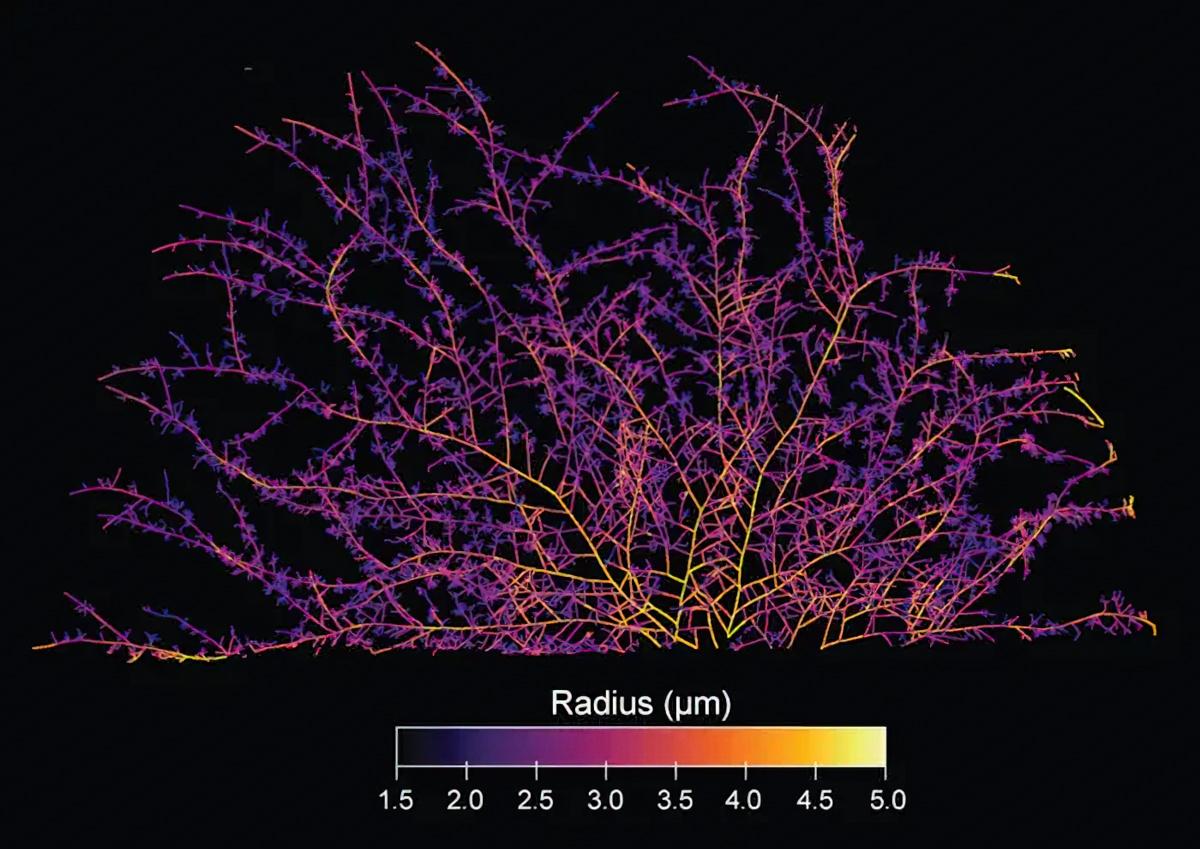
(Source: Corentin Bisot – VU Amsterdam, AMOLF Justin Stewart, SPUN.Earth.)
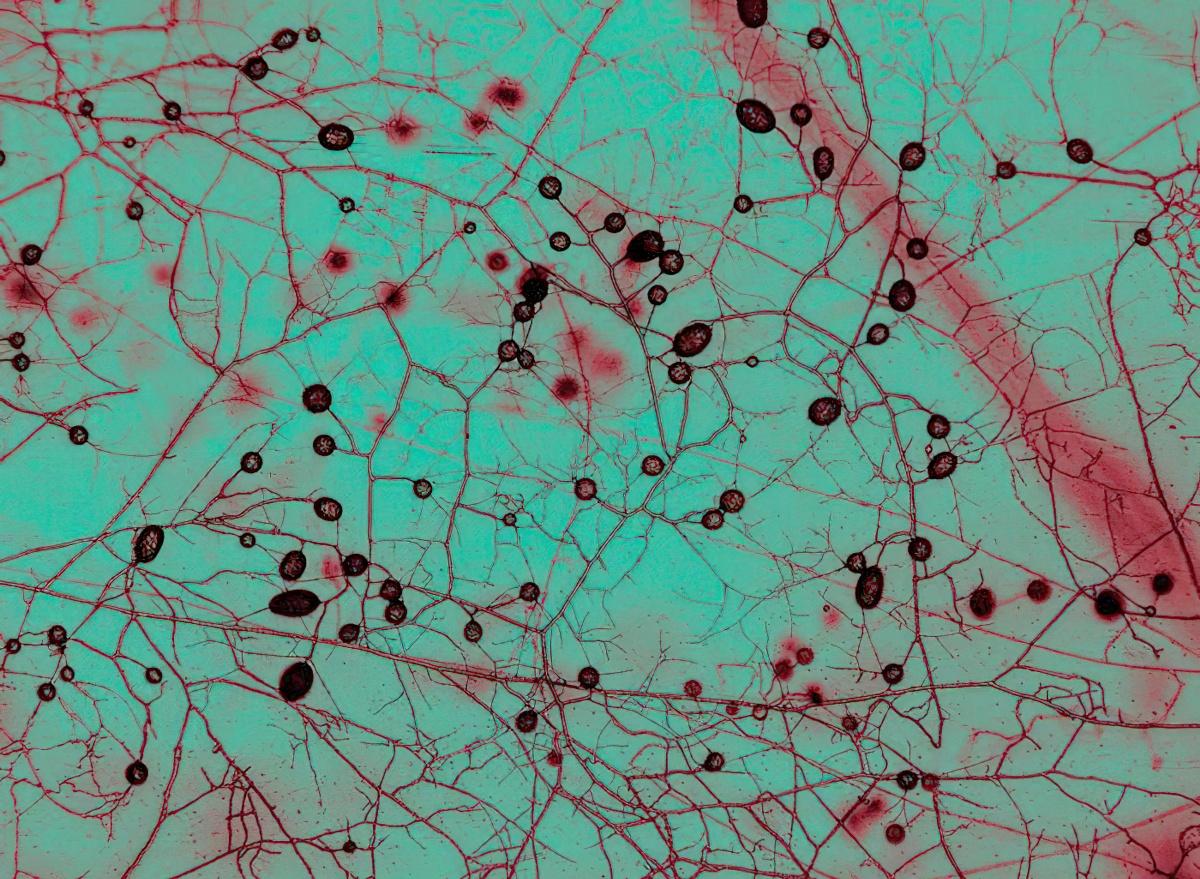
Hidden beneath the ground, there is a massive network of arbuscular mycorrhizal fungi (AM fungi). Of course there are many different kinds of fungi, but AM fungi are extremely important. Over 70% of the plants on Earth depend on AM fungi.
These fungi grow in the soil and connect to plant roots. The fungi send out many thin threads, called hyphae, which spread through the soil.
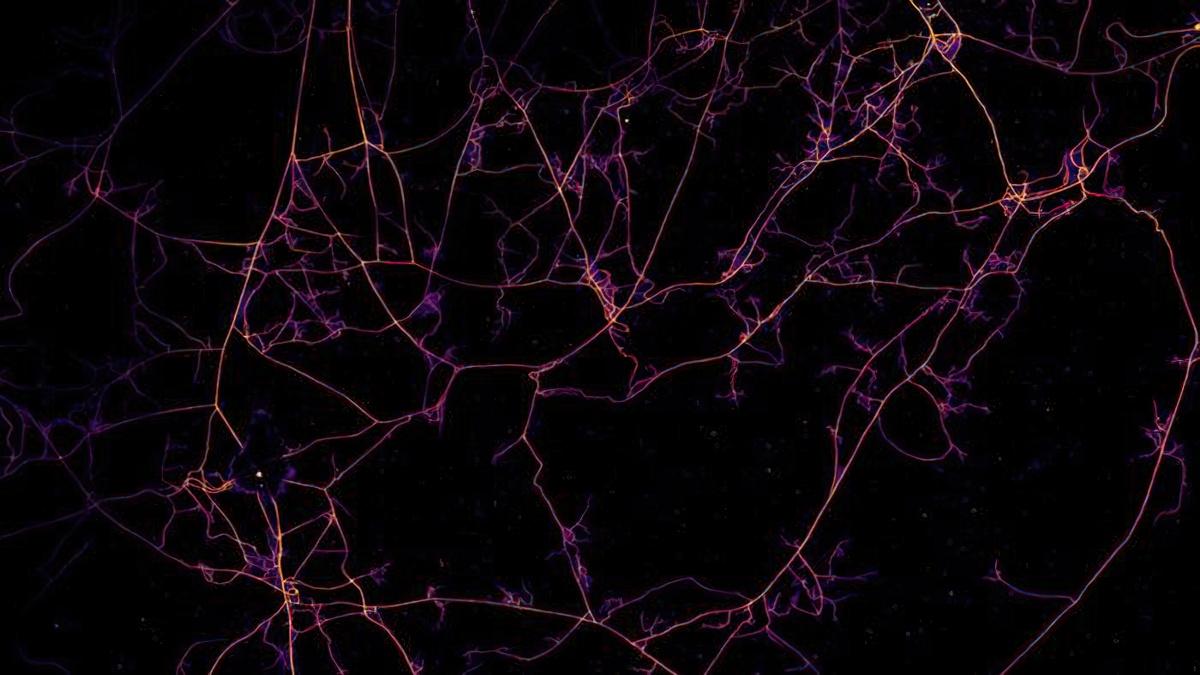
(Source: Loreto Oyarte Gálvez – VU Amsterdam, AMOLF, SPUN.Earth.)
The hyphae are like tiny tubes, and perform several important jobs. They bring water and minerals to plants, helping them grow. They also take in carbon from the plants and store it in the soil. This process helps keep carbon dioxide out of the atmosphere, which is important for controlling global warming.
Scientists wanted to learn more about the size and spread of these fungal networks. So they gathered information from hundreds of other studies that had collected over 16,000 samples of soil from around the globe.
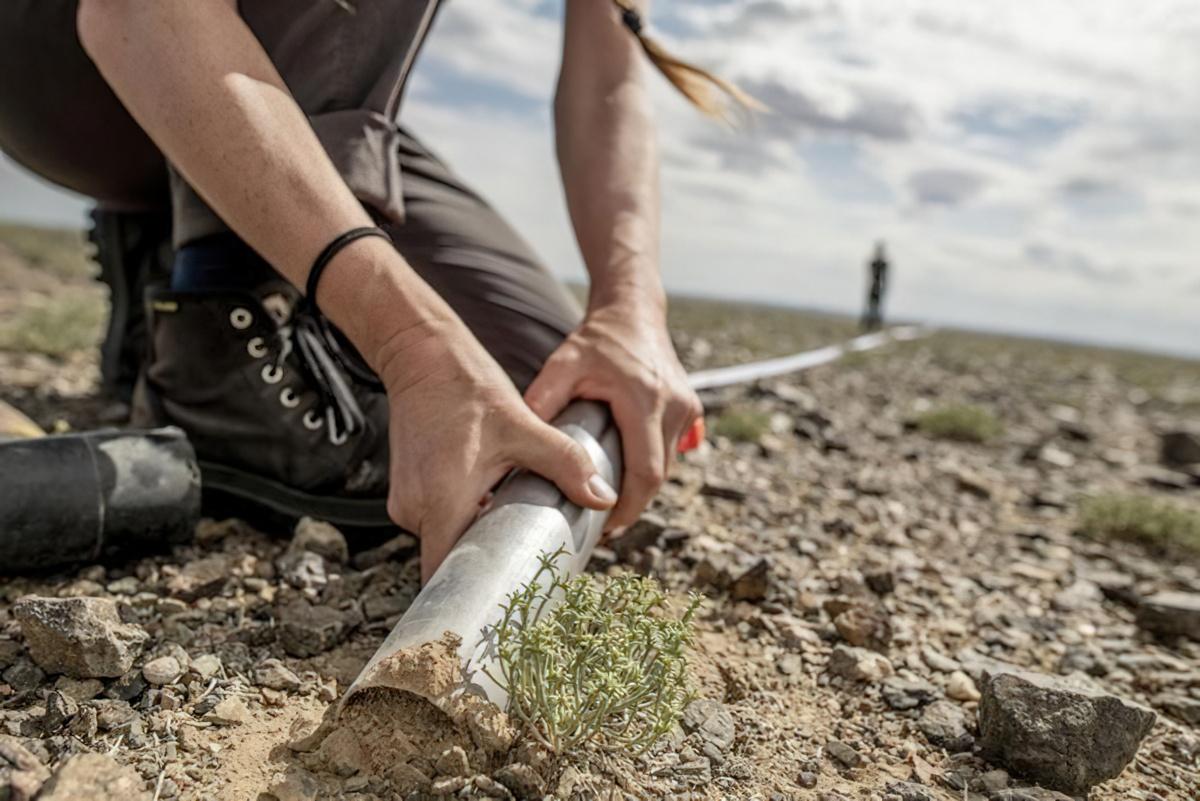
(Source: Tomás Munita, SPUN.Earth.)
These studies had already measured how “dense” the networks of AM fungi were in these samples. To determine this, scientists had to figure out how many meters of tube-like hyphae were in each cubic centimeter of soil. Believe it or not, one single teaspoon of soil can hold up to 33 feet (10 meters) of hyphae.
The researchers also gathered data about what the environment was like in the places where the samples were found. The scientists used all of this information to train an Artificial Intelligence computer model. Then they used the model to predict how dense the fungal networks would be in different places all over the world, even in areas where no samples had ever been collected.
(Source: Tomás Munita, SPUN.Earth.)
The team also used a special robot to take high-quality, close-up pictures of fungal samples grown in a lab. This allowed them to determine how thick the tubes of the hyphae were as they branched out.
With this information, the researchers were able to get a good idea of the length and weight of these fungal webs in the soil around the world.
They found that if all the world’s hyphae were laid out in a straight line, they would stretch about 68 quadrillion miles (110 quadrillion kilometers) long. That’s like traveling from the Earth to the sun – a 93-million mile (150-million kilometer) trip – not once, but 730 million times.
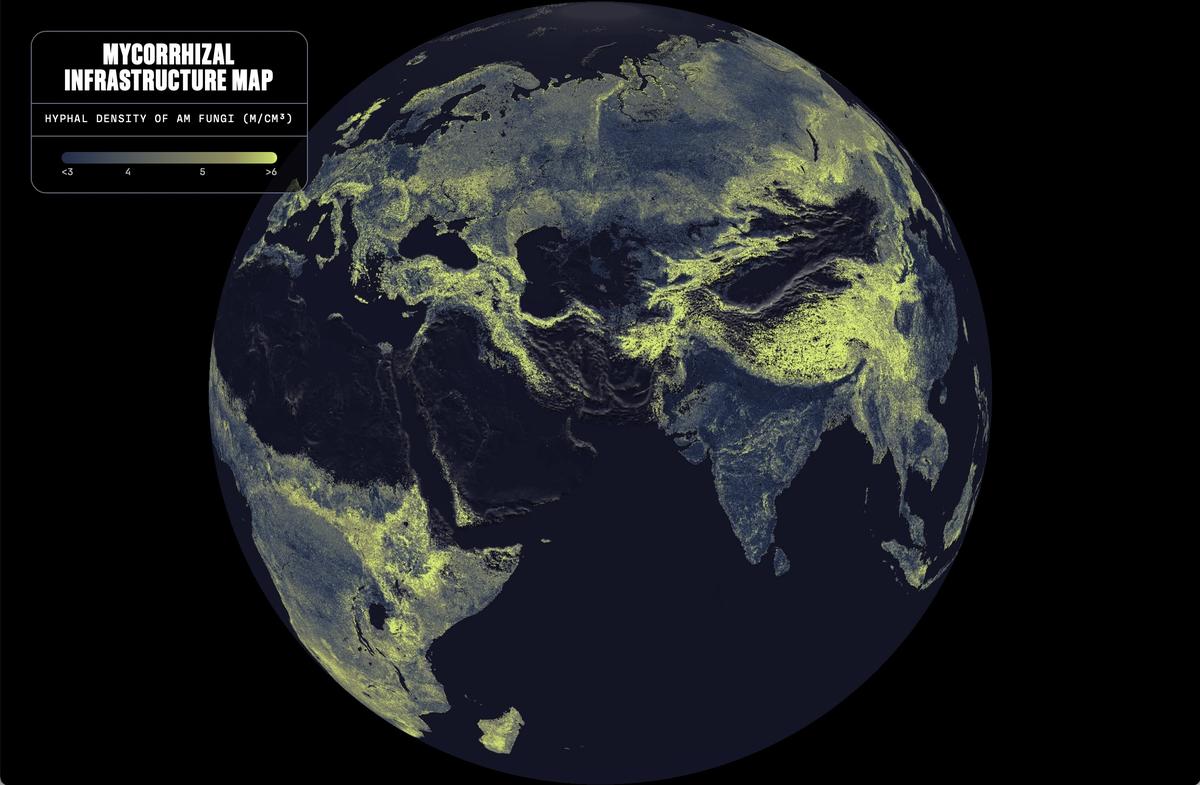
(Source: Truth & Beauty / Moritz Stefaner Justin Stewart, SPUN.Earth.)
The study showed that grasslands have the densest fungal networks. That’s important information, since it shows that grasslands play a big part in fighting the climate crisis. The report also showed that areas where crops are grown have about half as many fungi as other areas.
The scientists hope their findings will help people realize how important these underground networks of fungi are, and encourage efforts to protect them.
Did You Know…?
The scientists calculated that AM fungi networks hold about 300 megatons of carbon. How much is that? Well, the average human is about 18% carbon – roughly 26 pounds (12 kilograms). If you added up all the carbon contained in every person in the world, AM fungi networks would hold about 5 times that amount.