
Duluth, Minnesota —(Map)
Scientists studying a black “goo” found on a research ship in the Great Lakes have learned that the goo wasn’t just unusual – it actually contained a life form never heard of before. The slime still has scientists puzzling over several mysteries.
The R/V Blue Heron is a research ship owned by the US government. It’s run by the Large Lakes Observatory (LLO) at the University of Minnesota Duluth (UMD). The ship spends most of its time on research missions around the Great Lakes.
The Great Lakes
The Great Lakes are five massive lakes in the northern United States; some also go into Canada. There are five Great Lakes: Lake Huron, Lake Ontario, Lake Michigan, Lake Erie, and Lake Superior. Some people use the word “HOMES” to help them remember the lake names (Huron, Ontario, Michigan, Erie, Superior).

(Source: Rual Lee, via UMD.)
Last August, the Blue Heron was pulled out of the water for repairs. After a couple of days on land, the ship’s captain, Rual Lee, noticed that a black ooze was dripping from the ship’s rudder post. The post connects to the ship’s rudder, allowing the ship to be steered.
The captain was surprised because there shouldn’t have been anything there at all. The ship’s crew had never put oil or grease near the area. Only lake water would have touched the pole. But when the pole was removed, a “large amount” of the goo came rolling down.
It was strange. And Captain Lee wondered what the tar-like slime could be. It looked greasy, but it didn’t feel greasy. And it didn’t burn. Workers at the LLO collected a cup of the “ship goo”, and asked researchers at UMD to investigate.
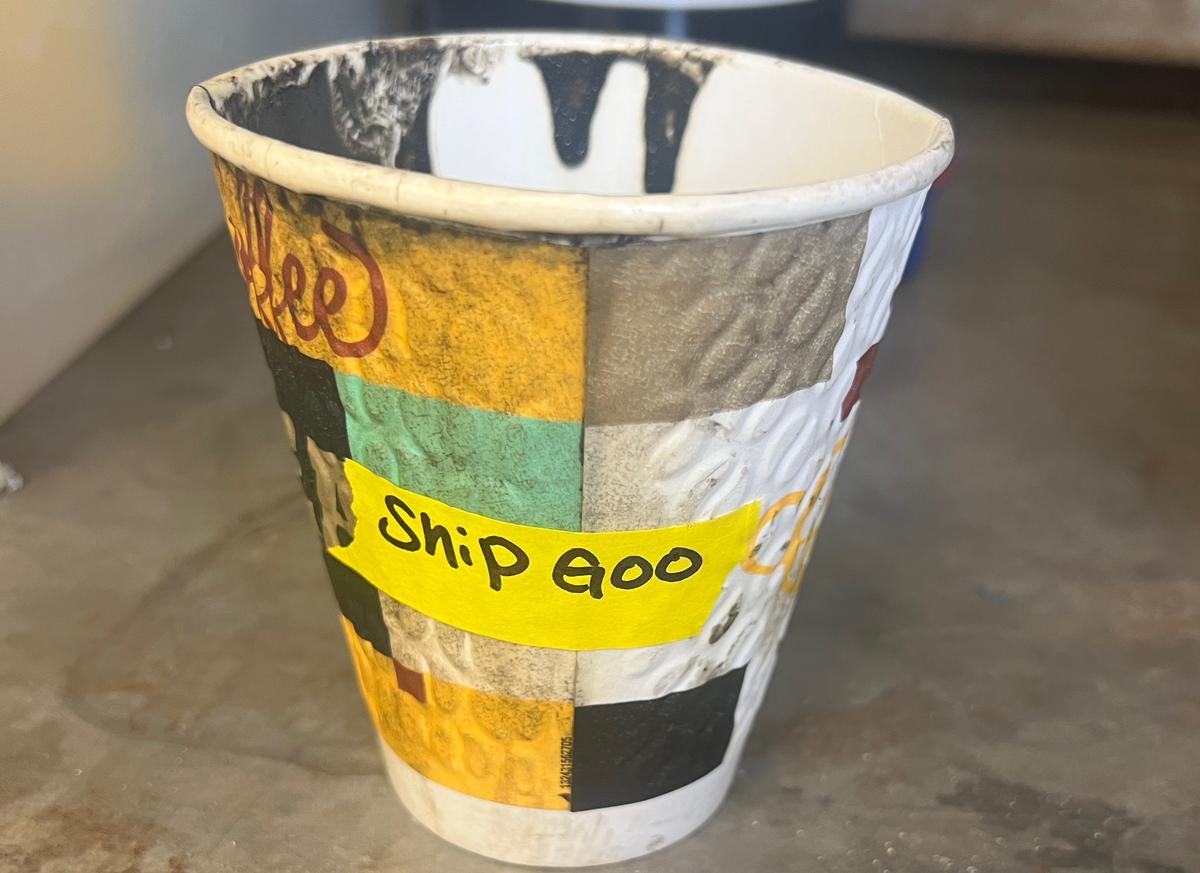
(Source: Cody Sheik, UMD.)
Cody Sheik is a biologist at UMD. He had one of his students study the sample. “We thought we’d find nothing,” he said. They were wrong.
The first tests of the slime returned enough DNA to make the scientists want to study it more carefully. “The biggest surprise was that the ship goo had life in it at all,” said Dr. Sheik.
The second tests showed a more surprising result: the goo contained the DNA of about 20 different organisms. Some of these organisms could be identified by checking known records. But at least one of the DNA samples was a kind of microbe that had never been recorded before. The researchers decided to call it “ShipGoo001”.
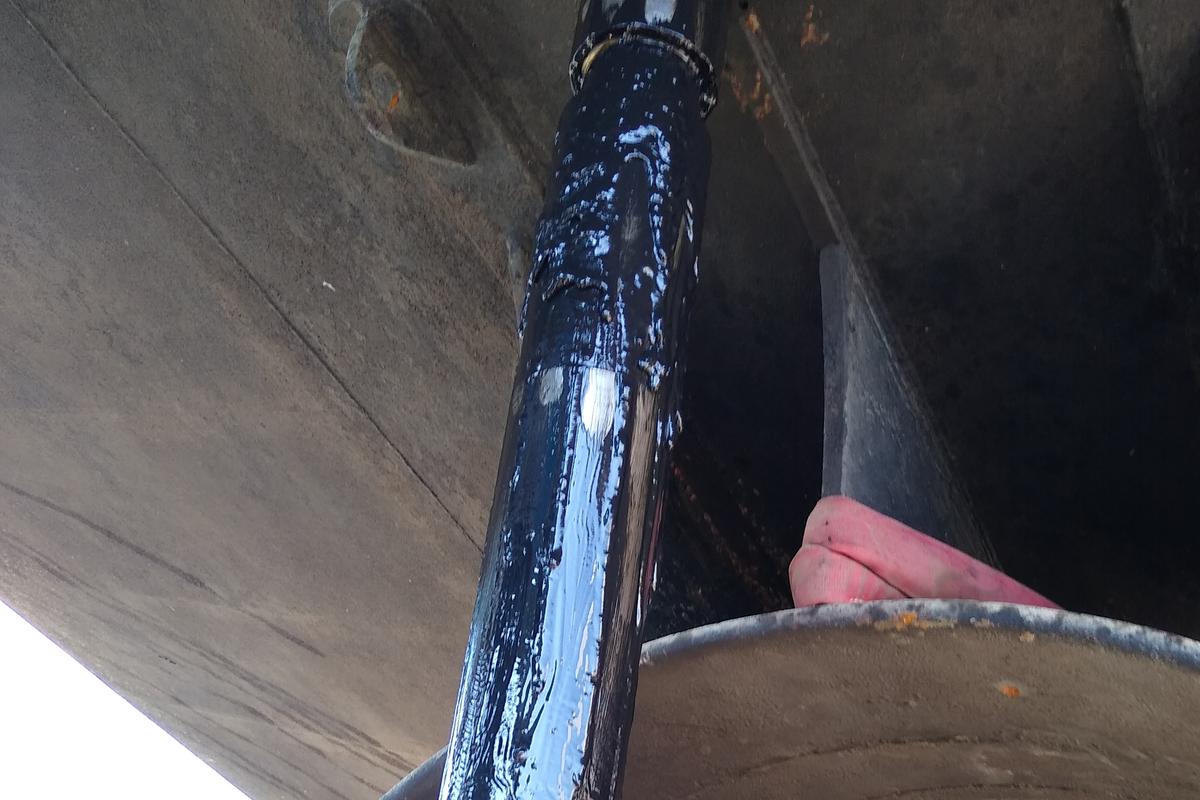
(Source: Rual Lee, via UMD.)
ShipGoo001 seems to grow well in a warm environment with no oxygen; those were the conditions it had near the rudder pole. But finding ShipGoo001 only raised more questions.
For one: how did the ShipGoo001 organisms get there? Probably not from the water. ShipGoo001 can’t survive around oxygen, and there’s lots of oxygen in the Great Lakes. Some of the other microbes in the ooze actually eat oxygen, perhaps making the mixture more pleasant for ShipGoo001 organisms.
One possibility is that the rudder post area was greased before the ship was bought, and that’s how the ShipGoo001 organisms got there. Some of the other microbes from the ooze have also been found in oil wells around the world.
Dr. Sheik says the discovery shows the value of being curious and of supporting basic science. Some of the microbes found produce methane gas, which could turn out to be useful for creating fuel. The researchers may have found a second organism new to science, so there could soon be a “ShipGoo002”.
Did You Know…?
Sadly, the researchers only had one small cup of the goo to work with. Since no one expected anything special, the rest of the ooze wasn’t saved. That will make it hard to study further. But Dr. Sheik believes that similar organisms can probably be found in similar places on other ships.
😕
This map has not been loaded because of your cookie choices. To view the content, you can accept 'Non-necessary' cookies.