
Geneva, Switzerland —(Map)
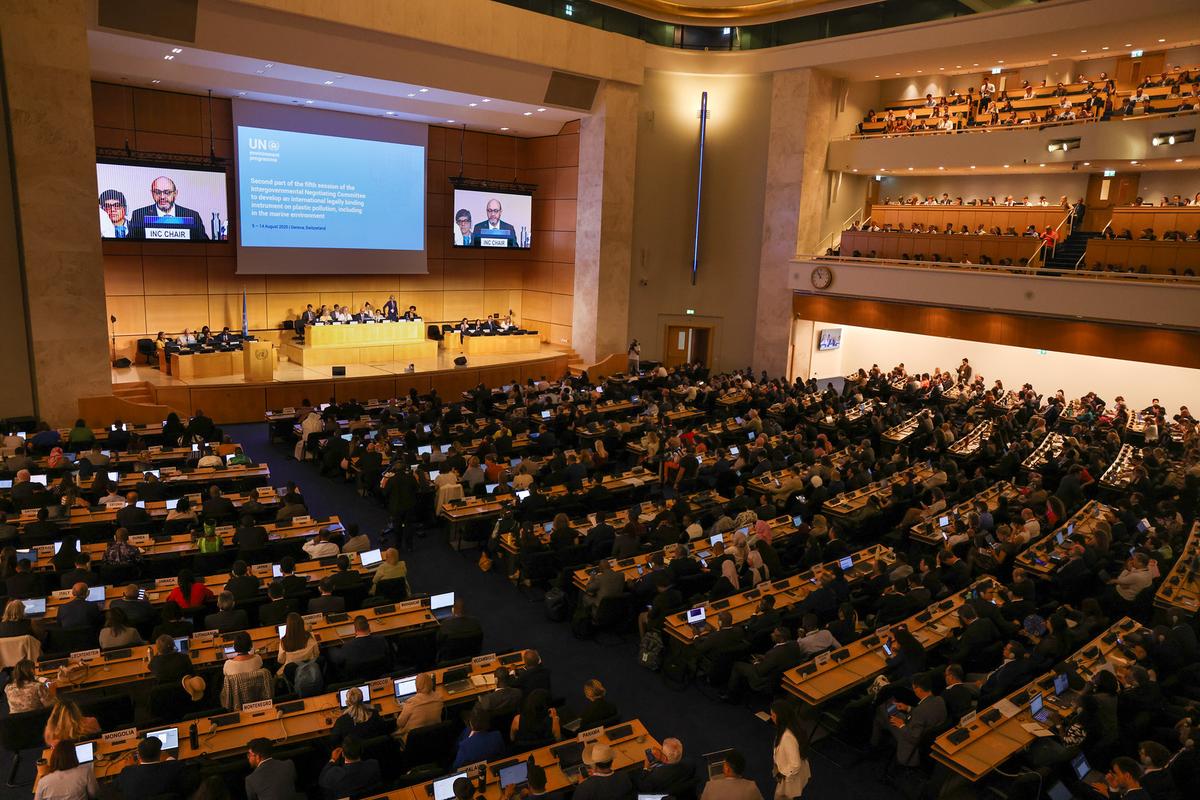
In early August, people representing over 180 countries met for 10 days in Geneva, Switzerland. They hoped to reach an agreement on dealing with plastic pollution. But the meeting ended in failure. Most countries wanted to put limits on producing new plastic. But countries that produce lots of plastic fought the idea.
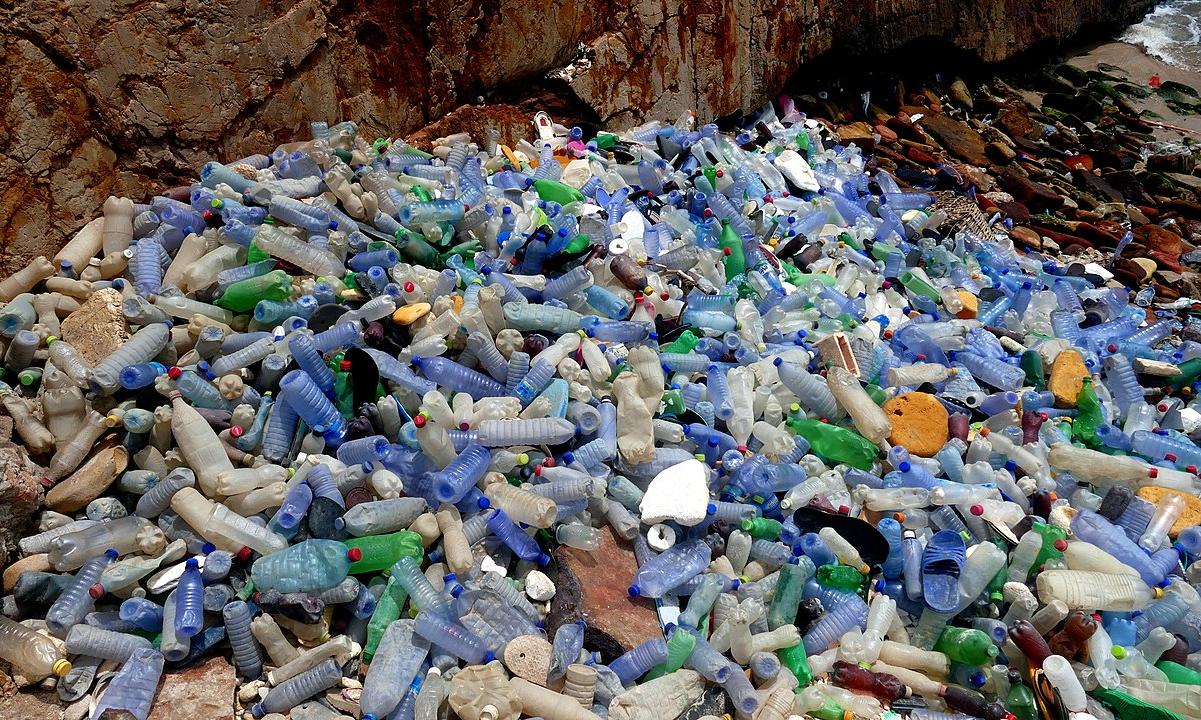
Plastic pollution is a huge problem. About 507 million tons (460 million tonnes) of new plastic are made every year. Over 90% of that plastic is never recycled. It ends up in landfills, lakes, rivers, and oceans.
Most plastics are made from some kind of oil. Plastic made in this way releases dangerous gases when it’s produced and when it’s burned or buried in the ground. Scientists say plastics are responsible for 4.5% of the world’s greenhouse gases – the gases that are driving the climate crisis.
(Source: Eggi [CC BY-SA 3.0], via Wikimedia Commons.)
Plastic doesn’t “decompose” like natural materials (such as wood). It just breaks into smaller and smaller pieces, creating a new problem – microplastics. Microplastics are tiny bits of plastic, often too small to be seen. Microplastics have been found almost everywhere, from the Earth’s tallest mountain to the deepest point in the sea. They’re even in the bodies of most humans.
In 2022, the United Nations (UN) decided that its member countries should work to create an official agreement to tackle plastic pollution from start to finish, including how plastic is made, used, and thrown away or recycled.
The talks in Geneva marked the sixth time the countries met to discuss plastic pollution, all without reaching an agreement. The meeting even ran for an extra day, but the countries couldn’t agree.
(Source: © Florian Fussstetter/UNEP [CC BY-NC-SA 4.0],, via Flickr.com.)
The main thing the countries disagreed about was whether there should be limits on making new plastic. Over 100 countries believe this should be limited. Many countries were also concerned about the dangerous chemicals in plastics.
But an important group of countries – including Russia and Saudi Arabia – didn’t agree. These countries make a lot of money from plastic, and don’t want limits on producing new plastic. With renewable energy growing rapidly, many countries and companies that produce fossil fuels see plastic as an important source of money.
Many people were disappointed that the talks didn’t result in an agreement. The representative from Tuvalu said the failure meant that “millions of tons of plastic waste will continue to be dumped in our oceans.”
😕
This image has not been loaded because of your cookie choices. To view the content, you can accept 'Non-necessary' cookies.
An important group of countries – including Russia and Saudi Arabia – didn’t want limits on producing new plastic. These countries see plastic as an important source of money. Above, people clean up small plastic pellets that washed up on a beach in Sri Lanka in July. Factories use these pellets to make plastic objects.
Some people believe the group’s rules for making decisions is limiting its progress. The group is supposed to try for “consensus” decisions, where every country agrees. But some countries think a majority vote should be used when everyone can’t agree. Bjorn Beeler, who leads a group that fights pollution, said, “This meeting proved that consensus is dead.”
Inger Andersen leads the UN’s Environment Program, which held the meeting. “This work will not stop,” she said, “Because plastic pollution will not stop. People want a deal.”
For now, the world will have to wait for the next meeting to see if the countries can agree on how to tackle the growing problem of plastic pollution.
Note: The article has been updated to clarify that majority voting is not currently used.
😕
This map has not been loaded because of your cookie choices. To view the content, you can accept 'Non-necessary' cookies.