
Birds are famous for waking up early. But in a recent study, scientists discovered that light pollution is leading birds to wake even earlier and go to sleep later. Bright lights are costing birds an average of 50 minutes of sleep each night.
Brent Pease teaches at Southern Illinois University Carbondale. In 2023, he was looking for a way to get his college students more excited about birds. He set up a microphone at an outdoor education center so he could play the singing birds for his students indoors.
Excited by this success, Dr. Pease began using a special recording device called a PUC*. This device is made by a group called BirdWeather. It doesn’t just record bird songs; it uses artificial intelligence to identify the birds that are singing. The device also records time, location, and weather information, and reports all of this over the internet.
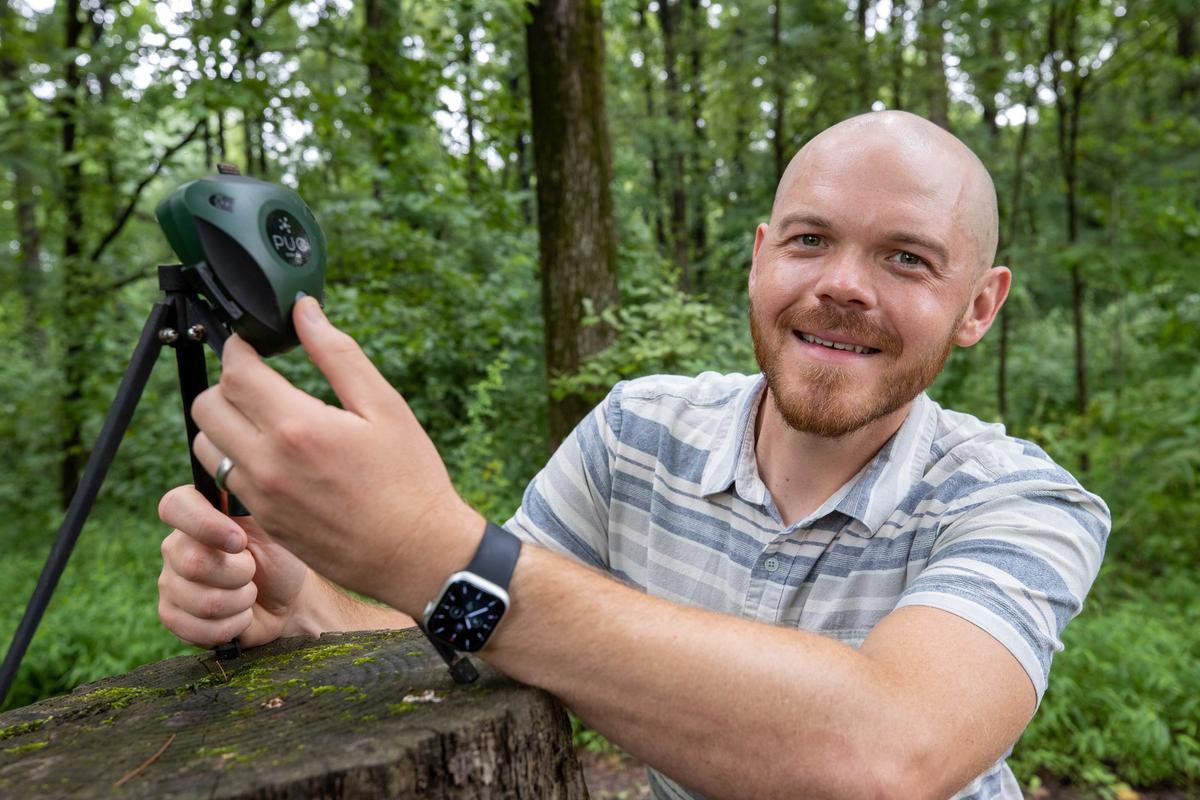
(Source: Russell Bailey, SIU Carbondale.)
BirdWeather collects information from PUCs located in the back yards of people around the world. The website has already detected around 1.4 billion bird songs. Dr. Pease believes this is “really important for wildlife research.”
“All of a sudden,” he says, “We not only know where species are, but how they are behaving 24/7.” He and Neil Gilbert, an assistant professor at Oklahoma State University, decided to use this information to investigate how light pollution was affecting birds.
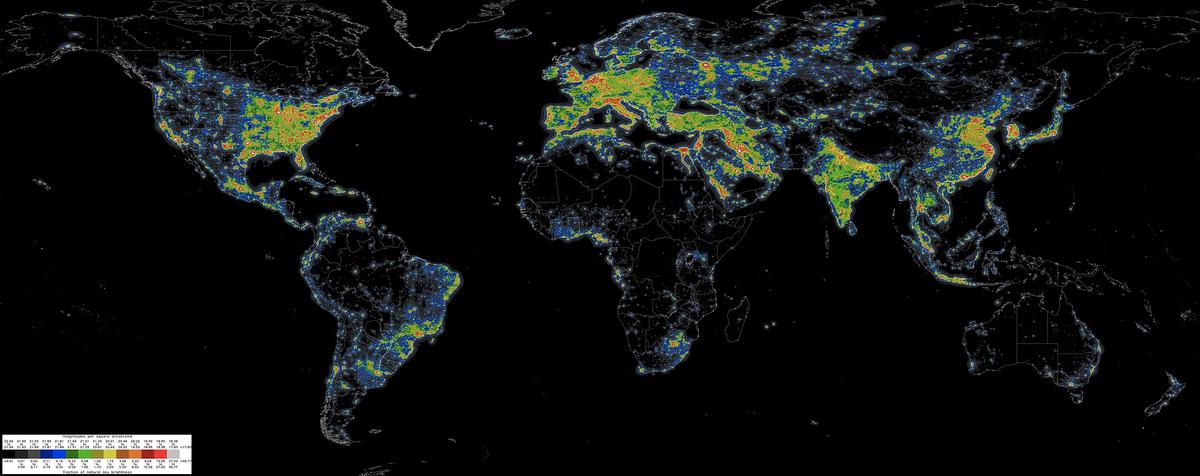
(Source: David Lorenz, via Wikimedia Commons.)
Light pollution happens when too much artificial light, like that from streetlights or buildings, makes the night much brighter than normal. Light pollution affects roughly 23% of the planet. It’s known that bright city lights can be confusing and deadly for migrating birds. But the researchers wanted to find out how birds were affected when they lived in areas with light pollution.
The researchers studied BirdWeather data on over 60 million bird calls from 583 species of birds that are normally active during the day. They knew the time and location of each bird sound. This allowed them to compare the timing of the calls with the average amount of light pollution in the area. (This information came from satellite images.).
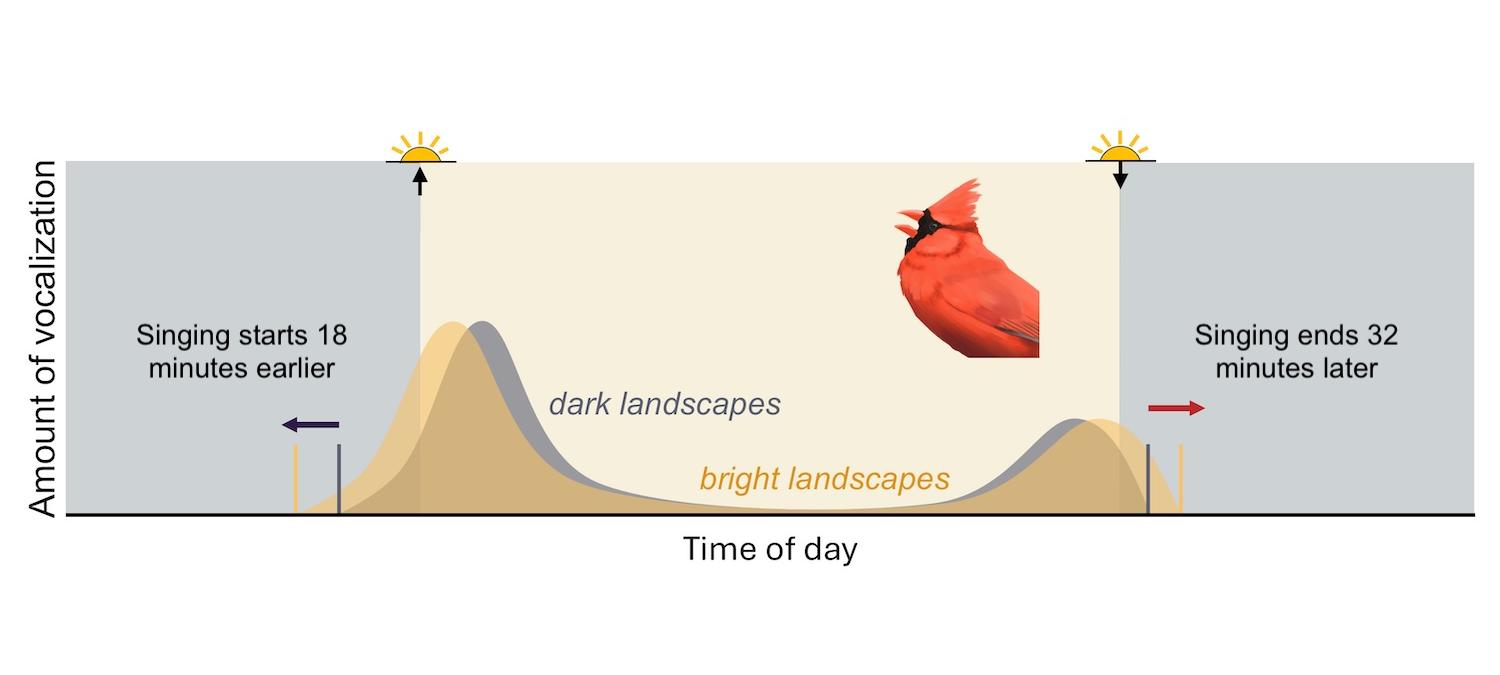
(Source: Adapted from image by Pease/Gilbert, via Github.com.)
They discovered that light pollution had a huge effect on how active the birds were in the morning and evening. In bright areas, birds began singing an average of 18 minutes early. At night, they sang for an extra 32 minutes on average. That means birds in areas with strong light pollution are staying up an average of 50 minutes longer every day.
😕
This image has not been loaded because of your cookie choices. To view the content, you can accept 'Non-necessary' cookies.
The light had a stronger effect on birds with larger eyes. This included birds like American robins (above), Northern cardinals, European goldfinches, and Australian magpie-larks. Dr. Gilbert says, “American Robins will sometimes be singing…two hours before sunrise in some of these polluted areas.”
The light had a stronger effect on birds with larger eyes (compared to their body size). This included birds like American robins, Northern cardinals, European goldfinches, and Australian magpie-larks. Birds that nest in dark areas – like holes in trees – didn’t seem to be greatly affected by light pollution.
The scientists say it’s worrying that the natural patterns of birds are being interrupted. But they say it’s too early to tell if staying up longer is actually harmful to the birds. They say it’s possible that the birds are adjusting somehow.
* PUC stands for Portable Universe Codec.