
Scientists have found a recording of a whale song made in 1949. It may be the earliest recording of a whale song ever made. The discovery is important because it provides a record of how sounds in the ocean have changed over the last 75 years.
In 1949, scientists from the Woods Hole Oceanographic Institution (WHOI) were working in the Atlantic Ocean near Bermuda. At the time, they were testing systems for recording sounds underwater. This wasn’t easy, since recording equipment at the time was big and bulky. And recording underwater was a new challenge.
(Source: Aran Mooney, © Woods Hole Oceanographic Institution.)
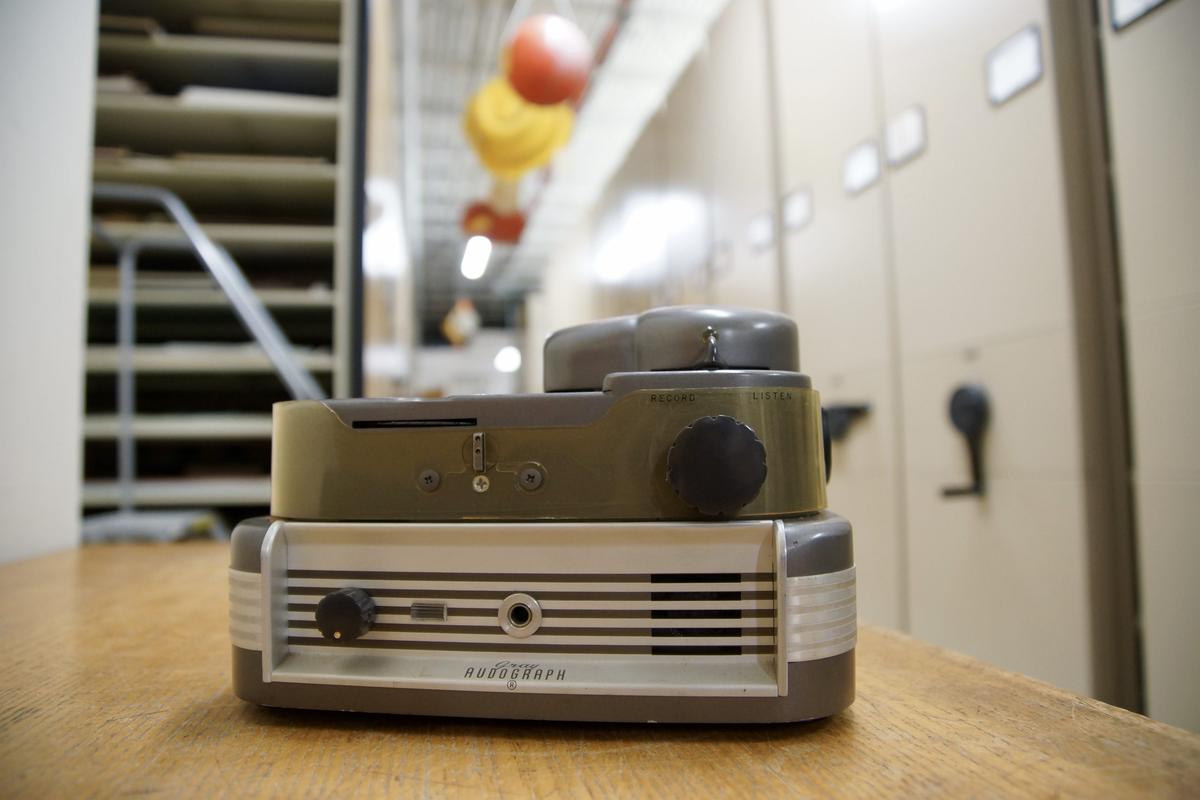
To make the recording, the scientists used a “Gray Audograph” – an office machine meant for business people to dictate letters. The microphone was lowered into the water in a special waterproof system that WHOI scientists had rigged up, called a “suitcase”.
Though recording tape was more common at the time, the Gray Audograph recorded onto thin plastic discs. The scientists didn’t really know what they were recording, so they labeled the recording “fish noises”.
(Source: Rachel Mann, ©Woods Hole Oceanographic Institution.)
The disc was one of 212 similar discs stored in WHOI’s archives (collections). Unlike many tapes, the discs have survived because they were well-cared for.
Dr. Ashley Jester is in charge of WHOI’s archives. She was sorting through the old recordings, and found the disc labeled “fish noises”. Almost as soon as she began playing the disc, she realized that it wasn’t fish noise at all. It was a humpback whale.
Scientists believe it may be the earliest recording of a whale song ever made.
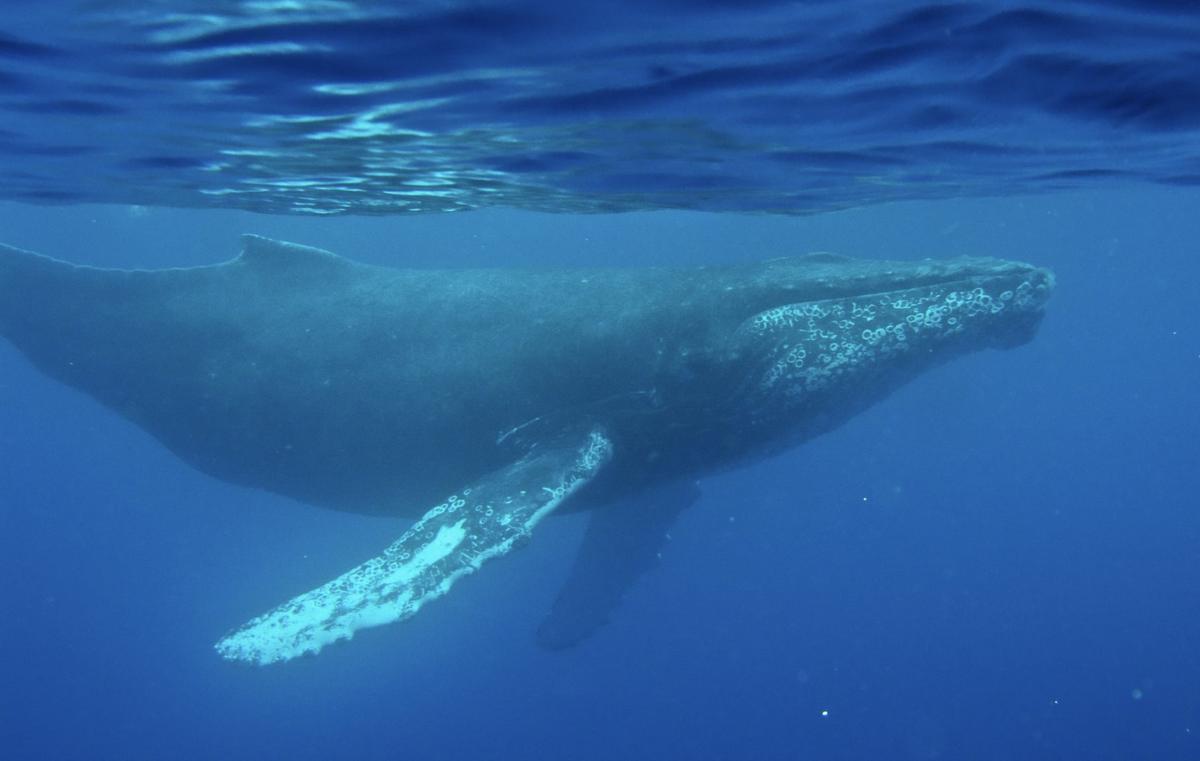
Almost as soon as Dr. Jester began playing the disc labeled “fish noises”, she realized that the sound was a humpback whale. Recorded near Bermuda in 1949, it may be the earliest recording of a whale song ever made. The MP3 above plays just the first few seconds from the recording.
(Source: ©Woods Hole Oceanographic Institution.)
The recording was made about 20 years before people were really aware of whale songs. It wasn’t until scientist Roger Payne put out an album called “Songs of the Humpback Whale” that most people learned about this part of whale communication.
The recording is important for several reasons. For one thing, it shows what the ocean sounded like in 1949. Scientists say some parts of the ocean are now 10 times as loud as they were just 60 years ago.
These days, huge ships are constantly traveling through the sea. Loud machines are being used to explore the ocean floor. With drilling, underwater construction, and other activities, there are more machines and devices making noise underwater now than ever before.
😕
This image has not been loaded because of your cookie choices. To view the content, you can accept 'Non-necessary' cookies.
Whales use sounds to talk to each other, to find their way as they travel, and to locate food. As the ocean has gotten noisier, the sounds that whales depend on may be getting lost in the noise pollution. Above, a mother humpback whale and her calf near the coast of Brazil in 2023.
The increase in underwater noise is a big problem for whales. Whales use sounds to talk to each other, to find their way as they travel, and to locate food. As the ocean has gotten noisier, the sounds that whales depend on may be getting lost in the noise pollution.
The new recording is also important because it may show how whale songs have changed. Just as human language changes over time, so does the way whales communicate. By comparing the old whale recording with new ones, scientists can learn about these changes.
Dr. Jester says there are more than 200 hours of underwater recordings like the “fish noises” disc. The scientists at WHOI are excited to see what other sounds and stories might be hidden on those discs.