
Guaporé River, South America —(Map)
Scientists from the University of Florida (UF) have recently reported on the world’s largest nesting site for freshwater turtles. They counted about 41,000 Giant South American River turtles at the site. Just as importantly, they developed a more accurate method of counting the turtles.
Giant South American River Turtles are large turtles that live in rivers in South America. They get their name from the size of the adults, which can weigh over 135 pounds (61 kilograms). These turtles are threatened, largely because people hunt them for their meat and eggs.
In July and August each year, female turtles of this species gather in large numbers to nest in the sandbanks of the Guaporé River, which runs along the border between Brazil and Bolivia. This provides a great opportunity to count them.
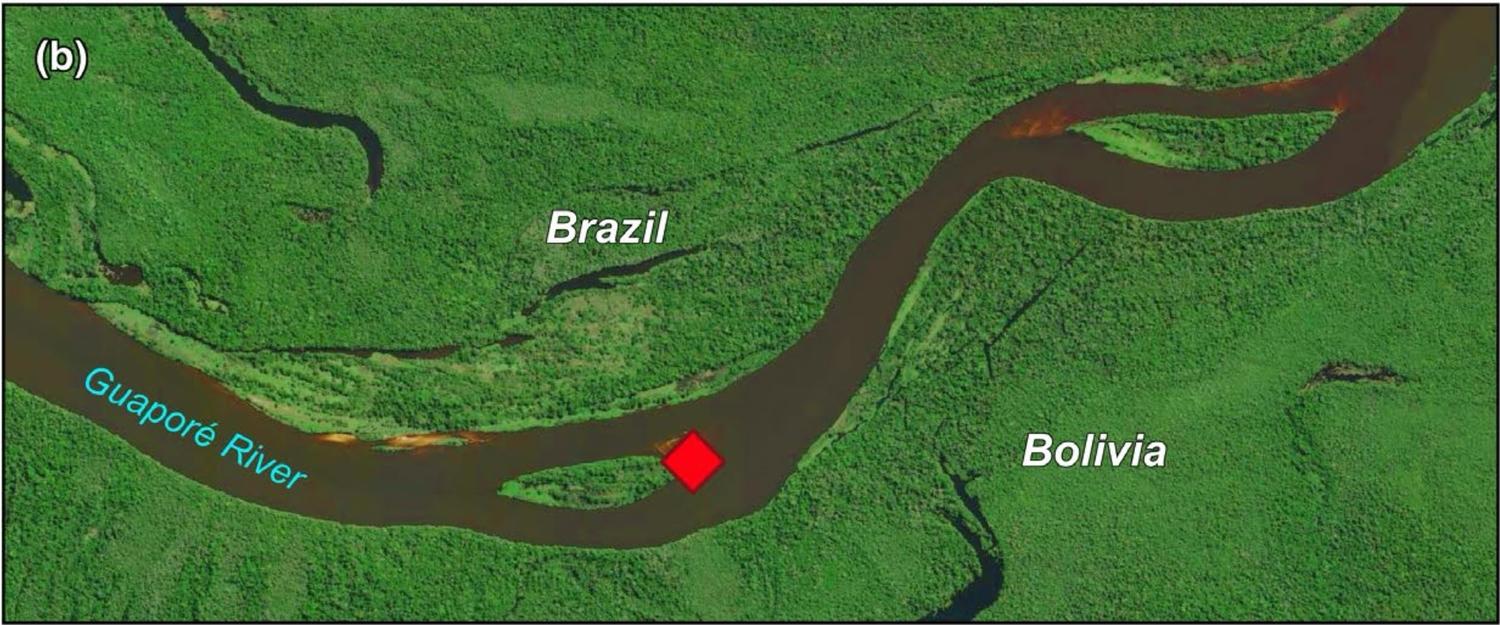
(Source: Brack et al., [CC BY-SA 4.0], Journal of Applied Ecology.)
The Wildlife Conservation Society (WCS) is a group that works to protect animals. WCS scientists in South America use drones to count turtles by taking lots of pictures from above. These pictures are combined into a large, detailed image, called an “orthomosaic”.
Counting turtles in an orthomosaic disturbs the animals less than having researchers walk through the area. It also gives a more complete picture of the animals in the area.
But the method isn’t perfect. Because the turtles often move around, some may be counted more than once. Also, not all of the animals appear in the images.
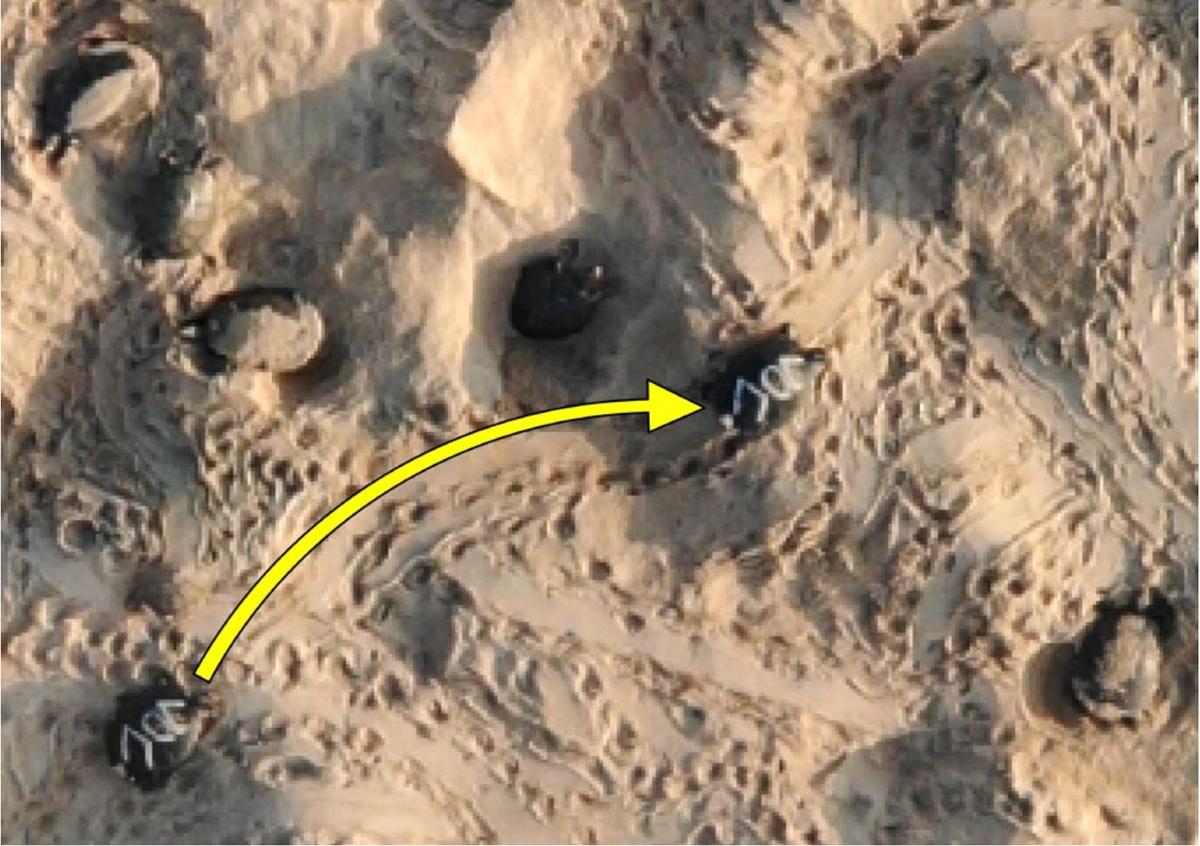
(Source: Brack et al., [CC BY-SA 4.0], Journal of Applied Ecology.)
UF researcher Ismael Brack, met with WCS scientists and learned about their work. He thought that by working together, they could come up with a more accurate way to count the turtles.
The trick was to try to identify and track some of the turtles to get a better idea of what was happening in the larger group.
The scientists marked the shells of 1,187 turtles with paint. They then flew a drone over the area four times a day for 12 days. On each trip the drone took 1,500 pictures, following a pattern designed to cover the whole area. The researchers used computers to create orthomosaics from these pictures.
Next, the scientists carefully studied how many marked turtles were visible in these images, keeping track of whether they were walking or nesting. Studying the marked turtles revealed that 20% of the time, walking turtles appeared more than once in an image.
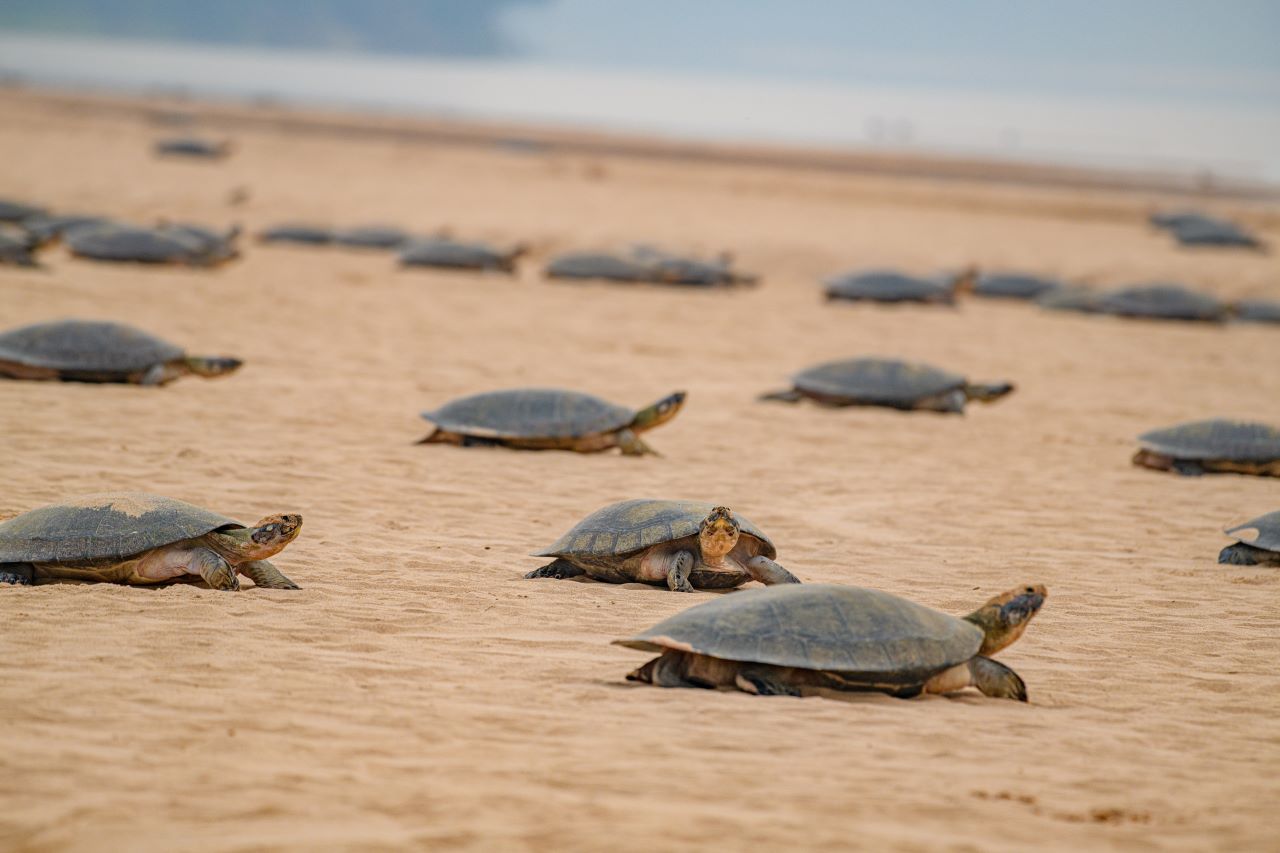
(Source: Omar Toprrico/WCS, via University of Florida.)
Using this information, the researchers created a special math model to help them figure out more accurately how many turtles were really using the sandbank.
The results were surprising. People counting on the ground counted about 16,000 turtles. Simply counting turtles in the orthomosaics without using the math model gave a much higher number – about 79,000 turtles. But the math model showed that the real number was about 41,000 turtles.
Dr. Brack points out that having an accurate count of the turtles is important for protecting them. Without an accurate figure, it’s difficult to know if the numbers are going up or down.
The scientists plan to keep working to improve the method. They believe the method could be used to count other kinds of animals, too.
😕
This map has not been loaded because of your cookie choices. To view the content, you can accept 'Non-necessary' cookies.