The Free Software Foundation (FSF) celebrated its 40th birthday last Saturday. First started in 1985, the FSF has helped shape the digital world we live in today. Its ideas about free software inspired the open‑source movement; now open‑source programs run on countless computers, phones, and devices around the globe.
Before the FSF, most software had to be paid for. And the way it worked was kept secret. You couldn’t look at the code that made a program work, and you couldn’t change it. Richard Stallman thought this was a problem. He believed people should be able to see how their software worked. He also thought they should be allowed to change the software and share it with other people.
In 1985, Mr. Stallman created the FSF to support his ideas about “free software”. In this case, “free” didn’t mean that the software didn’t cost money. Instead, it meant that users should be free – free to run the software, to study how it works, to change it, and to share it with others.
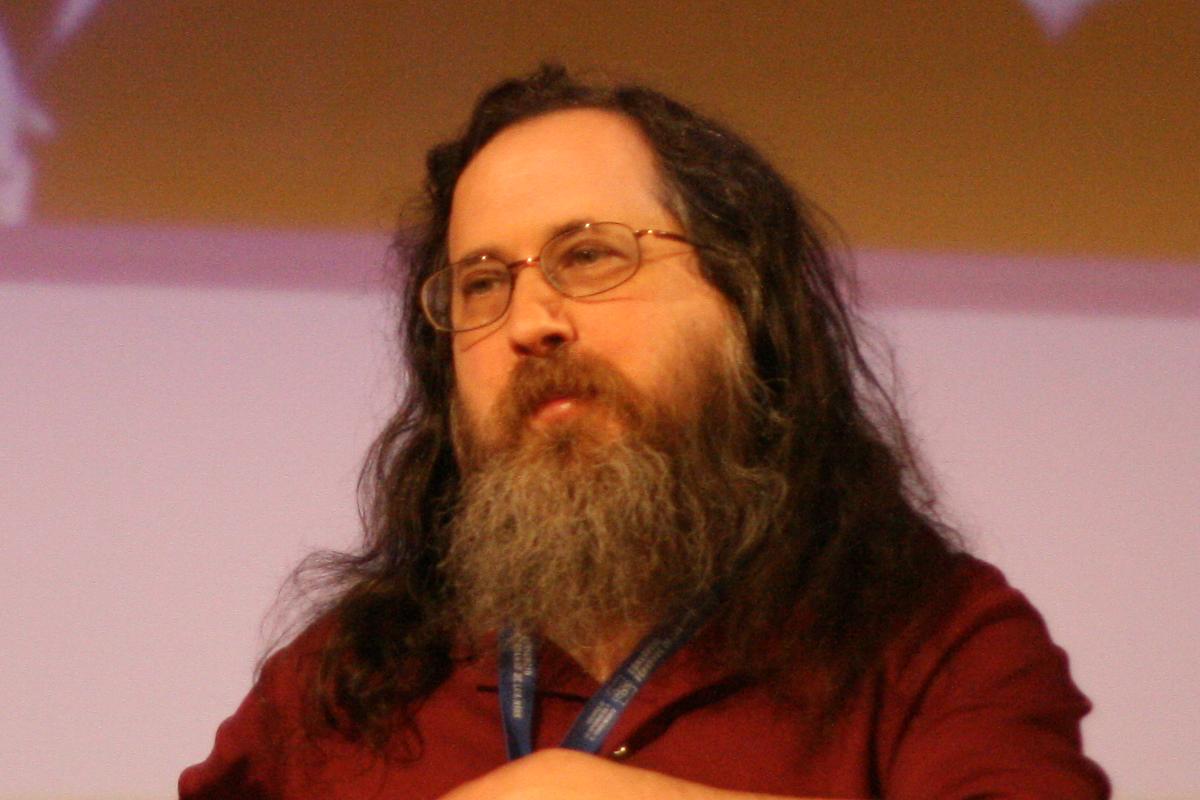
(Source: Pablo, [CC BY-SA 2.0], via Wikimedia Commons.)
At the time, these were new and unusual ideas.
The FSF created special agreements, called “licenses”, that people and companies could use for their software. Most licenses at the time said something like “Company X made this software. You can use it, but you can’t copy it, change it, or share it.”
The FSF created the GNU General Public License (GPL), which said the opposite. The GPL lets people use and change software, but it also requires them to share their changes under the same license. This makes sure that the software always remains free and open.
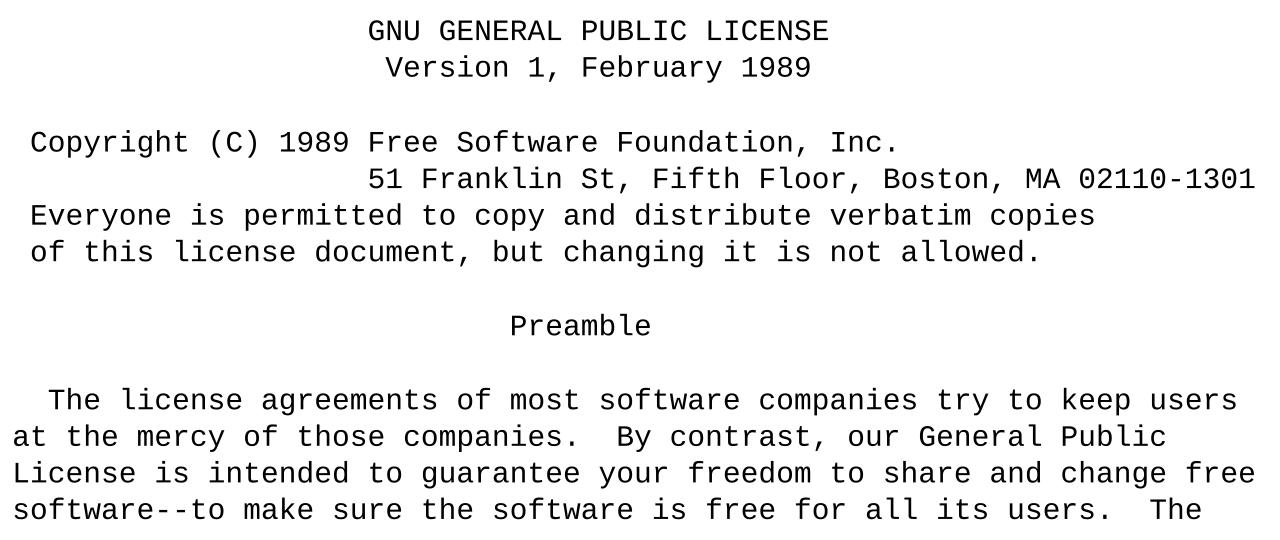
(Source: [GNU GPLv2], via Wikimedia Commons.)
The FSF’s ideas have had a huge impact. Many important software projects are based on the FSF’s licenses. For example, the GNU Project, also started by Mr. Stallman, created many important tools that are used in Linux, a popular open-source operating system. And Linux is free software, released under the GPL.
Today, Linux is everywhere, whether you know it or not. If you use an Android phone or a Chromebook, you’re using a system based on Linux. Huge organizations like Google, Twitter, Amazon, and Wikipedia depend on Linux. Roughly 75% of the computers serving the internet run Linux.
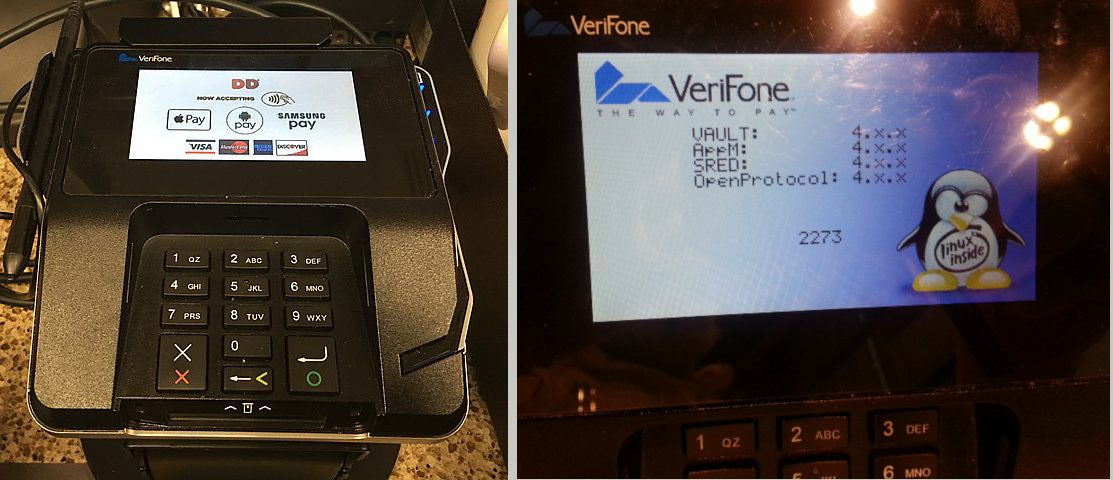
(Source: Left: [CC BY 2.0], Mike Mozart, Right: [CC BY 4.0], Miskatonic.org.)
.jpg)
Today, the ideas behind the FSF are no longer unusual. Using, studying, changing, and sharing computer code is common. There are dozens of open source licenses. And GitHub, the world’s largest collection of computer code, holds millions and millions of projects that anyone can download, use, and work on.
Even companies like Apple and Microsoft, which make mainly “closed” software, use free and open source tools for some parts of their software.
(Source: JL [CC BY-SA 4.0], via FSF.)
The FSF has changed a lot more than just software. It has changed the way people think about sharing technology. These days, lots of people believe that technology should help users, not limit them. And the idea of “open source” runs through many fields, including science, education, electronics, music, art, and even healthcare.
Did You Know…?
To celebrate 40 years, on October 4, the FSF held a special event in Boston. They also announced a new project called LibrePhone, which aims to “bring software freedom” to mobile phones.