
Sydney, Australia —(Map)
Regent honeyeaters are beautiful black and yellow birds found in southeastern Australia. There used to be huge flocks of them, but now they’re in danger of dying out. But scientists may have found a way to help the birds survive – by getting older birds to teach younger birds how to sing.
The honeyeaters are endangered because large areas of the forests where they live have been cut down. Scientists think there are only about 250 regent honeyeaters left in the wild.
As their numbers have dropped, the birds have become more spread out. This has caused an unusual problem: young honeyeaters in the wild haven’t been learning the song that male honeyeaters have always sung.
That’s a problem, since male regent honeyeaters use this song to attract mates and defend their territory.
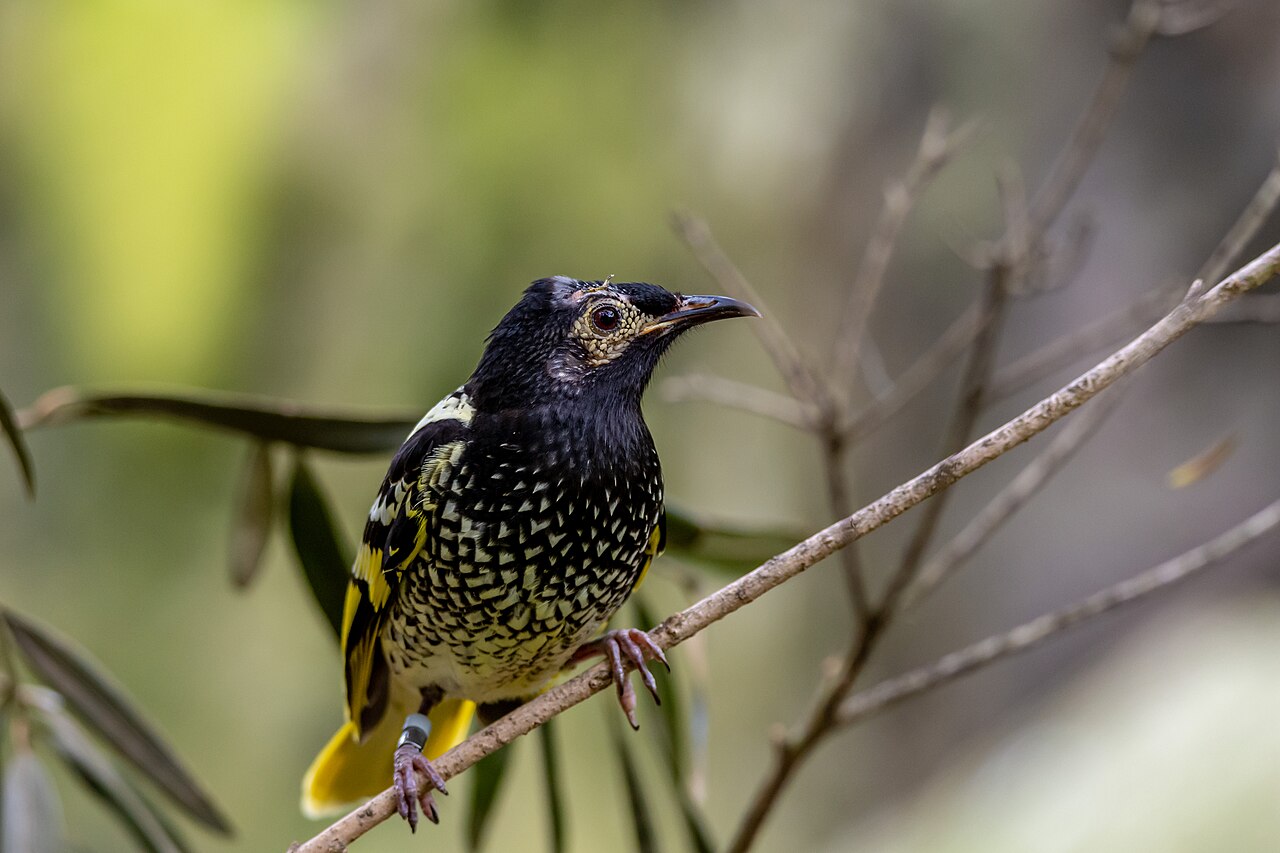
(Source: Jss367 [CC BY-SA 4.0], via Wikimedia Commons.)
Some young honeyeaters sing simpler versions of the old song. Others are even copying the songs of different kinds of birds.
Because there are so few of the birds left in the wild, some zoos in Australia have been raising regent honeyeaters in captivity. The goal is to release these birds into the wild.
But without hearing any adult male honeyeaters sing, young birds in captivity can only develop a very basic song that scientists describe as “strange”. When they’re released into the wild, these birds may struggle to attract mates with their singing.
As the numbers of regent honeyeaters have dropped, young birds haven’t been learning the song that male honeyeaters have always sung. So scientists are working to teach them the song. You can hear this song above.
Source: Australian National University .)
Daniel Appleby and other scientists at the Australian National University began to work on a plan to help the birds learn the right song. They knew that young birds normally learn the song by listening to older males. So they decided to try to give the young birds a singing tutor (teacher).
The scientists first tried playing recordings of the song all day long for the young birds. That had no effect on the songs that the young birds made.
The zoos* had two older birds who had been born in the wild and knew the song. The scientists decided to try to use these birds as teachers. They put each of these birds, as a tutor, into an area with several younger birds. That worked well. After about three months, the younger birds began to sing the correct song.
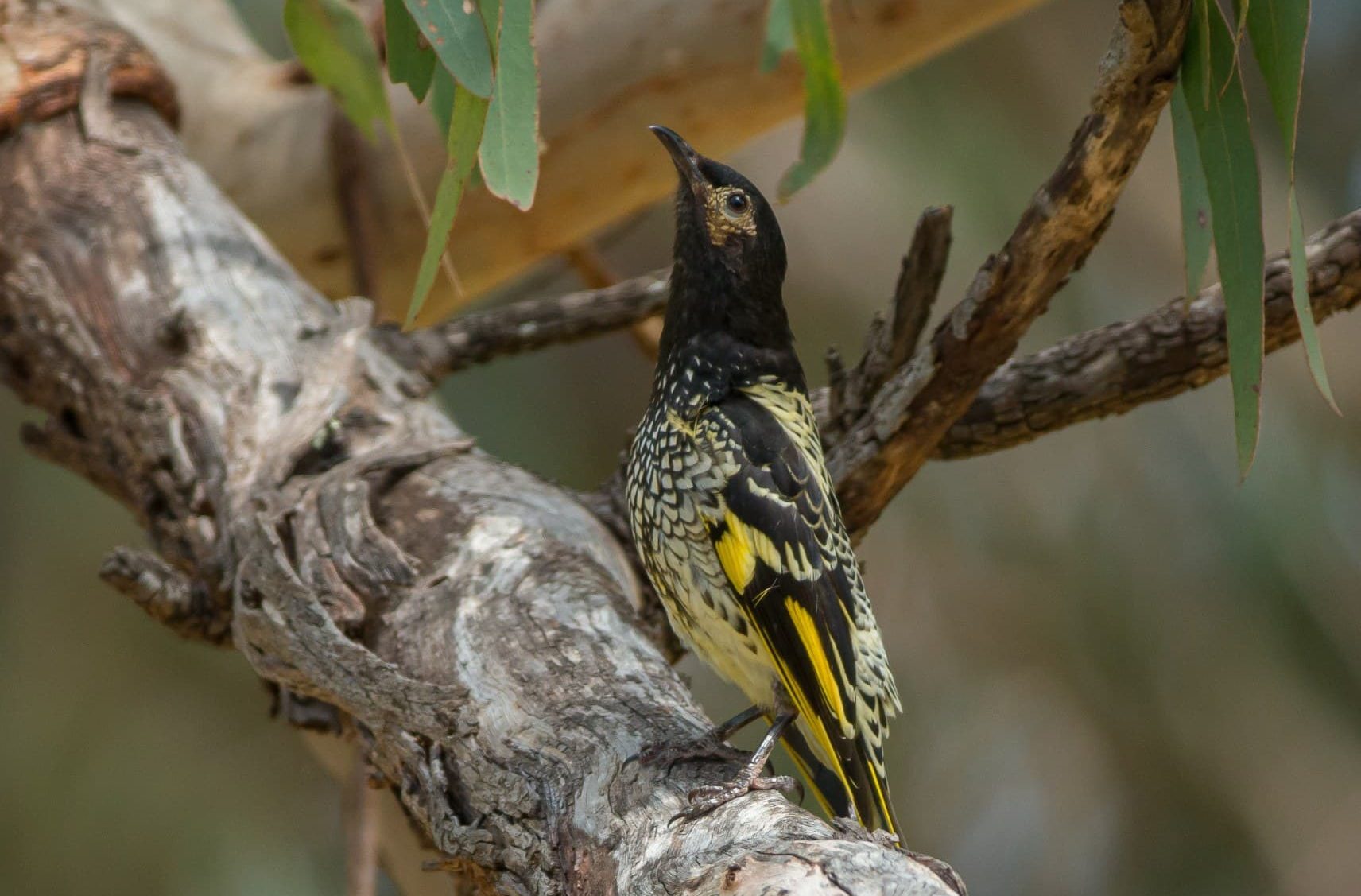
(Source: Murray Chambers, Australian National University .)
The scientists found that when there were five or fewer young birds for each tutor, the young birds learned the song very well. So well, in fact, that it was hard to tell their songs apart.
As the program continued, some of the successful younger birds became tutors themselves, teaching the song to other birds. Now, over half of the male honeyeaters raised in zoos can sing the correct song.
The researchers are releasing some of these young birds into the wild. They are watching carefully to see how the young birds do.
They hope that as they release more and more honeyeaters who know the right song, their numbers will grow. Having the birds singing the same song will make it easier for regent honeyeaters to find each other and raise more chicks.
Did You Know…?
The program’s success suggests that when scientists are trying to protect endangered species, it might be important to think about an animal’s “culture”. In other words, not just saving the animals, but also protecting the knowledge and behaviors that they pass down to their children.
* The zoos involved in the song tutoring are the Taronga Western Plains Zoo and Taronga Zoo, Sydney.
😕
This map has not been loaded because of your cookie choices. To view the content, you can accept 'Non-necessary' cookies.