
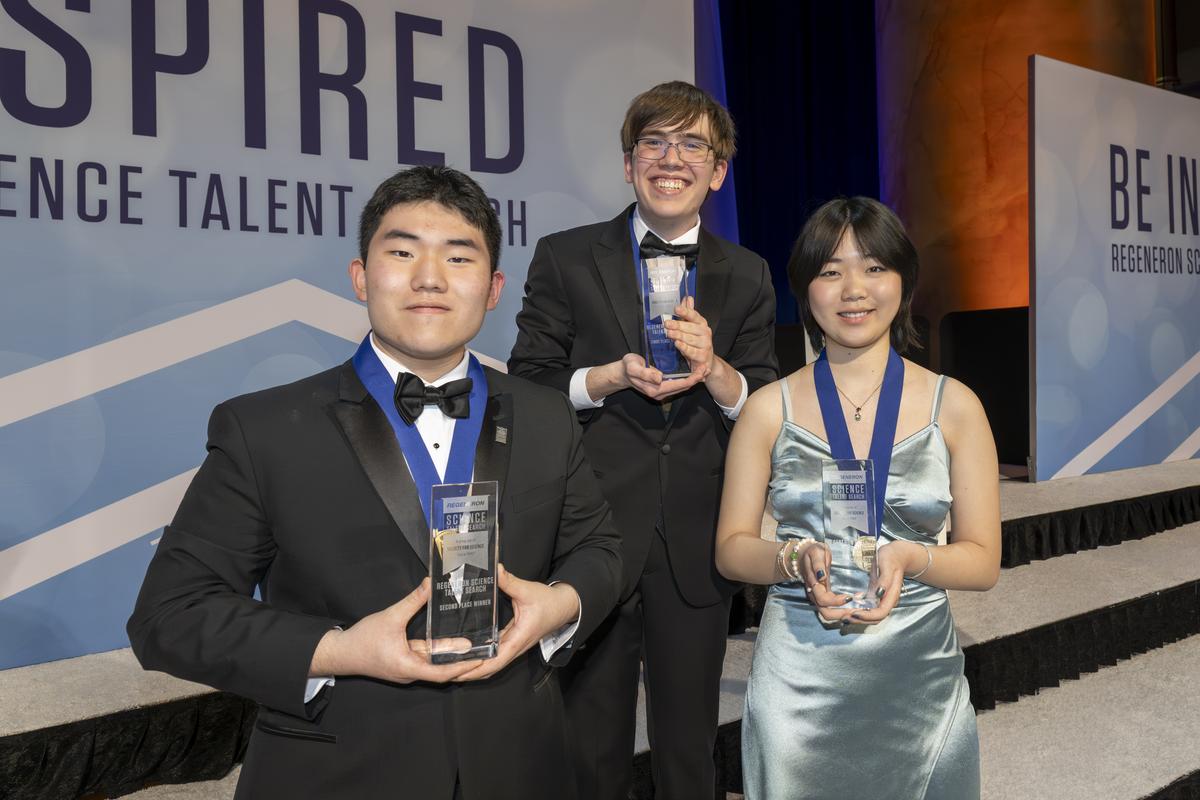
Every year, some of the top high school seniors in the United States compete in the Regeneron Science Talent Search. This year, forty students were chosen as finalists and traveled to Washington, DC. Together, these students earned more than $1.8 million in prizes for their hard work. The winners were announced in March.
The Regeneron Science Talent Search is one of the oldest and best-known science and math contests in the United States. This was the 85th anniversary for the search, which began in 1942. The goal of the contest is to find and support young people who are using math and science to tackle important problems. Over 2,600 students entered the contest this year.
(Source: Chris Ayers Photography/Licensed by Society for Science.)
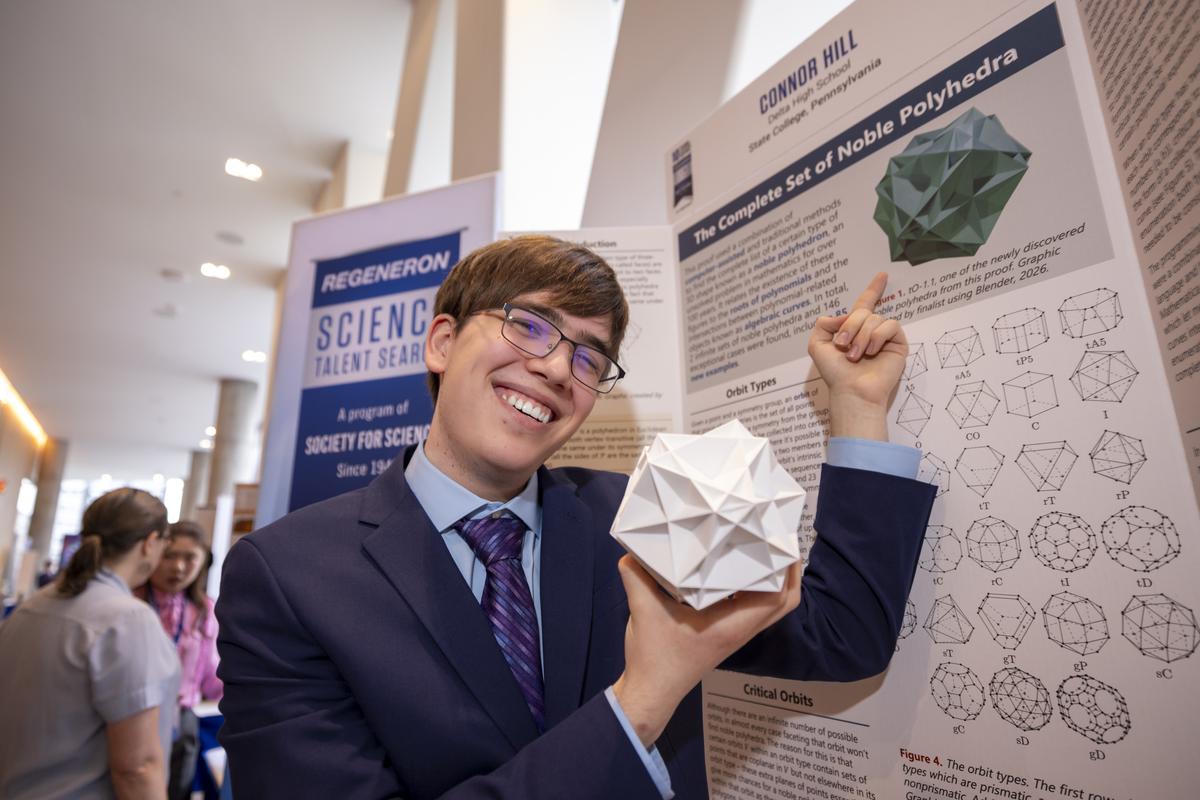
The top prize of $250,000 went to 17-year-old Connor Hill from Pennsylvania. Connor studied “noble polyhedra.” A polyhedron is a 3D shape with flat sides and straight edges, like a cube. In a “noble” shape, every side and every corner is exactly the same. There are two well-known groups of these shapes.
But outside these groups, mathematicians only knew of 61 noble polyhedra. Connor wrote a computer program to search for and find all of these shapes. He wound up identifying 85 new examples. Connor also leads his school’s news team.
(Source: Chris Ayers Photography/Licensed by Society for Science.)
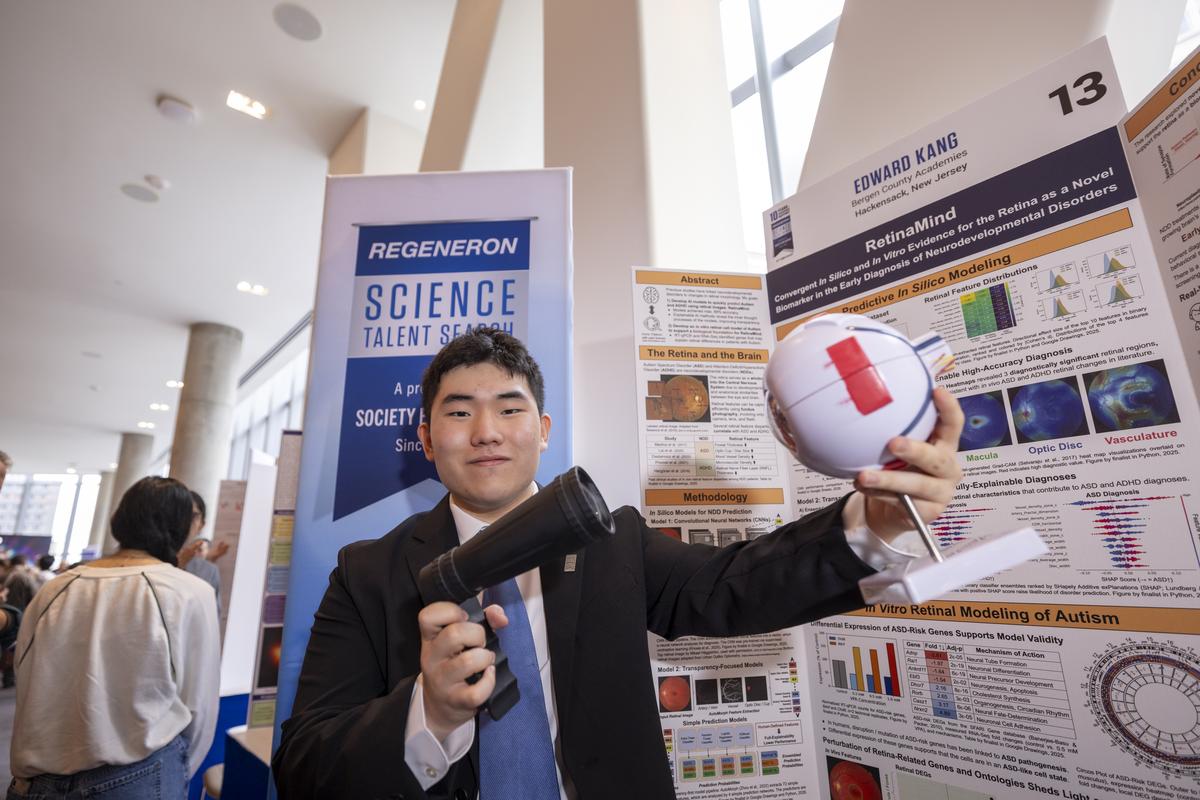
Second place went to Edward Kang, 17, from New Jersey. He won $175,000 for his work with the human eye and brain. Edward studied the retina, which is the part of the eye that senses light. He was looking for patterns in the retina linked to autism and ADHD.
Edward used images of retinas to train an Artificial Intelligence (AI) tool he calls “RetinaMind.” A tool like this could help doctors find these conditions much faster than they do now. Edward is also a talented singer who has performed at Carnegie Hall.
(Source: Chris Ayers Photography/Licensed by Society for Science.)
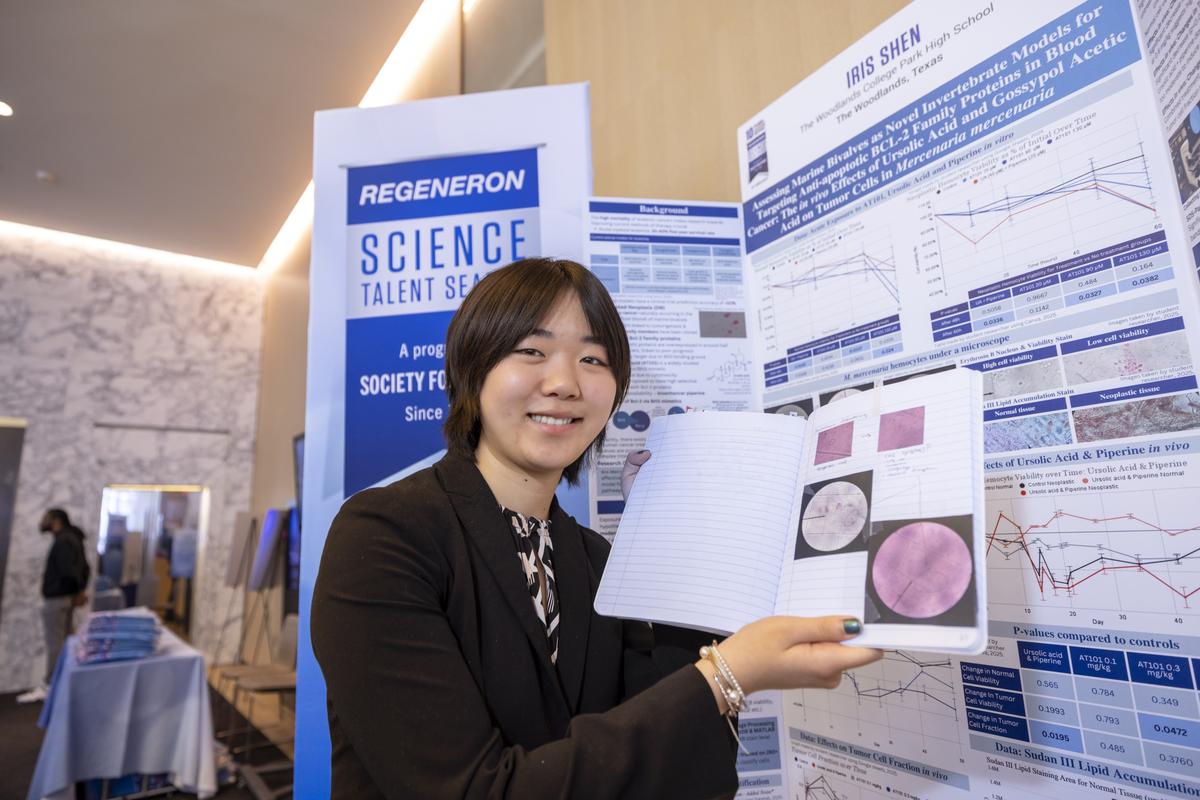
Iris Shen of Texas took third place. The 17-year-old won $150,000 for her study of clams. Testing cancer drugs in animals can take a long time and cost a lot of money. Iris wanted to see if clams could be used as a cheaper, faster way of testing cancer drugs.
Iris tested cancer drugs on clams, and found the medicine worked just like it does in human cells. The work suggests that clams could help scientists test new cancer treatments much more quickly. In her spare time, Iris also runs a non-profit group that teaches science to middle school students.
(Source: Chris Ayers Photography/Licensed by Society for Science.)
Many hard-working and talented young students won other awards in the contest. The work of these students shows that you don’t need to be an adult to make a big difference.
The Science Talent Search is supported by the drug company Regeneron. One of the leaders of the company, George D. Yancopoulos, was actually a winner of the contest back in 1976. Regeneron has promised $150 million to support the contest over the next ten years.
“We may never know where the next great scientific leader will come from,” says Mr. Yancopoulos. But he says the company wants “to find that talent, fuel it, and give it every chance to change the world.”