
The Natural History Museum in London holds a yearly contest for the Wildlife Photographer of the Year. This year, the contest had a record 60,636 entries from around the world. Here are some of this year’s best pictures, and the stories behind them.
This year’s photographs are amazing in many different ways. Some show dramatic scenes as animals interact. Others present nature in surprising ways. Some just capture a perfect moment.
(Source: © Wim van den Heever / Wildlife Photographer of the Year .)
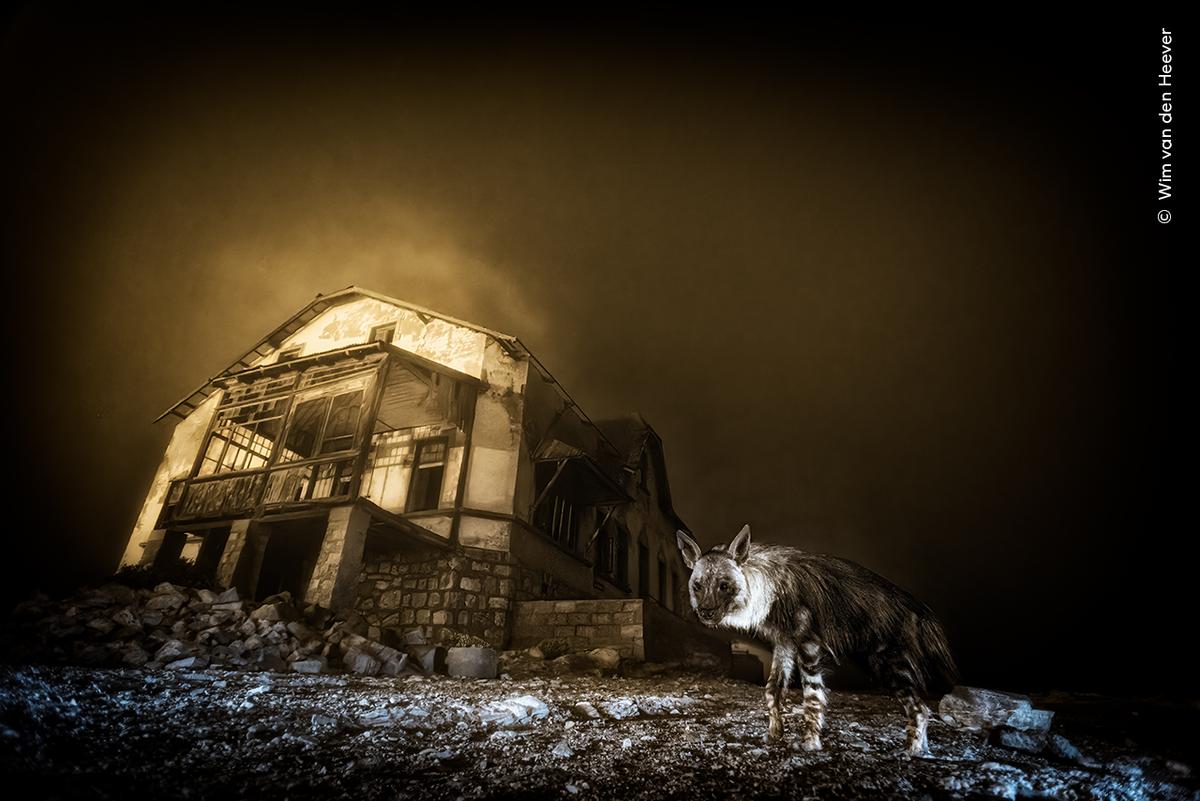
The grand prize this year was won by Wim van den Heever of South Africa for an image called “Ghost Town Visitor”. The picture shows a rare brown hyena in front of an empty house in a town in Namibia where no one has lived for 70 years. With humans gone, animals have come back to this desert town. Mr. van der Heever set up a “camera trap” in the location, but it took him years to capture the perfect image.
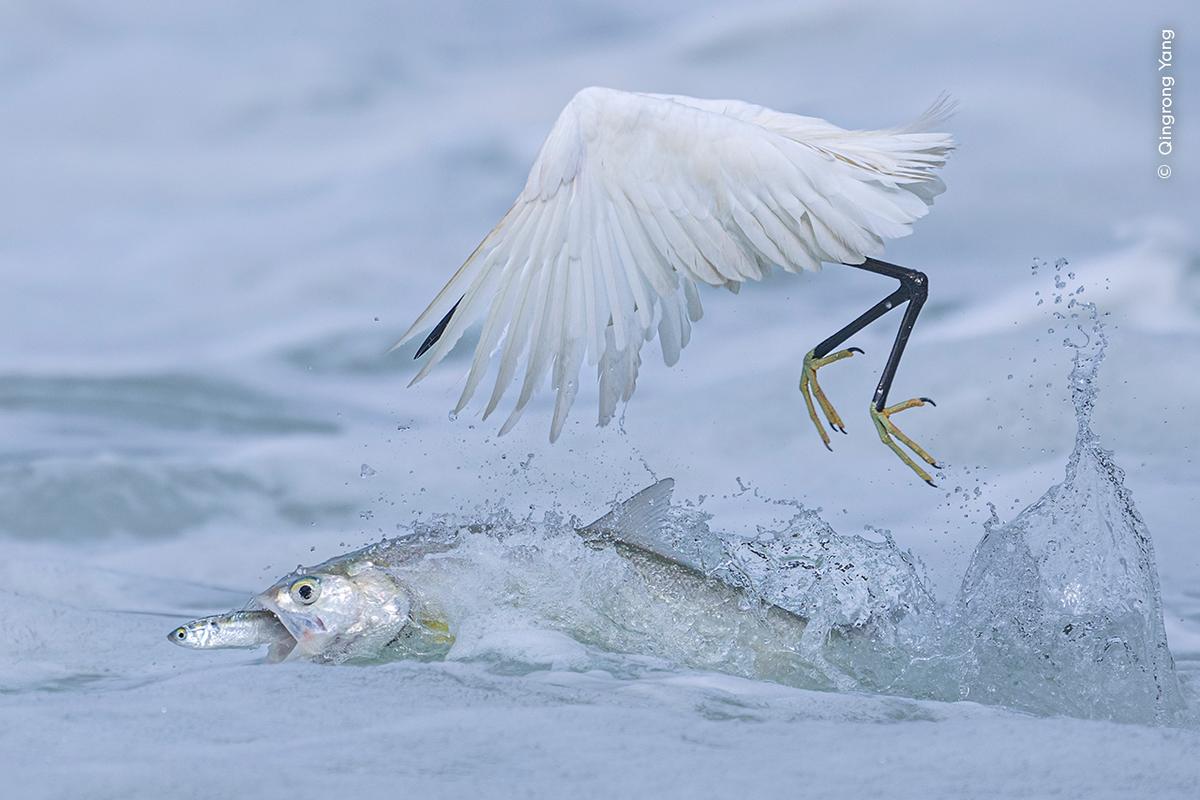
Qingrong Yang of China made regular trips to Yundang Lake in Fujian province to take this image, which won him the award for Bird Behavior. His photo, called “Synchronized Fishing”, captures the moment when a little egret drops toward the water, hoping to grab a small fish, only to have a large ladyfish snatch the tiny creature first.
(Source: © Qingrong Yang / Wildlife Photographer of the Year .)
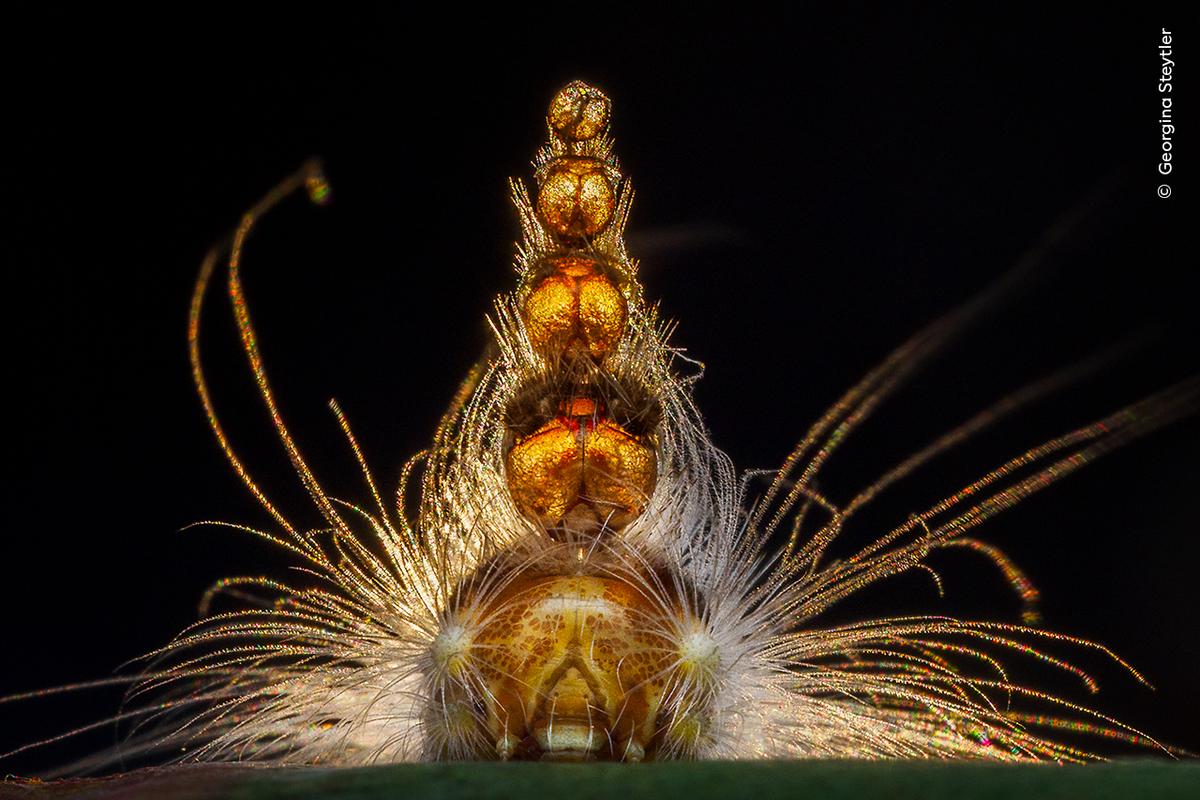
Australia’s Georgina Steytler won the Invertebrates (animals without a backbone) award for her picture “Mad Hatterpillar”. The picture shows the head of an unusual caterpillar called the “gum-leaf skeletoniser caterpillar”. These caterpillars eat away the green parts of certain tree leaves, leaving behind just the “skeletons” of the leaves.
Each time the caterpillar sheds its skin, it keeps the old “head” part, giving it this strange look. The heads may protect the caterpillar from predators. Ms. Steytler snapped the picture in Western Australia while the sun was setting behind the insect.
(Source: © Georgina Steytler / Wildlife Photographer of the Year .)
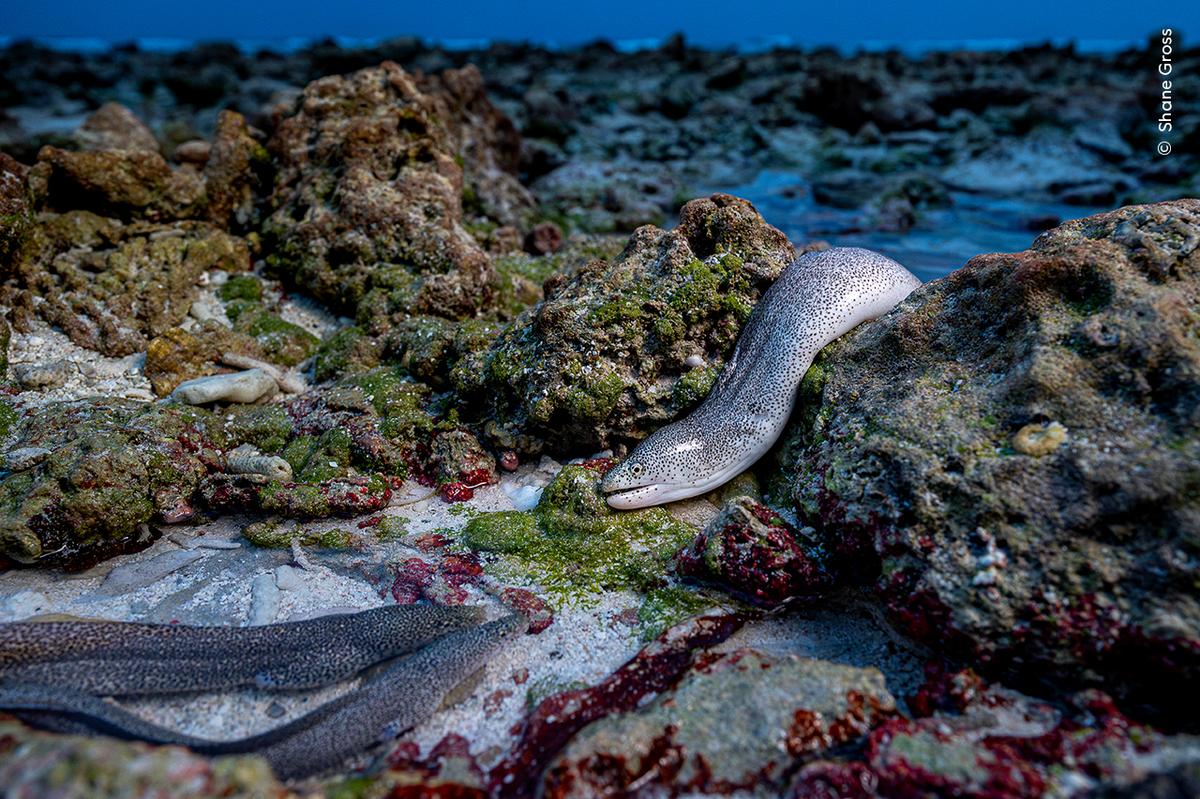
Normally, moray eels are seen underwater. But Shane Gross of Canada captured this image of three peppered moray eels in the Seychelles Islands out among the rocks after the tide went out. Mr. Gross realized that the eels were using their strong sense of smell to look for dead fish. They can remain out of water for up to 30 seconds at a time. His picture, called “Like an Eel out of Water”, won the award for Animals in their Environment.
(Source: © Shane Gross / Wildlife Photographer of the Year .)
Young Competition
The Young Wildlife Photographer of the Year is a separate contest for people under 18.
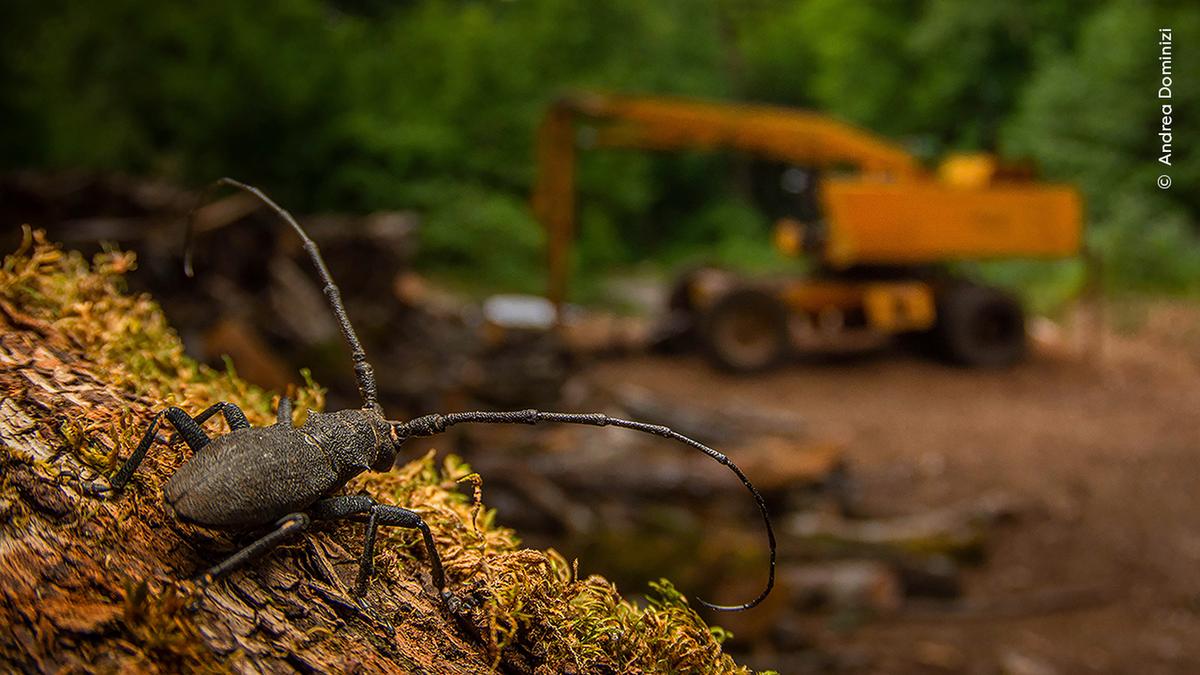
(Source: © Andrea Dominizi / Wildlife Photographer of the Year .)
Andrea Dominizi of Italy won the competition for Young Wildlife Photographer of the Year with “After the Destruction”. The image shows a longhorn beetle on a log in a forest in central Italy. Large beech trees had been cut down from the forest, and in the background, the image shows some of the machinery involved.
Because of the way the picture was taken, the beetle appears to be roughly the same size as the machine in the background. Longhorn beetles are one of the few animals which eat dead wood, helping the forest in the natural process of biodegrading.
Did You Know…?
Wildlife Photographer of the Year is developed and produced by the Natural History Museum, London. If you’d like to have a look at more of the amazing photos, you can find them here.