
When he was just 8, Miles Wu discovered a love for origami – the Japanese art of folding paper. Last October, the 14-year-old’s origami skills earned him the first prize in a national science competition – and proved that a simple sheet of paper can hold more than 10,000 times its own weight.
Junior Innovators Challenge
The competition that Miles won is called the Junior Innovators Challenge. It’s run by the Society for Science and the company Thermo Fisher Scientific. The contest encourages students to explore science, technology, engineering, and math (STEM). Close to 2,000 students entered the contest, and just 30 of them were chosen to take part in the final round in Washington, DC.
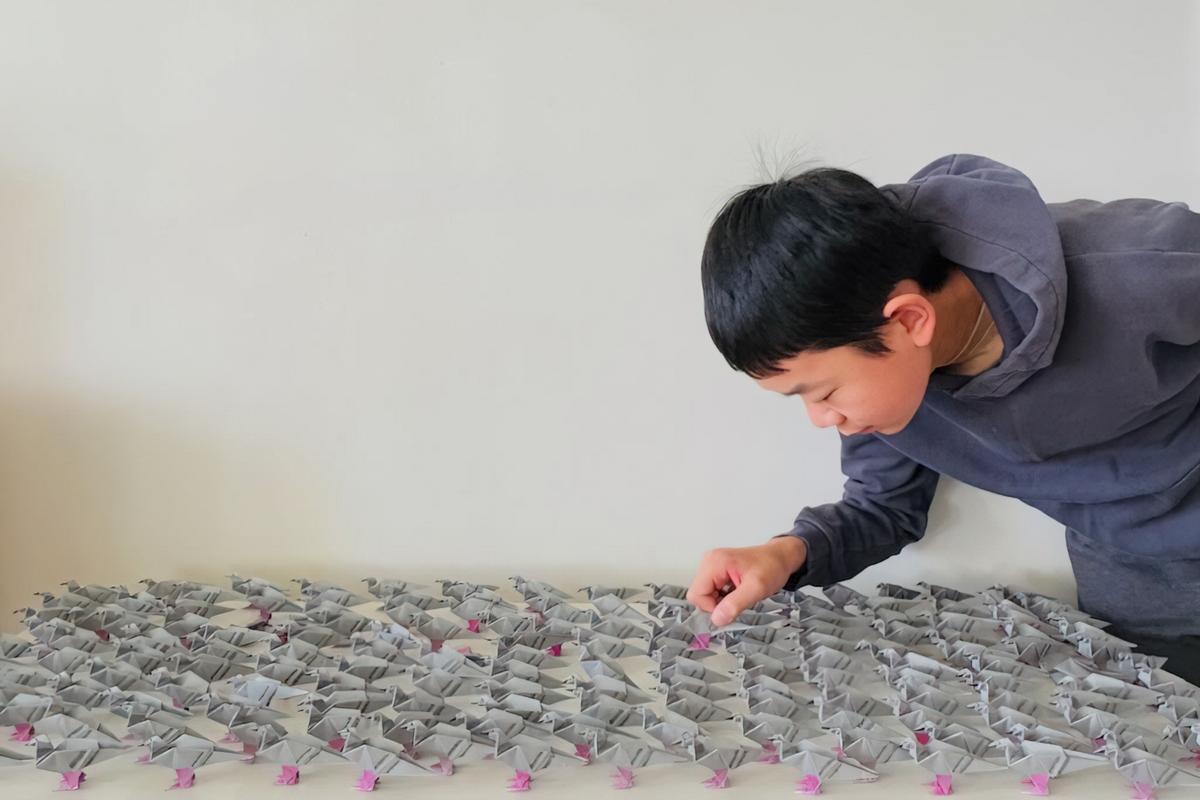
Miles is fascinated by origami. He has been making origami creations since he was eight. Miles is interested in insects and in bird-watching. One of the things he enjoys is creating insects and other animals out of paper using origami. He sometimes posts his creations on social media. He has even raised $2,000 for charity by selling his origami pigeons.
(Source: Society for Science.)
Miles needed his creativity for the contest. But he also needed a strong scientific focus. He chose to test the strength of different ways of folding paper.
One thing that drove Miles’ interest was thinking about emergency shelters. The perfect emergency shelter would be small and lightweight, but strong and easy to set up. He thought origami might hold a clue to solving this problem.
The fold Miles focused on is called the “Miura-Ori” fold. Miura-Ori folds were first discovered by the Japanese scientist Koryo Miura. The fold was designed as a way of packing large maps into a small shape that could be opened or closed with a single motion. NASA has used the ideas behind the Miura-Ori fold to pack and open large solar panels on satellites.
(Source: Society for Science.)
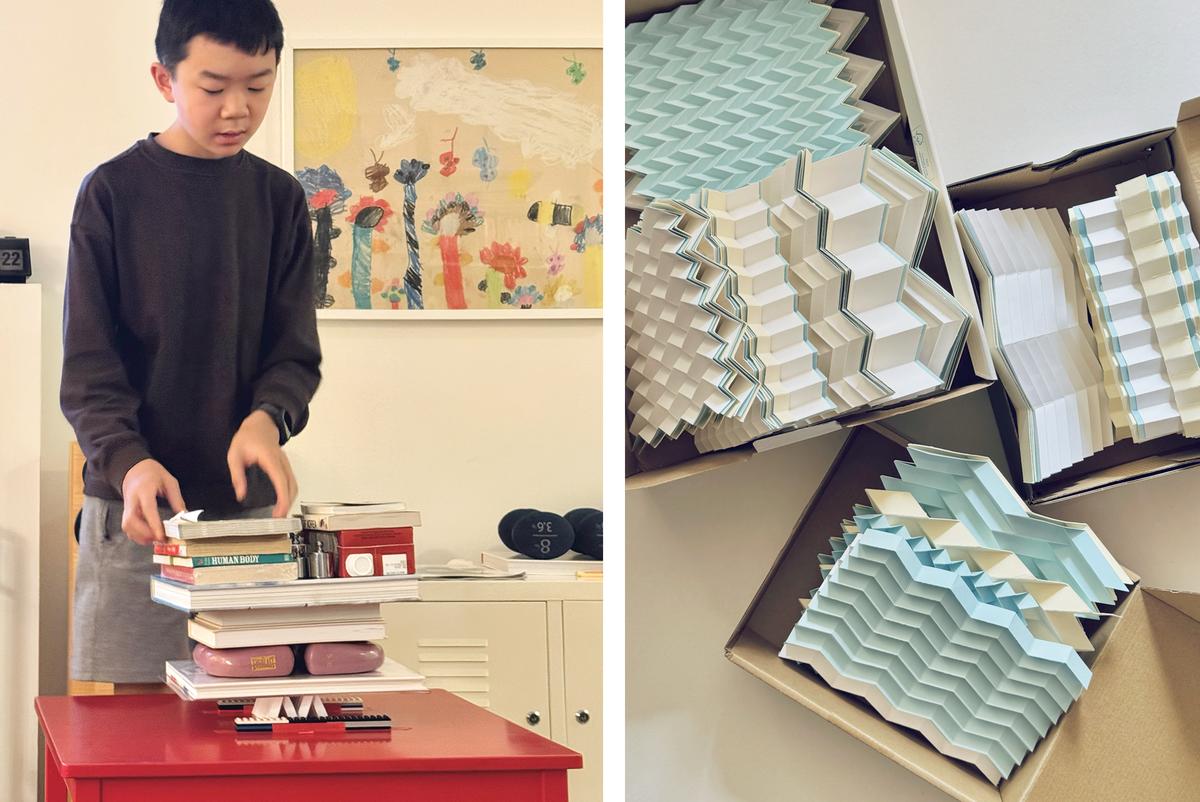
For his experiment, Miles set up a simple “lab” in his family’s living room. There, he folded different kinds of paper using different Miura-Ori patterns. Then tested these structures to see how strong they were by putting more and more weight on them.
Miles tested 54 different combinations of folding methods and kinds of paper. He also figured out that smaller folds, of about one inch (2.54 centimeters) made the strongest and most stable structures.
He discovered one way of folding the paper that could support more than 10,000 times the weight of the paper itself. Miles said he calculated that that was about the same as piling 4,000 elephants on top of a taxi cab.
(Source: Lisa Fryklund/Licensed by Society for Science.)
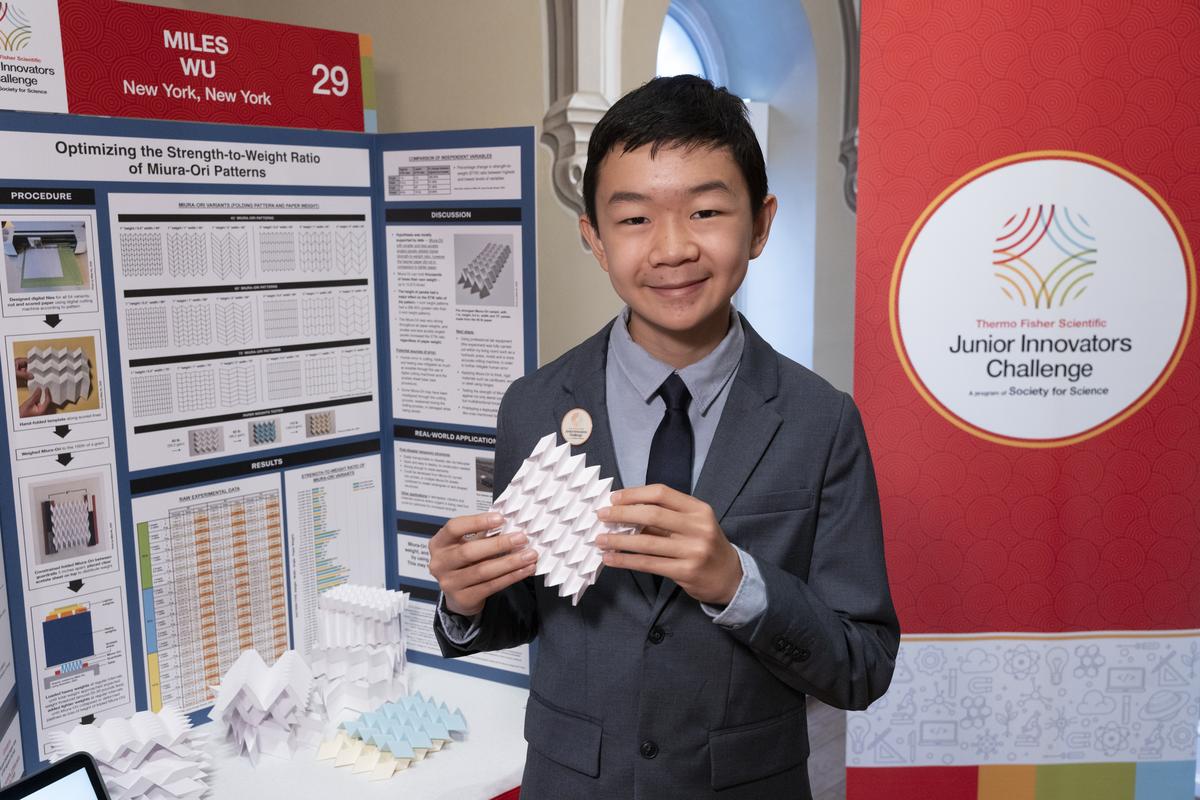
Miles’ project stood out in the contest, even though many other students had more advanced equipment and support from outside scientists. The project impressed the judges, in part because of the creativity and care that Miles put into it. Miles won first prize, earning $25,000.
The young inventor says he wants to keep exploring how folding works. He hopes to use more advanced tools to continue his experiments. He also wants to develop his folding designs further and see if they could be used to create emergency shelters that are easy to move and set up.
Miles says the contest has shown him that “it’s always worth following your curiosity and interests in science, because you don’t know where they could lead you.”